-
E-mail
china_yanei@163.com
-
Phone
19906877984
-
Address
10th Floor, Building 6, Qiantang Cloud Valley, No. 68 Qiantang Street, Qiantang District, Hangzhou City, Zhejiang Province
Hangzhou Yanyi Intelligent Control Technology Co., Ltd
RFID reagent cabinet maintenance and upkeep, building a safety defense line for laboratory hazardous chemical management
Date: 2025-07-27Read: 0
RFID reagent cabinets, as the core equipment for intelligent management of hazardous chemicals in laboratories, achieve precise tracking and safety control of the entire life cycle of reagents through radio frequency identification technology. However, its stable operation highly relies on a scientifically standardized maintenance and upkeep system. This article systematically outlines the maintenance points of RFID reagent cabinets from four dimensions: hardware cleaning, sensor calibration, software management, and emergency response.
1、 Hardware cleaning: dual protection against corrosion and pollution
The hardware maintenance of RFID reagent cabinets requires the establishment of a three-level cleaning mechanism of 'week month quarter'. Wipe the surface of the cabinet with a dry microfiber cloth every week, avoiding the use of alcohol or acidic cleaning agents to prevent corrosion of the touch screen and shell coating. Clean the ventilation openings and cooling fans monthly, use compressed air to remove dust and prevent damage to electronic components due to overheating. Thoroughly clean the reagent storage shelves every quarter, with a focus on removing residual volatile substances from strong acids and bases. For example, a laboratory at a certain university found that the sodium hydroxide volatiles that were not cleaned up in a timely manner caused corrosion of the metal plate, leading to the risk of loosening of the reagent rack.
The maintenance of RFID tags is equally crucial. Check the labels for detachment or contamination every month, and clean reusable labels with a dedicated cotton swab dipped in deionized water to ensure a success rate of ≥ 99.5% in reading and writing. A case study of a pharmaceutical company shows that the proportion of reagent misplacement accidents caused by label contamination reached 12%, but after standardized cleaning, this proportion decreased to 0.3%.
2、 Sensor calibration: the lifeline of accurate data
Temperature and humidity sensors need to be calibrated with a standard temperature and humidity meter every 6 months, and gas concentration sensors (such as VOCs and toxic gases) need to be calibrated with a standard gas generator every 3 months. The calibration process should follow the three-step method of 'environmental stability - standard comparison - data verification': after the equipment is powered on and preheated for 30 minutes, close the cabinet door to eliminate external interference, input the standard value and continuously monitor for 24 hours to ensure that the error is controlled within ± 3%. The practice of a certain chemical research institute has shown that uncalibrated temperature and humidity sensors caused an abnormal increase of 27% in the moisture absorption rate of reagents, resulting in the failure of three batches of reagents.
3、 Software management: the cornerstone of data security and system stability
Establish a three in one software maintenance system of 'backup update audit'. Automatically backup reagent access records and alarm logs to the cloud every week, and export them to independent storage devices every quarter. The data loss incident of a certain biopharmaceutical company revealed that failure to perform dual backup resulted in the destruction of 3-year experimental data. System updates need to follow the 'test backup upgrade' process. Before updating, backup core data such as user permissions and reagent lists to avoid permission loss due to firmware vulnerabilities.
4、 Emergency Response: The Last Barrier to Risk Prevention and Control
Develop graded emergency plans: Level 1 response (such as temperature exceeding the standard) triggers sound and light alarms and pushes text messages to administrators; Level 2 response (such as illegal opening of cabinet doors) automatically locks the cabinet and starts recording; Level 3 response (such as fire) linkage laboratory fire protection system. The fire simulation test in a new materials laboratory showed that standardizing emergency response reduced the reagent loss rate from 45% to 8%.
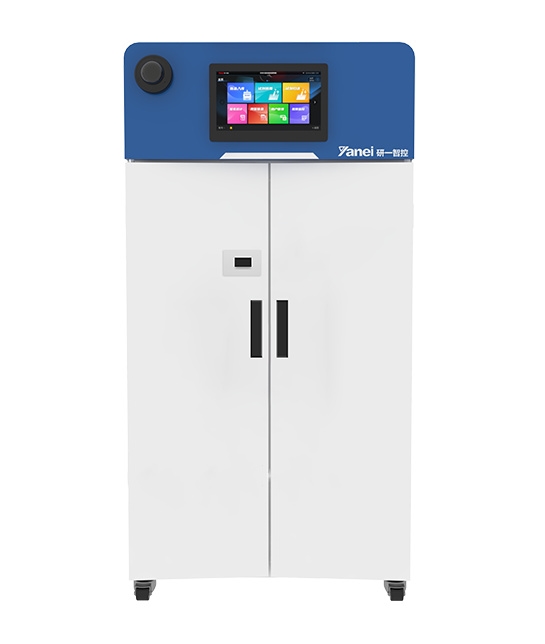
The maintenance of RFID reagent cabinets is a systematic project that requires the establishment of standardized processes based on equipment characteristics. By implementing the four strategies of 'hardware cleaning calendar, sensor calibration system, software management standardization, and emergency response plan', the overall equipment efficiency (OEE) can be significantly improved to over 92%, while reducing the accident rate of hazardous chemical management by 80%. Under the wave of smart laboratory construction, the precise maintenance of RFID reagent cabinets is becoming the core competitiveness to ensure scientific research safety.