-
E-mail
2558114459@qq.com
-
Phone
17767180598
-
Address
Unit 3, Building 2, Shimao Jiangbin Commercial Center, Hangzhou Economic and Technological Development Zone
Hangzhou Jinmai Instrument Co., Ltd
Four rules to help you easily choose a tensile testing machine
Date: 2025-09-02Read: 0
In the rubber and plastic industry, in addition to density meters, tensile testing machines are also one of the popular instruments. Choosing this tensile testing machine often encounters various problems. When choosing a testing machine, one must not be blind. First, it is important to understand what the machine is used for testing, and to what extent the test results are expected to be accurate. Then, look for a trustworthy manufacturer and consult with professionals before making a purchase. Here are four rules for choosing a tensile testing machine to help you easily purchase!
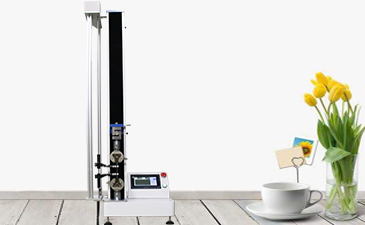
Rule 1: Resolution and Dynamic Performance (Bandwidth) Selection
Resolution is an important parameter of a testing machine, and an appropriate resolution will be beneficial for measuring resolution. When measuring smaller divisions, effective resolution and dynamic performance are contradictory. Simply increasing effective resolution comes at the cost of sacrificing dynamic performance (bandwidth), and the decrease in bandwidth directly results in less obvious material yield fluctuations or even a plateau phenomenon. Therefore, effective consideration of these parameters should also be given in the selection process.
In addition to resolution and dynamic performance (bandwidth) selection, the tensile testing machine also has range selection.
Rule 2: Range Selection
According to the load of the test material, the required test machine load (i.e. range) is selected. It is recommended that the material test load be around 70% -90% of the test machine range, which not only ensures the resolution of the test but also extends the service life of the test machine.
The tensile testing machine understands range selection and has other options: synchronous performance selection.
Rule 3: Synchronization Performance Selection
The data collected from material testing is the load and deformation of the material at the same time. If the two are not synchronized, there will be deformation of the load towards the front or deformation towards the front dry load. For the problem of the same load corresponding to two deformations when measuring elastic materials in the back and forth directions, the phenomenon of the back and forth curves not overlapping.
In addition to the above selection considerations, it is more important to choose a tensile testing machine that meets one's own accuracy requirements.
Rule 4: Selection of Accuracy Level
At present, the accuracy of domestic testing machines generally uses two types: level 1 and level 0.5. For general material testing, choosing a level 1 testing machine is completely sufficient, and there is no need to spend extra money to improve accuracy. For scientific research and material analysis, a level 0.5 precision testing machine is needed; In fact, there is not a significant difference in technology between testing machines with 0.5 level and 1 level accuracy. The verification methods and means are basically the same, but this is the difference in correction points. With the development of sensor technology, the linearity of sensor components has reached a very high level. As long as the measurement circuit has no defects and good anti-interference performance, all testing machines can achieve 0.5 level accuracy without any problem. For electrical measurement, it has far exceeded the limit of 0.5 level, and the relative error defined by national standards needs to be discussed.