-
E-mail
3356056332@qq.com
-
Phone
15088734782
-
Address
No.1, Road 10, Dongzhou Industrial Park, Fuyang District, Hangzhou City, Zhejiang Province
Hangzhou Jinghao Machinery Co., Ltd
The performance of ultrasonic nanocell disruption equipment relies on the coordinated operation of multiple precision modules
Date: 2025-11-17Read: 1
Ultrasonic nanocell disruption equipment utilizes high-frequency ultrasonic cavitation effect to efficiently lyse cells, disperse nanoparticles, emulsion droplets, or extract bioactive substances at the microscale. It is widely used in fields such as biomedicine, food engineering, nanomaterials, and environmental detection. The performance of ultrasonic nanocell disruption equipment relies on the collaborative operation of multiple precision modules, each of which carries the core technical logic of breaking through walls with sound and achieving stable control efficiency.
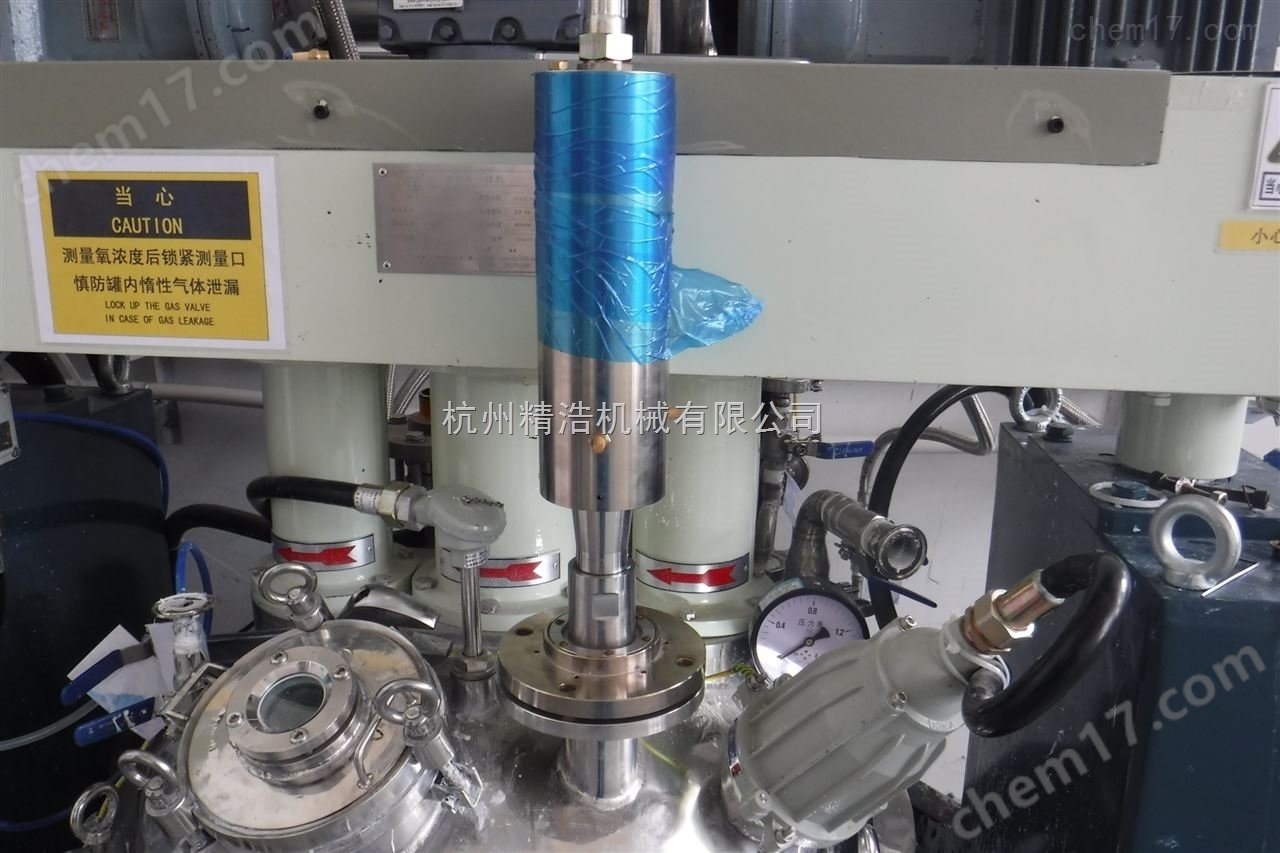
1. Ultrasonic transducer
As the core power source, piezoelectric ceramic transducers convert high-frequency electrical signals (usually 20-50kHz) into mechanical vibrations, generating high-intensity ultrasonic waves. High quality transducers have high electromechanical coupling coefficients and low heat generation characteristics, ensuring long-term operational stability. The output power can reach 500W-2000W, meeting the needs from trace samples to pilot scale.
2. Variable amplitude pole (probe)
Made of precision machined titanium alloy (such as TC4), with one end connected to a transducer and the other end deeply embedded into the sample. Its conical or stepped structure can amplify the amplitude (up to tens of micrometers) and concentrate ultrasonic energy in micro areas, forming local high-temperature and high-pressure cavitation bubbles, achieving efficient crushing. Different diameter probes (such as 3mm, 6mm, 10mm) are suitable for samples of different volumes and viscosities.
3. Ultrasonic host
Integrated microprocessor and power feedback system, supporting precise settings:
Working time/interval ratio (such as working for 3 seconds and stopping for 2 seconds) to prevent sample overheating;
Output power percentage (10% -100% continuously adjustable), suitable for fragile cells or tough tissues;
Total processing time and pulse mode to avoid protein denaturation or excessive DNA splicing.
Some models are equipped with temperature sensor interfaces to automatically pause overheating.
4. Sample processing unit
Micro processing: using an EP tube adapter, combined with an ice bath, suitable for samples ranging from 100 μ L to 10mL;
Large volume continuous flow: equipped with a circulating flow pool and peristaltic pump to achieve online crushing and avoid local overheating;
Anti pollution design: The probe can be sterilized under high temperature and pressure, and some models support disposable sterile sleeves.
5. Cooling and protection system
Ice bath or external cooling cycler: maintain sample temperature ≤ 4 ℃ to protect thermosensitive components;
Soundproofing hood/soundproofing box: reduces ultrasonic noise (up to 85dB or more), ensuring the hearing safety of operators;
Overload protection: When the probe gets stuck or the load is abnormal, the output is automatically cut off to prevent the transducer from burning out.