-
E-mail
hzfsn@foxmail.com
-
Phone
13738015913
-
Address
4th Floor, Building 2, Science and Technology Innovation Industrial Park, No. 16 Changtai Street, Changkou Town, Fuyang District, Hangzhou City, Zhejiang Province
Hangzhou Fansuoneng Ultrasonic Technology Co., Ltd
Ultrasonic coating technology of heparin on medical devices
Date: 2025-12-17Read: 47
Heparin, as a drug, is used for the prevention and treatment of thrombotic diseases, such as deep vein thrombosis and pulmonary embolism, as well as for the prevention of thrombosis after orthopedic or general surgery.
At present, the treatment of moderate to severe cardiovascular stenosis often involves interventional therapy, such as the implantation of stents, catheters, etc. Coating heparin and other drugs on the surface of stents and catheters is beneficial for the slow release of drugs bound to medical devices after implantation into human tissues, inhibiting the proliferation of vascular endothelium.
The main coating process methods include immersion coating method; Traditional spraying methods, such as using spray pens, spray guns, etc; Chemical grafting/fixation method; Another method is ultrasonic spraying. The disadvantage of immersion coating method is poor control of coating uniformity, weak binding of heparin, and easy rapid loss. The traditional spraying method, on the other hand, relies on the operation for the uniformity of atomization and droplet size, which may result in droplet splashing, uneven coating, and average reproducibility. The chemical grafting/fixation method requires relatively few people, has complex processes, high costs, and may also alter the natural conformation of heparin, thereby affecting its activity.
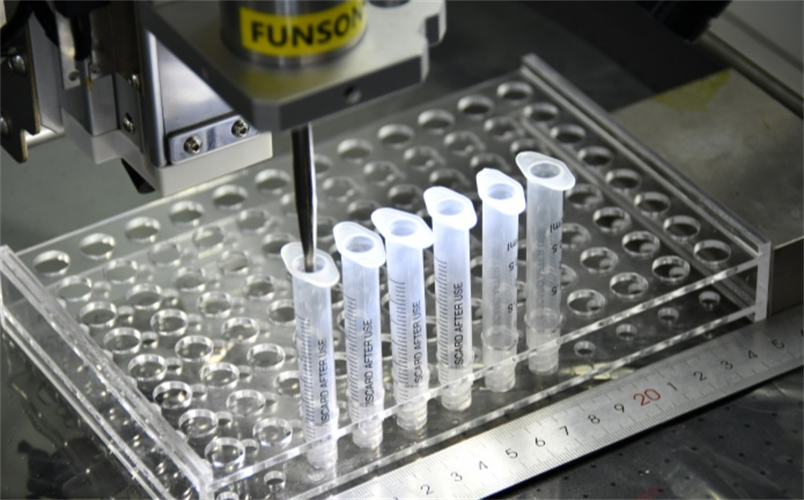
Ultrasonic spraying is a cutting-edge precision coating technology, with the core advantages of "fine, uniform, controllable, and efficient". It is suitable for coating and depositing bioactive substances such as heparin, and forming medicinal films on instruments; Its advantages are:
1. Uniform and ultra-thin coating height: Ultrasonic nozzles atomize the solution into micro droplets with uniform size and height, forming an extremely uniform and ultra-thin coating, avoiding the "orange peel effect" or droplet aggregation of traditional spraying, which is crucial for fine coating of small instruments such as coronary stents.
2. Reliable controllability and reproducibility: By controlling parameters such as ultrasound frequency, flow rate, and nozzle movement speed, the thickness, density, and distribution of the coating are accurately controlled, while also ensuring high consistency between batches, in compliance with strict production and quality control standards for medical devices.
3. Improve the utilization rate of materials and save costs: excessive spray and little waste (the utilization rate of materials can reach more than 95%) can significantly save costs for expensive active drugs (heparin) or composite solutions.
4. Suitable for spraying various shapes of surfaces and special trajectories. Due to the automated design of the equipment, the nozzle angle and motion trajectory are controllable, which can effectively cover complex geometric surfaces, including those with hollow mesh brackets. Selective area spraying can be performed to achieve patterned coating; It can be cured and then coated continuously.
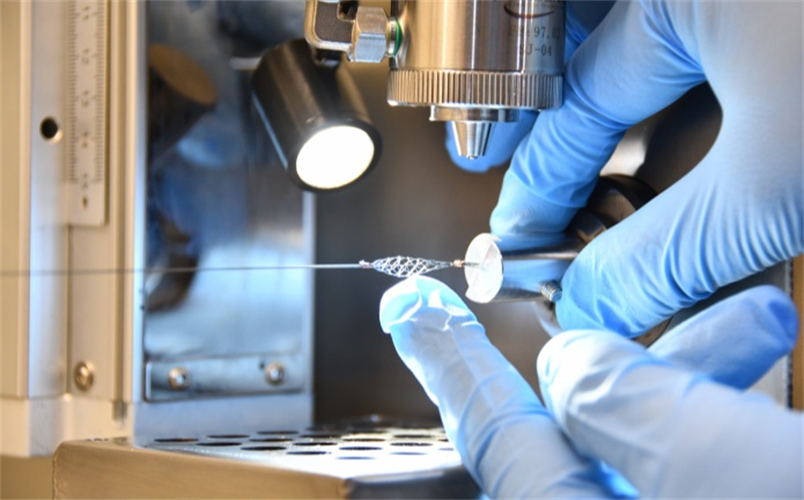
Overall, ultrasonic precision spraying technology has become the preferred and key technology for producing heparin or other drug coatings on high-value medical devices, especially intravascular implants, due to its outstanding advantages in uniformity, controllability, efficiency, and biocompatibility. It elevates the quality control of drug coatings on medical devices from a "handmade" level to a "precision engineering" level.
This article is limited to the promotion of ultrasonic spraying technology and its applications; Suggestions for non professional medical skills.