-
E-mail
416183088@qq.com
-
Phone
13461341555
-
Address
2nd Floor, Building 3, No. 1-1 Huayi Road, Yuhangxing Street, Yuhang District, Hangzhou City, Zhejiang Province
Hangzhou Dawei Science and Education Instrument Co., Ltd
Structure and Function of Low Temperature Constant Temperature Magnetic Stirring Reaction Bath
Date: 2025-12-01Read: 2
Low temperature constant temperature magnetic stirring reaction bath is a commonly used equipment for chemical reactions, physical experiments, and biological sample processing in laboratories, widely used in the fields of chemistry, medicine, food, and environment. By combining low-temperature control and constant temperature heating technology, and using magnetic stirring to achieve the mixing of reactants, stable experimental conditions are provided for various precision reactions.
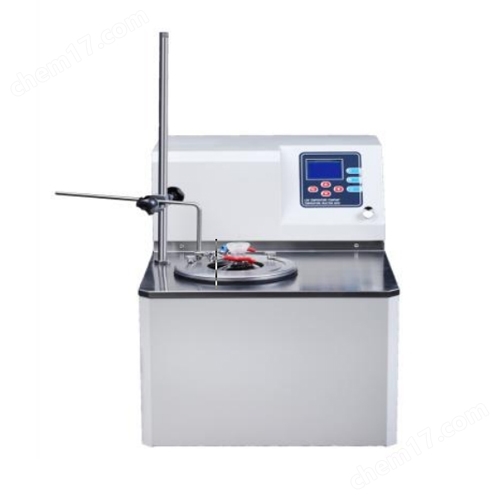
Low temperature constant temperature magnetic stirring reaction bathWorking principle:
1. Principle of constant temperature control: The reaction bath is equipped with a temperature control device inside, usually consisting of a refrigeration system and a heating system. The refrigeration system absorbs heat through the refrigerant, reducing the temperature of the reaction bath, while the heating system releases heat through electric heating elements to increase the temperature. Temperature control systems typically use digital controllers with high-precision temperature sensors that can monitor and adjust temperature in real-time, ensuring that the temperature inside the bath remains within the set range.
2. Principle of magnetic stirring: A magnetic stirrer is installed at the bottom of the reaction bath, and the magnetic stirrer is controlled by an electromagnetic field to rotate in the bath, thereby achieving uniform stirring of the liquid. The advantage of magnetic stirring is that it has no mechanical contact, thus avoiding the pollution problems that may occur in traditional stirring systems, while ensuring efficient and uniform mixing effects.
3. Low temperature reaction environment: It can provide a temperature range from -20 ℃ to 100 ℃, which makes it suitable for reaction processes with different temperature requirements. By precisely controlling the temperature, adverse effects of temperature fluctuations on experimental results can be avoided.
Structural characteristics:
1. Reaction bath: Reaction baths are usually made of corrosion-resistant materials such as stainless steel or polytetrafluoroethylene (PTFE) to ensure that the equipment is not corroded by chemical substances during long-term use. There are refrigeration and heating systems distributed inside the bath to ensure precise temperature control.
2. Temperature control system: The temperature control system usually includes temperature sensors, heaters, refrigerant circulation systems, etc. The temperature sensor is used to monitor the temperature inside the bath in real time and transmit the temperature signal to the controller to automatically adjust the heating or cooling operation.
3. Magnetic stirring system: An electromagnetic stirrer is installed at the bottom, and a magnetic stirrer is used to rotate under the action of magnetic force. Magnetic stirrers are usually made of chemically resistant materials that can rotate at high speeds in the reaction liquid, thereby improving mixing efficiency.
4. Control panel: The control panel is the operation interface, and users can set parameters such as temperature and adjust mixing speed through the control panel. Modern devices are generally equipped with digital display and touch screen functions, making operation more convenient.
5. Safety protection device: In order to ensure the safety of the equipment during use, many are also equipped with overheat protection, overload protection and other functions to avoid equipment damage or experimental accidents caused by high temperature or circuit failure.
Precautions for using low-temperature constant temperature magnetic stirring reaction bath:
1. Installation position: Ensure that the equipment is placed on a stable surface to avoid vibration affecting the stability of the magnetic stirring system.
2. Selection of reaction liquid: Choose the appropriate reaction liquid according to actual needs, avoiding the use of liquids that can corrode equipment materials.
3. Temperature setting: Set an appropriate temperature range according to experimental requirements and avoid setting temperatures that are too high or too low to prevent equipment damage.
4. Mixing speed adjustment: When adjusting the mixing speed, it is necessary to adjust it according to the viscosity and properties of the reaction liquid to avoid excessive mixing speed having a negative impact on the reaction process.
5. Observation during the reaction process: Regularly observe the temperature and stirring status during the reaction process to ensure the smooth progress of the experiment.