-
E-mail
sales@morotchem.com
-
Phone
19884159221
-
Address
Ivy Health Industry Park, Yuhang District, Hangzhou City, Zhejiang Province
Hangzhou Borealis Chemical Technology Co., Ltd
Breakthrough the bottleneck of DTD synthesis! Continuous production technology achieves efficient, safe, and green preparation!
Date: 2025-11-12Read: 3
This article was published in Organic Process Research&Development. The author team is from Dalian University of Technology and focuses on the efficient synthesis of 1,3,2-dioxapentane-2,2-dioxide (DTD). They proposed a continuous process with a fixed bed reactor as the core, which solved the problems of low efficiency, heavy pollution, and easy hydrolysis of products in traditional processes through catalyst selection, reaction parameter optimization, and separation system design. This provides a green and feasible technical solution for the industrial production of DTD.
1、 The Important Value of DTD and the Pain Points of Traditional Synthesis
Core application scenarios
In the field of lithium-ion batteries, as an SEI film forming additive, it can improve the low-temperature performance, cycle life, and safety of batteries, and suppress capacity decay.
In the field of organic synthesis, it is commonly used as a hydroxylation reagent and a key raw material for the synthesis of pharmaceutical intermediates such as ether glycerides and ceramides.
The three major limitations of traditional craftsmanship
Early methods: The reaction of 1,2- with silver sulfate reported in 1932 resulted in a yield of only 23%; The route using thionyl chloride in 1997 was highly corrosive and heavily polluted.
Mainstream batch process: using ruthenium trichloride/sodium hypochlorite and other systems, catalysts are expensive and difficult to recover, wastewater discharge is large, and product quality is unstable.
Intermittent reaction problem: The reaction releases heat violently, the product DTD is easily hydrolyzed, the catalyst separation is difficult, and the production efficiency is low.

3、 Optimization of reaction parameters and analysis of results
Key parameter optimization
Through single factor experiments, the study systematically explores the effects of solvent, temperature, oxidant ratio, liquid space velocity (LHSV), and substrate concentration on the reaction, and determines process parameters:
temperatureGradient temperature control inhibits hydrolysis: Under single temperature conditions, although the temperature increase (5-20 ℃) increases the ES conversion rate from 85.1% to 99.7%, the DTD selectivity decreases from 99.5% to 88.4% (due to intensified hydrolysis); Finally, a gradient temperature of "10 ℃ (first reactor, accelerated reaction)+5 ℃ (second reactor, inhibited hydrolysis)" was adopted to achieve a balance between 87.9% conversion rate and 99.3% selectivity.
Oxidizer ratio: 1.05:1 Balancing efficiency and cost: When the molar ratio of H ₂ O ₂ to ES increases from 1.05 to 1.50, the water content of the system increases significantly, resulting in a decrease in the probability of ES contacting the catalyst. The conversion rate decreases from 90.4% to 84.3%, and the selectivity decreases from 99.4% to 98.0%; Therefore, a ratio of 1.05:1 was determined to reduce costs while ensuring conversion rates.
Liquid airspeed:0.6h ⁻¹ equilibrium reaction and separation: When LHSV increased from 0.6h ⁻¹ to 1.2h ⁻¹, the reaction residence time shortened from 16.5 minutes, and DTD hydrolysis decreased (selectivity increased from 99.1% to 99.4%), but the ES conversion rate decreased from 99.4% to 90.4%; The final choice is 0.6 hours ⁻¹ to ensure ES conversion without the need for additional separation of unreacted substrates.
Substrate concentration:1mol/L adaptive catalytic ability: When the substrate concentration is less than 3mol/L, the ES conversion rate is greater than 98.0% and the DTD selectivity is greater than 99.2%; When the concentration increased to 4mol/L, the water content of the system relatively increased, the conversion rate decreased to 95.8%, and the selectivity decreased to 98.5%; Therefore, 1mol/L was chosen as the substrate concentration to balance production capacity and product quality.
Process performance and stability
Excellent core indicators: Under the parameters (DMC as solvent, 10/5 ℃ gradient temperature, H ₂ O ₂/ES=1.05:1, LHSV=0.6h ⁻¹, 30wt% H ₂ O ₂, 1mol/L ES), the ES conversion rate reached 99.5%, the DTD selectivity reached 99.1%, and the DTD separation yield reached 96% after continuous separation. The product purity meets industrial requirements.
Strong catalyst stability: 800 hours of continuous operation experiments showed no significant decline in the conversion rate and selectivity of TS-1 catalyst; Through FT-IR and XRD characterization, it was found that the structure of the catalyst did not change, indicating that the catalyst has good stability in the reaction system and can be recycled for a long time.
4、 Technological advantages and industrial value
Efficiency and cost double improvement: Continuous production significantly improves DTD production efficiency, while reducing catalyst, environmental protection, and equipment maintenance costs, laying the foundation for industrial large-scale production.
Green and safety dual guarantee: using TS-1/H ₂ O ₂ green catalytic system, no pollutant emissions; Fixed bed reactors effectively solve the problem of exothermic reactions, instantly separate and inhibit product hydrolysis, and balance environmental protection and production safety.
Technological extension value: This process is not only suitable for DTD synthesis, but also provides a universal technical framework for the continuous and green synthesis of cyclic sulfate compounds (such as other cyclic sulfates), which can be extended to fields such as medicine and fine chemicals.
5、 Conclusion
6、 Directly targeting the pain points of synthesis!Zhejiang Borelli's fixed bed helps industrial production improve quality and reduce costs
The Zhejiang Braulis fixed bed reactor combines high efficiency, stability, and green advantages, and is suitable for the needs of the chemical and new energy fields. The catalyst fixed bed design ensures sufficient contact between reactants, coupled with a precise temperature control system, which can avoid local overheating and significantly improve reaction conversion and selectivity. For example, the conversion rate of DTD synthesis reaches 99.5%, and the selectivity is 99.1%. The equipment structure is simple and easy to maintain, the catalyst is retained in situ without loss, the service life is long, and the operating cost is significantly reduced. Supporting continuous production and intelligent control, equipped with online monitoring function, easy operation and stable production, while reducing wastewater discharge and energy consumption, in line with the concept of green chemistry. In addition, it can be personalized and adapted to multiple scenarios, balancing the needs of small-scale research and development with industrial scaling up.
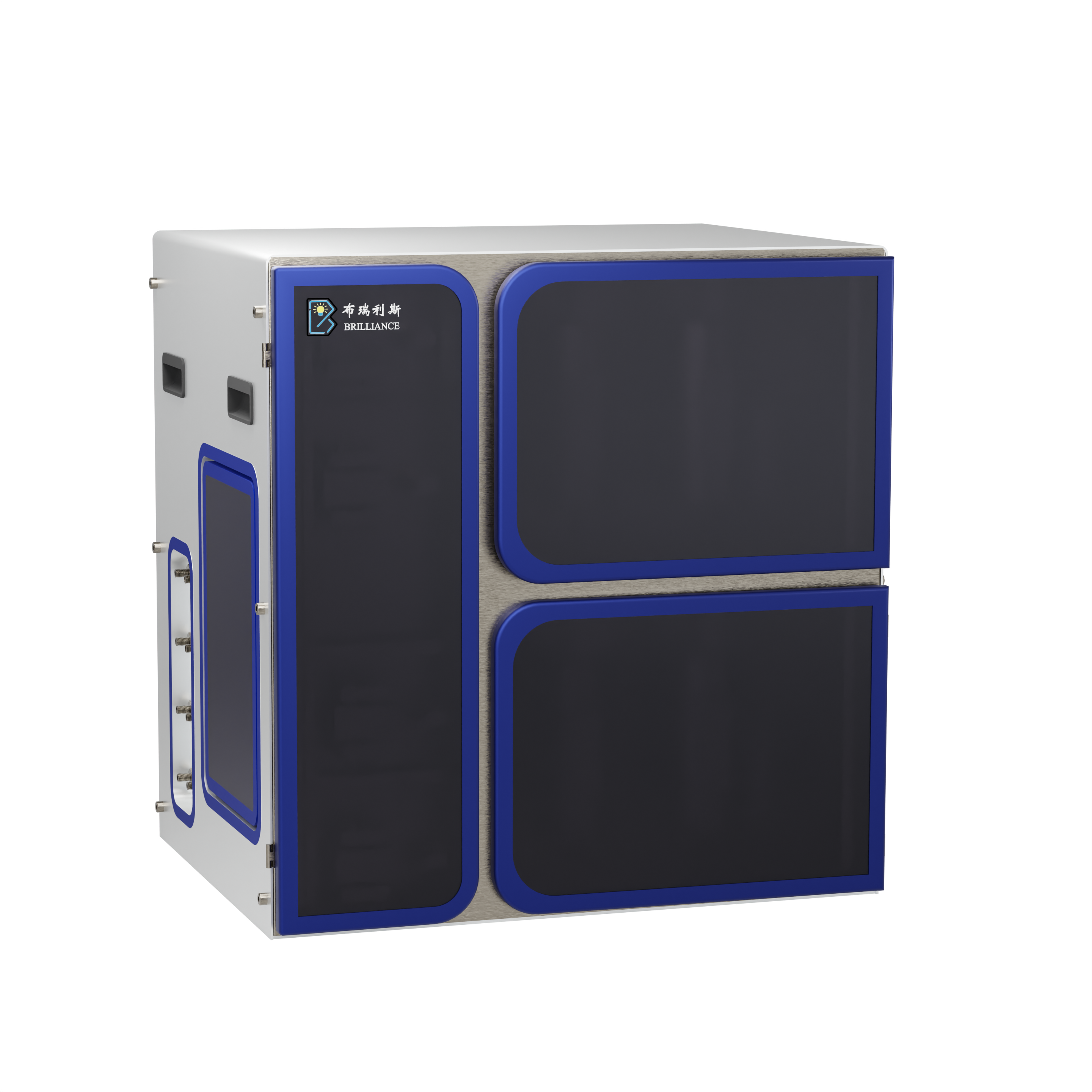
Braunschweig - Continuous Multiphase Catalytic Parallel Reactor