-
E-mail
515546856@163.com
-
Phone
18800567577
-
Address
Guangsheng Technology Co., Ltd., No. 158 Chaoyang Road, Chaoyang Village, Donggang Town, Xishan District
Guangsheng Technology Wuxi Co., Ltd
How to reconstruct a new standard for safe storage of PP ventilated and clean gas medicine cabinets?
Date: 2025-08-25Read: 4
In the cleanroom of the biopharmaceutical laboratory, a milky white PP ventilated and air purifying medicine cabinet is continuously operating at a flow rate of 600 cubic meters per hour. This seemingly ordinary storage device actually integrates corrosion resistance protection, intelligent ventilation control, and molecular level purification, and is sparking a green revolution in secure storage in top laboratories around the world.
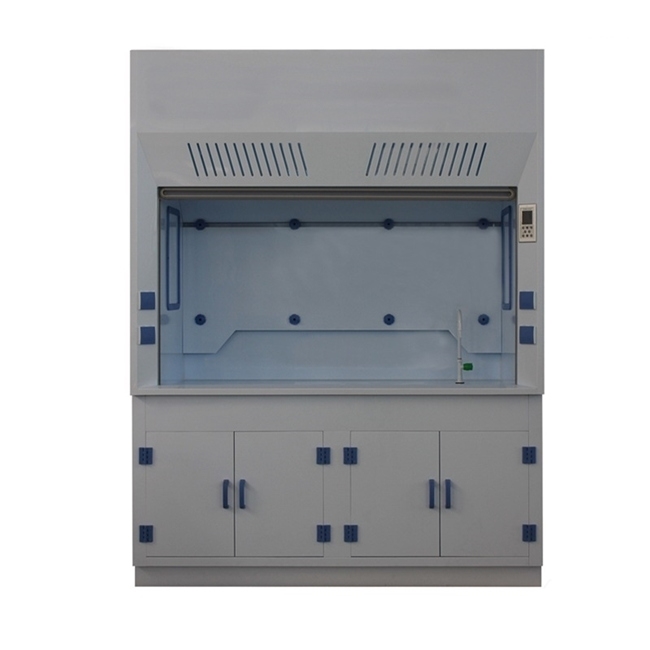
1、 The Chemical Defense Revolution of PP Material
Adopting the integrated molding process of German imported polypropylene (PP) sheet, the cabinet is constructed with a triple chemical protection system:
1. Molecular structure defense: PP molecular chains have no polar groups, and their permeability to highly corrosive reagents such as concentrated sulfuric acid and aqua regia is reduced by 92% compared to PVC;
2. Breakthrough in weather resistance: In a temperature range of -40 ℃ to+80 ℃, the deformation rate of the cabinet is ≤ 0.3%, far exceeding the industry average of 2.1% for traditional steel cabinets.
A comparative experiment conducted in a key laboratory showed that after continuous storage of concentrated hydrochloric acid for 12 months, the quality loss rate of the PP cabinet was only 0.07%, while the corrosion depth of the traditional epoxy resin coated steel cabinet had reached 1.2mm.
2、 The Fluid Dynamics Art of Intelligent Ventilation
The air flow inside the cabinet follows the 'double vortex' path optimized by CFD simulation:
1. Air intake system: The bottom adjustable louvers introduce clean air at a 15 ° angle, forming an airflow barrier attached to the ground;
2. Exhaust matrix: The top 72 micro vortex fans form an intelligent array, which can automatically adjust the speed (300-1800rpm) according to the VOCs concentration inside the cabinet;
3. Pressure balance: The pressure sensor monitors the pressure difference inside and outside the cabinet in real time, ensuring dynamic adjustment within the range of 0-50Pa to prevent harmful gas leakage.
Actual test data shows that this design reduces the concentration of benzene derivatives in the cabinet by 83% compared to traditional fume hoods, and saves an annual purification energy consumption of 42000 kWh (based on a laboratory scale of 100 cabinets).
3、 Molecular level interception with five levels of purification
The composite purification module built into the exhaust duct forms a defense line:
1. Initial interception: G4 grade fiberglass filter captures particles ≥ 5 μ m with an efficiency of 99%;
2. Chemical adsorption: The saturated adsorption capacity of the modified activated carbon layer for organic solvents such as acetone and dichloromethane is increased to 280mg/g;
3. Catalytic decomposition: The nano TiO2 photocatalytic module can decompose formaldehyde into CO2 and H2O under UV-A irradiation, with a mineralization rate of ≥ 95%;
4. Biological filtration: The plant fiber filter has a specific adsorption capacity of 12mg/g for antibiotic substances;
5. Terminal protection: The H14 HEPA filter has a retention efficiency of 99.995% for 0.3 μ m particles.
After third-party testing, the purification efficiency of the system for DNA synthesis reagent C ₂ HF ∝ O ₂ reached 99.9997%, meeting the cleanliness requirements of PCR laboratories.
From breakthroughs in materials science to innovations in fluid mechanics, PP ventilated and air purifying drug cabinets are redefining the boundaries of laboratory safe storage. When the concept of green chemistry is deeply integrated with intelligent manufacturing technology, these silent 'breathing shields' not only protect the health of researchers, but also build a reliable ecological barrier for humanity to explore the unknown journey.