-
E-mail
515546856@163.com
-
Phone
18800567577
-
Address
Guangsheng Technology Co., Ltd., No. 158 Chaoyang Road, Chaoyang Village, Donggang Town, Xishan District
Guangsheng Technology Wuxi Co., Ltd
File security guard under multiple protections of double door fireproof filing cabinet
Date: 2025-10-20Read: 2
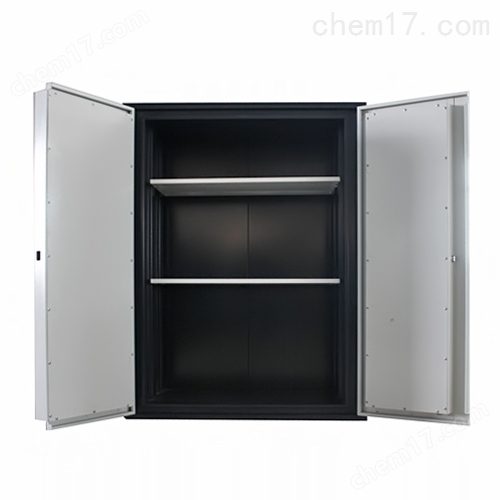
Double door fireproof filing cabinet is a professional storage device designed specifically to protect paper documents and electronic storage media. Through special materials and structural design, it provides reliable protection for important information in abnormal environments such as fires.Its core functions and values are reflected in three dimensions: fire resistance, structural safety, and scene adaptability.
1、 Fireproof performance: the core technology for blocking high temperatures
The fire prevention standards for double door fireproof filing cabinets are much higher than those for ordinary filing cabinets. The international mainstream standard requires cabinets to maintain an internal temperature below 180 ℃ for 1 hour in a fire environment with an external temperature of up to 1000 ℃, ensuring that the paper does not carbonize and the handwriting is clear and legible. The implementation of this performance relies on dual technologies:
1. Flame retardancy of materials: The cabinet is made of 1.2mm thick high-quality cold-rolled steel plate, which is stamped and formed by CNC molds, and filled with special fireproof materials to form a thermal insulation barrier;
2. Structural sealing: The double-layer steel plate is filled with insulation material of 66-80mm, and the cabinet door is equipped with a three-point linkage lock and piano hinge, with an opening and closing angle of 180 °, ensuring no gap infiltration under high temperature.
Some advanced models have passed UL certification in the United States or JIS certification in Japan, with a fire rating increased to 2 hours, which can cope with more severe fire scenarios.
2、 Structural safety: dual guarantee of anti-theft and durability
In addition to fire prevention, the double door design balances theft prevention and durability:
1. Anti theft mechanism: The cabinet door is equipped with dual key locks or electronic password locks, and can be optionally equipped with mechanical password locks to enhance security;
2. Corrosion resistance: The cabinet is treated with full tunnel phosphating and oxidation prevention, and the surface is covered with epoxy resin electrostatic spraying. There is no rust in the salt spray test, and it is suitable for humid or corrosive environments;
3. Flexibility adjustment: The internal layer board can freely adjust its height to meet the storage needs of files of different sizes. Some models support customization of the number of layer boards.
3、 Scenario adaptation: Multi domain information security solutions
Double door fireproof filing cabinets are widely used in scenarios with strict requirements for information security:
1. Financial industry: storing confidential documents such as contracts, bonds, and transaction records;
2. Government and research institutions: protect policy documents, experimental data, and other non replicable materials;
3. In the field of healthcare and archives: storing medical records, historical archives, and other materials that require long-term preservation.
Its dual door structure facilitates quick access to a large number of files, and through integrated design of fire prevention, theft prevention, moisture prevention, and dust prevention, it has become the core equipment for information asset management.
4、 Technological Evolution: From Single Protection to Comprehensive Security
With the upgrading of security requirements, devices are developing towards intelligence and modularity. Some products integrate temperature and humidity sensors and remote monitoring systems, which can upload real-time environmental data inside the cabinet to the cloud; Another model supports anti magnetic function to resist external magnetic field interference and protect electronic media such as disks and USB drives.
Conclusion
The double door fireproof filing cabinet takes technology as the shield and scenario as the outline, and builds the last line of defense for paper and electronic materials under the threat of fire. Its value is not only reflected in the hard indicators of fire performance, but also in becoming a crucial "security infrastructure" in modern information management through structural optimization and functional expansion.