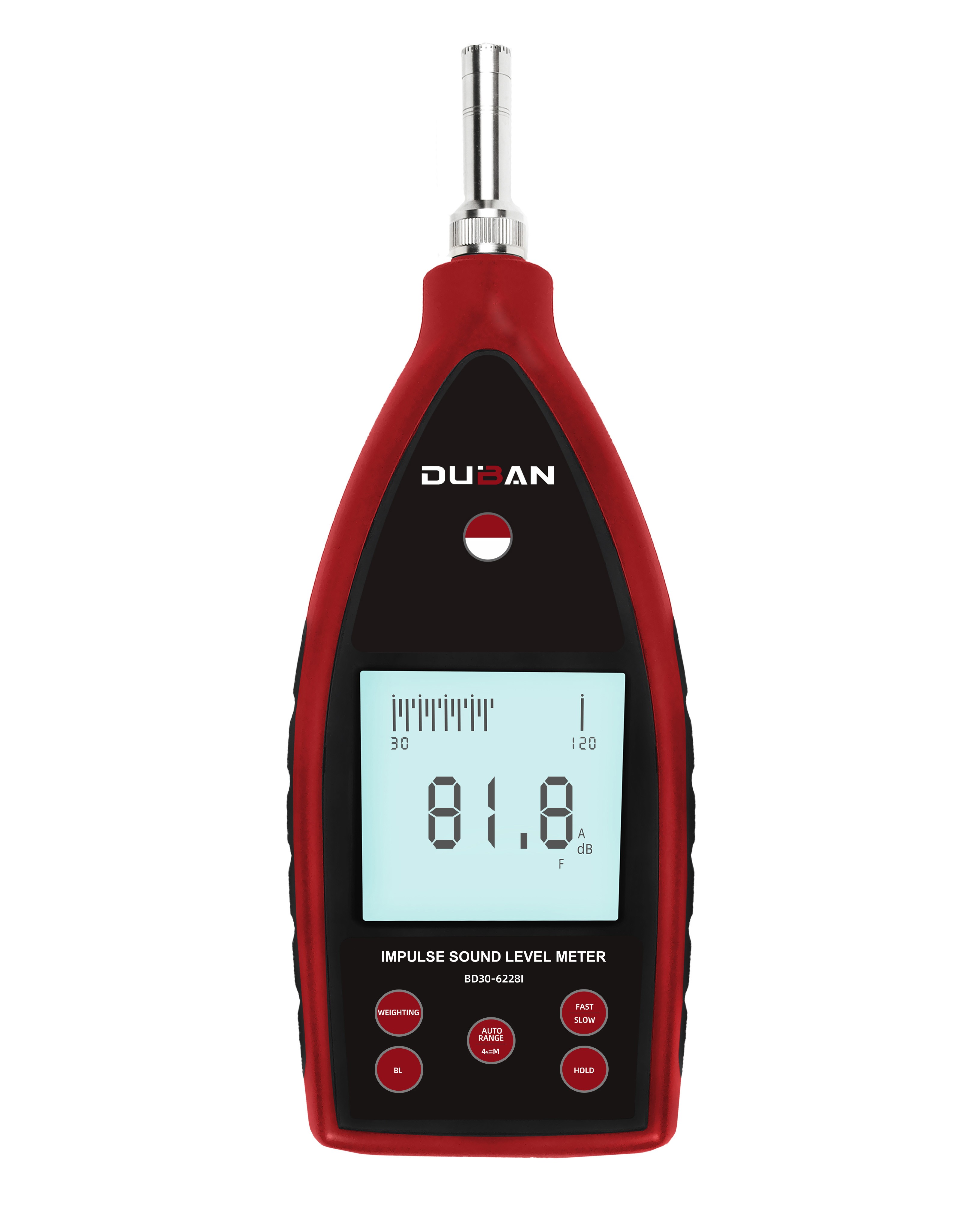
Pulse sound level meterSpecially designed to capture instantaneous noise such as blasting, impact, and collision, widely used in industrial testing, environmental monitoring, public safety, and other scenarios. To ensure the accuracy and reliability of measurement data, it is necessary to strictly follow the following usage precautions to ensure that every instantaneous noise detection is accurate and error free.
Before measurement, it is essential to calibrate and prepare the instrument. Use a sound calibrator that meets the standard to calibrate the instrument and ensure that the sensitivity meets the standard; Check if the sensor probe is clean and undamaged to avoid dust and oil contamination affecting signal reception. At the same time, select the appropriate range and frequency weighting (commonly A-weighting) according to the measurement scenario, switch to pulse measurement mode, set a reasonable trigger threshold, and prevent missed or false triggering.
During the measurement process, it is necessary to maintain a standardized operating posture. Place the sensor vertically towards the noise source, 1-3 meters away from the source and unobstructed, to avoid body obstruction of the probe when holding the instrument; Stay away from reflective surfaces such as walls and floors to reduce echo interference. Avoid touching the instrument or probe during measurement to prevent measurement errors caused by human vibration. After a single measurement is completed, the instrument should be kept stable for 1-2 seconds to ensure complete data recording.
After measurement, timely data processing and instrument maintenance should be carried out. Accurately record measurement environment, time, location and other information for easy traceability in the future; Abnormal data needs to be measured three times to eliminate accidental errors. After use, wipe the probe with a dry soft cloth and store the instrument in a dry environment with a temperature of 20-25 ℃ and a humidity of 40% -60%, avoiding direct sunlight and severe collisions. Regularly send it to a measuring institution for calibration to extend the service life of the instrument.
Standardizing the use of pulse sound level meters can ensure accurate data and fully leverage their advantages in capturing instantaneous noise, providing reliable data support for noise control and compliance testing.