-
E-mail
grt_salea@163.com
-
Phone
13792870018
-
Address
Wanke Tiandi, Xinli Street, Dongli District
Glite (Tianjin) Technology Co., Ltd
Static friction testing machine quantifies the "static" force to ensure safety and quality
Date: 2025-09-20Read: 0
In industrial manufacturing and materials science, the resistance generated on the contact surface between two objects in contact when they are about to slide relative to each other but have not yet slid is called static friction. This seemingly simple force is the cornerstone of the safety and functionality of countless products and engineering structures.The static friction testing machine is a precision instrument specifically designed for precise measurement of this key parameter.Its role goes far beyond providing data, but runs through the entire process of research and development, quality control, and safety assessment.
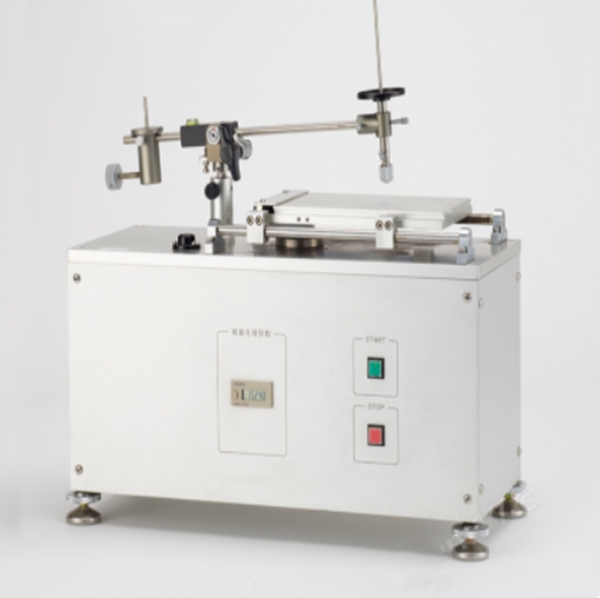
1、 Core function: Accurate measurement of static friction coefficient
The fundamental mission of a static friction testing machine is to accurately measure the static friction coefficient (μ s) between two materials under controllable experimental conditions. This coefficient is the ratio of static friction force (Fs) to vertical normal pressure (N) (μ s=Fs/N), and is a dimensionless physical constant that characterizes the friction characteristics of the material surface.
By simulating different pressures, velocities, temperatures, and surface states (such as dry, wet, and lubricated), the testing machine can obtain the static friction coefficient under different operating conditions, providing core data input for material selection and engineering design.
2、 The key role in product development and design
1. Material screening and pairing optimization:
In the early stages of product design, engineers need to screen out combinations of materials that meet the required friction performance. For example, in the automotive industry, by testing the static friction coefficient between brake pads and brake discs made of different materials, the pairing that can provide the best braking efficiency can be selected to ensure braking safety from the source.
2. Process improvement and surface treatment effect evaluation:
Many surface treatment processes, such as spraying, coating, texture etching, and polishing, can significantly alter the surface friction characteristics of materials. The static friction testing machine can quantitatively evaluate the effectiveness of these processing techniques and provide data support for improving production processes. For example, testing the static friction coefficient of floor tiles after different anti slip treatments to ensure that they meet safety standards.
3、 The core role in quality control and safety compliance
1. Product quality consistency control:
For many products, stable friction performance is a fundamental quality requirement. The production line can be sampled regularly and tested using this testing machine to ensure that the friction coefficient of the product remains stable within the preset range. For example, checking whether the roll of packaging film has appropriate static friction to prevent slipping or excessive adhesion during transportation.
2. Meet safety regulations and standard certifications:
Numerous industry standards and national mandatory safety regulations have clear requirements for the anti slip performance of products. Static friction testing machine is a necessary equipment for conducting compliance testing and obtaining certification.
① Floor and tiles: They must undergo static friction testing to ensure their slip resistance in dry and wet environments and prevent pedestrians from slipping.
② Sports venue ground: The static friction coefficient of the track needs to be within a specific range, which can provide sufficient grip to ensure sports performance, and also provide appropriate cushioning in case of falls to reduce abrasions.
4、 The Deep Role in Basic Research and Failure Analysis
1. Scientific research: used to study the mechanism of tribology, explore the inherent laws between material composition, surface morphology, environmental conditions, and static friction force.
2. Accident diagnosis and failure analysis: When accidents such as conveyor belt slippage, packaging collapse, equipment displacement, etc. occur, this testing machine can be used to reproduce the working conditions, measure the actual friction coefficient of the materials involved in the accident, and provide scientific evidence for analyzing the root cause.
summary
The function of a static friction testing machine is to transform the vague sensory experience of "not easily sliding" into precise and quantifiable engineering parameters. It is like a rigorous "safety inspector" and "quality guardian", providing crucial data assurance for ensuring the reliability, functionality, and safety of products from micro material matching to macro product safety. It is an important tool for driving industrial manufacturing towards higher precision and safety.