-
E-mail
grt_salea@163.com
-
Phone
13792870018
-
Address
Wanke Tiandi, Xinli Street, Dongli District
Glite (Tianjin) Technology Co., Ltd
Material reshaping engine for steam flat vulcanizing machine under high temperature and high pressure
Date: 2025-07-22Read: 0
The steam flat vulcanizing machine is the core equipment in the production of rubber and plastic products. Through the synergistic effect of steam heating and hydraulic pressure, rubber or plastic molecules undergo cross-linking reactions in high temperature and high pressure environments, ultimately achieving physical property enhancement and shape solidification of materials. Its working principle can be disassembled into four core modules: steam heating, hydraulic pressurization, vulcanization reaction, and automation control.
1、 Steam heating: the builder of a uniform thermal field
The steam heating system generates high-temperature steam through a boiler, which is transported through pipelines to the serpentine pipes inside the hot plate of the vulcanizing machine. Compared to electric heating, steam heating has the advantages of high thermal conductivity efficiency and uniform temperature distribution. The temperature difference on the surface of the hot plate can be controlled within ± 1 ℃. Taking conveyor belt production as an example, the steam pressure is usually set at 0.6-0.8MPa, corresponding to a hot plate temperature of 145-160 ℃. This temperature range can ensure sufficient cross-linking of rubber molecules and avoid material degradation due to overheating. The uniformity of steam heating is crucial for product quality. If there is a local temperature difference in the hot plate, it can lead to uneven vulcanization, which in turn can cause defects such as cracking and inconsistent density in the product.
2、 Hydraulic Pressure: The Physical Driver of Molecular Crosslinking
The hydraulic system injects hydraulic pressure into the oil cylinder through an oil pump, drives the plunger to push the lower hot plate up, and closes with the fixed upper hot plate to form a sealed chamber. Taking the 2000 × 2500mm vulcanizing machine as an example, its clamping force can reach 9MN, and the unit area pressure can reach 24MPa, far exceeding the 8-10MPa of ordinary molding equipment. The high-pressure environment ensures that the rubber fully fills the mold cavity during the vulcanization process, while suppressing the generation of bubbles, resulting in an increase in product density to 1.2-1.5g/cm ³. The stability of hydraulic systems directly affects the dimensional accuracy of products. Modern equipment often uses proportional pressure flow composite valves for control, and pressure fluctuations can be controlled within ± 0.1MPa.
3、 Sulfurization reaction: the process of qualitative change in material properties
When rubber is heated to 140-180 ℃ and subjected to high pressure, crosslinking agents such as sulfur or peroxide begin to decompose and react with the active sites on the rubber molecular chain, forming a three-dimensional network structure. Taking natural rubber as an example, its vulcanization process can be divided into four stages: induction period (decomposition of crosslinking agent), pre sulfuration period (initial cross-linking of molecular chains), normal sulfuration period (peak cross-linking density), and over sulfuration period (cross-linking bond breakage). The steam flat vulcanizing machine precisely controls the temperature and pressure to complete the vulcanization of materials during the positive sulfurization period. At this time, the tensile strength of the product can reach 25-30MPa, and the elongation at break is maintained at 400-600%, significantly improving the aging resistance.
4、 Automated control: precise management of process parameters
Modern equipment integrated with PLC control system can achieve closed-loop control of temperature, pressure, and time. Taking a certain model of equipment as an example, its control interface can be set with multiple vulcanization programs: in the first stage, the temperature is raised to 120 ℃ at a rate of 10 ℃/min and held for 5 minutes for pre vulcanization; The second stage is to raise the temperature to 150 ℃ at a rate of 5 ℃/min and maintain it for 20 minutes to complete the main vulcanization; In the third stage, cooling water is introduced to reduce the temperature to below 80 ℃, while the hydraulic system is depressurized and the mold is opened. The system also has data recording function, which can trace the vulcanization curve of each batch of products and provide a basis for process optimization. In addition, the addition of explosion-proof design, automatic exhaust, pressure compensation and other functions further enhances the safety and reliability of the equipment.
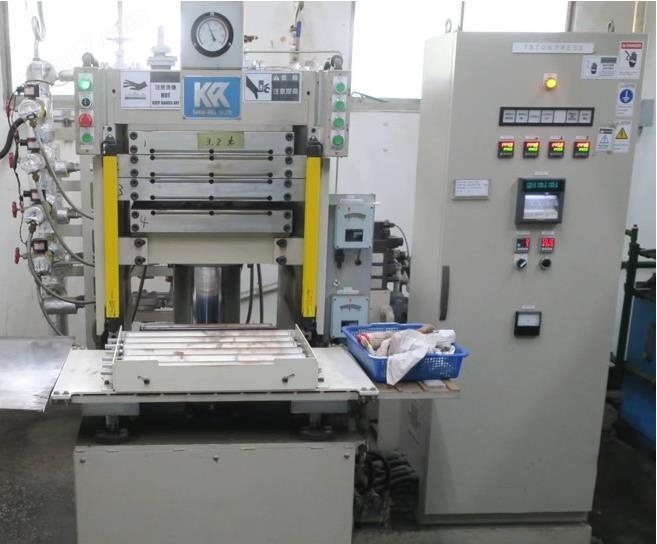
The steam flat vulcanizing machine provides a controllable vulcanization environment for rubber and plastic products through the precise combination of steam heating and hydraulic pressure. From conveyor belts to seals, from car tires to medical catheters, their applications cover various fields of the rubber and plastic industry. With the development of materials science and automation technology, steam flat vulcanizing machines are evolving towards higher precision, higher efficiency, and lower energy consumption, continuously promoting the upgrading of rubber and plastic product performance and quality.