-
E-mail
info@phenom-china.com
-
Phone
18516656178
-
Address
Room T5705, Shanghai Hongqiao Libao Plaza, No. 88 Shenbin Road, Hongqiao Town, Minhang District, Shanghai
Funa Scientific Instruments (Shanghai) Co., Ltd
What does the scanning electron microscope steel inclusion analysis system look like now after three iterations and 28 years of research and development
Date: 2025-11-06Read: 2
As the steel industry enters the era of low profits, producing high-quality clean steel with higher added value has become a demand for the development of steel enterprises themselves. Therefore, the research on clean steel technology and its production process control technology has become an important topic for various steel enterprises.
The key to producing clean steel lies in reducing impurities in the steel, and the key to controlling impurities lies in accurately and quickly determining impurities in such steel and optimizing the corresponding steelmaking process.
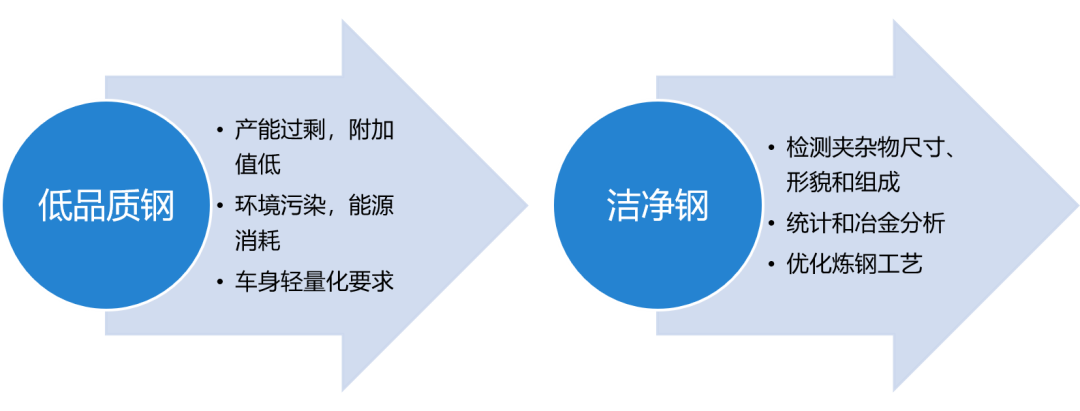
Analyzing and determining non-metallic inclusions in steel is a complex task that requires quantitative analysis of a large number of inclusions present in the steel sample, measuring their size, morphology, as well as determining their chemical composition, distribution, and trends of change.
At present, commonly used inclusion analysis methods (such as metallographic analysis, chemical analysis, scanning electron microscopy, electrolytic methods, etc.) only reflect the properties of non-metallic inclusions in steel from a certain aspect. However, these methods not only rely on manual operation, which is time-consuming and laborious, but also lack statistical significance. Moreover, the detected data is not comprehensive and cannot provide the required inclusion information for production departments.
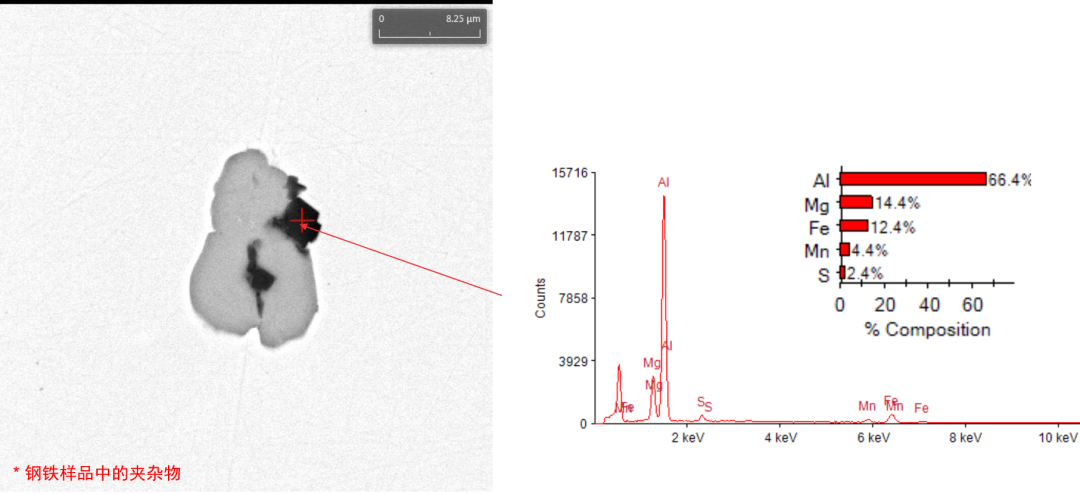
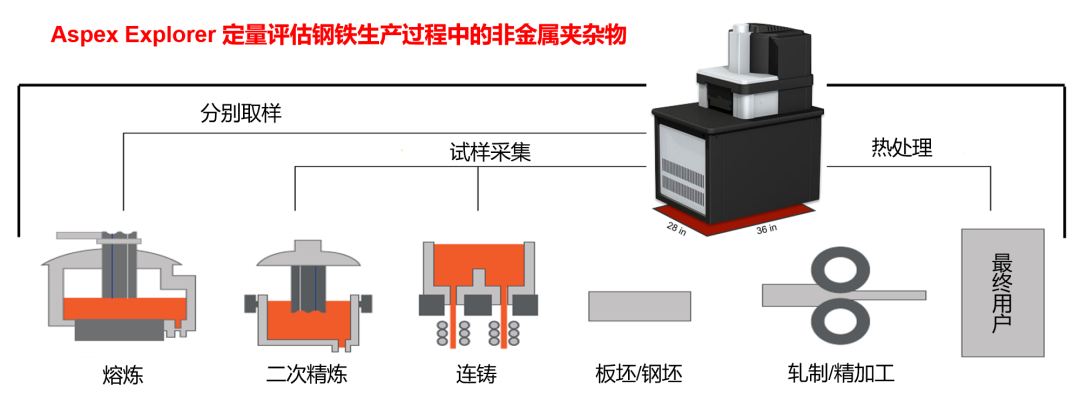
Among various inclusion analysis techniques, the most accurate and reliable method currently used both domestically and internationally is to use a fully automated and integrated rapid inclusion analyzer to detect and analyze inclusion particles——The Aspex series products produced by the former American FEI company.
Due to its fully automated and integrated fast inclusion analysis and reporting function, it has been widely recognized in the global steel industry, and there have been numerous successful cases of its application in steel production reported in literature.
Now, Aspex has gone through 28 years of development history and upgraded to Particle X. Let's take a look at the entire development history.
In 1992, ASPEX was founded
Since its inception, ASPEX has been committed to developing fully automated scanning electron microscopes. The ASPEX personal SEM launched focuses on automated particle analysis based on SEM+EDS, meeting customers' particle analysis needs for particle size, morphology, and elemental composition, and emphasizing providing customers with overall solutions. Today, ASPEX has gone through 28 years of development and accumulated rich experience in software/hardware and industry applications.
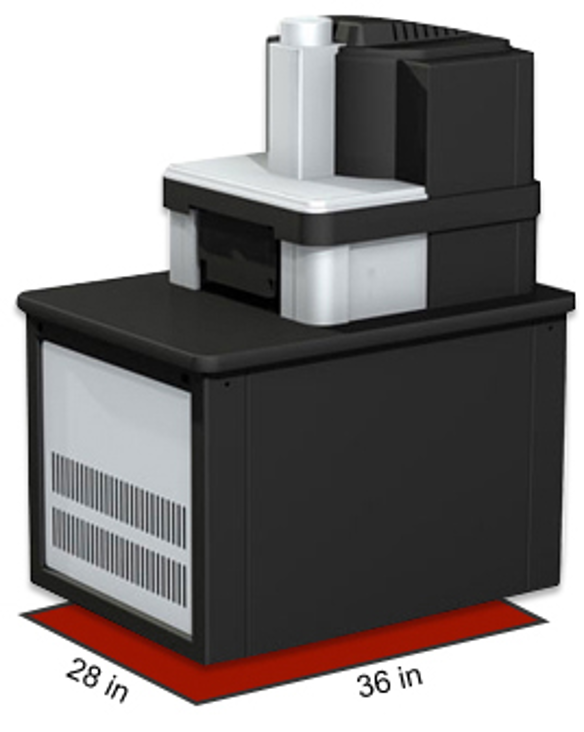
2017- Upgraded to Explorer 4
In 2012, FEI acquired ASPEX and combined its decades of experience in the field of electron microscopy with ASPEX to upgrade its products. In 2017, ASPEX underwent a major hardware upgrade: upgrading from tungsten filaments to ultra long life crystal filaments, greatly reducing the frequency of filament replacement; The vacuum system has been upgraded to a three compartment separation design, and vacuuming only takes 30 seconds; The control system has been upgraded to a high-precision automatic motor platform, which moves more quickly and accurately.

3. 2019- Upgraded to ParticleX
Due to the inconvenient operation of using Aspex and Explorer4 as a regular electron microscope. Therefore, Explorer 4 added a conventional scanning electron microscope operating system on the basis of the original automation system and upgraded to a dual system Particle X. ParticleX can not only automatically analyze steel inclusions, but also serve as a conventional scanning electron microscope to analyze fracture morphology and perform operations such as energy spectrum surface scanning.

To sum up, ASPEX was initially positioned as a fully automated scanning electron microscope in 1992; In 2012, it merged with FEI and underwent a major hardware upgrade in 2017, renaming it Explorer4; The upgrade to dual system ParticleX in 2019 greatly improved the user experience.

With the development of the steel industry, the demand for producing high-quality clean steel continues to increase. It is increasingly important to effectively utilize fast and efficient detection technology for fully automatic analysis, statistical analysis, and reporting of non-metallic inclusions in a large amount of steel.
Due to its ability to quickly and accurately analyze statistical data on a large number of inclusions, Particle X (and its predecessor products) inclusion analysis technology has been widely and successfully applied in many foreign steel enterprises, and has become a modern analysis method for analyzing and controlling non-metallic inclusions in steelmaking processes.