-
E-mail
info@phenom-china.com
-
Phone
18516656178
-
Address
Room T5705, Shanghai Hongqiao Libao Plaza, No. 88 Shenbin Road, Hongqiao Town, Minhang District, Shanghai
Funa Scientific Instruments (Shanghai) Co., Ltd
Detection and Analysis of Metal Foreign Bodies in Lithium Iron Phosphate | Safety Risks of Lithium Batteries and Fully Automated Scanning Electron Microscopy Detection Scheme
Date: 2025-11-20Read: 1
01【The hazards of metal foreign objects to the safety of lithium batteries
Lithium iron phosphate cathode material has the advantages of excellent thermal stability, good cycle life, electrochemical stability, and environmental friendliness, making it one of the ideal cathode materials in the field of power batteries. But when metal impurities are introduced into lithium iron phosphate materials, it can seriously damage the lifespan and safety of the battery.
Common metal foreign objects include iron, nickel, copper, zinc, chromium, etc. During the battery formation stage, metal foreign objects will first oxidize at the positive electrode and then reduce at the negative electrode. When the metal element accumulates to a certain extent at the negative electrode, dendrites will form, causing membrane perforation and internal short circuit of the battery, increasing the self discharge rate of the battery. In severe cases, it may even cause battery fire and explosion, affecting the safety performance of the battery.

Schematic diagram of membrane perforation caused by accumulation of metal foreign objects

Copper metal causes battery short circuit (a) Scanning electron microscopy image (b) Distribution of various elements
02【Sources of metal foreign objects and how to control them
1) Impurities generated from raw materials during the sintering process
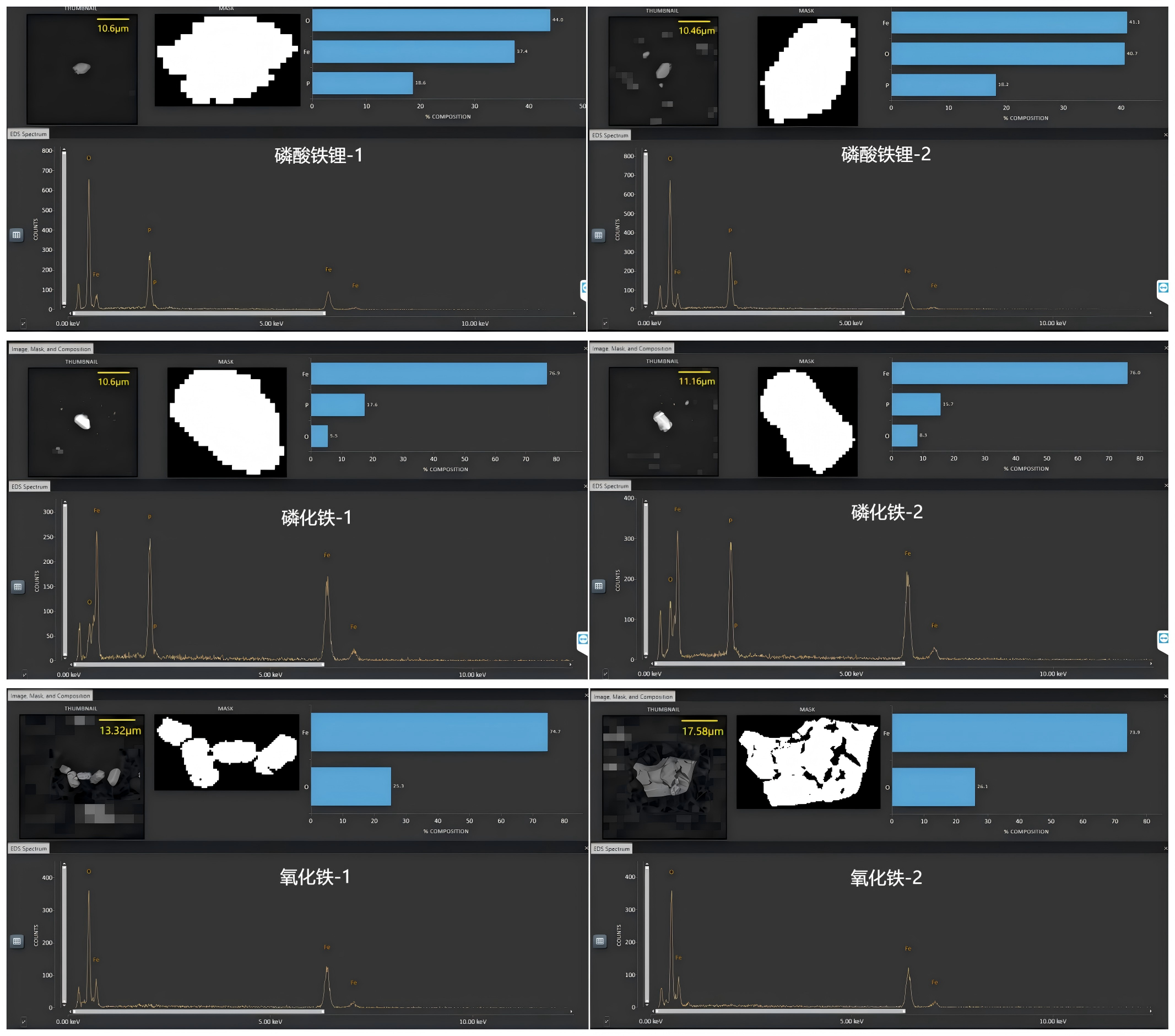
During the synthesis of lithium iron phosphate (LiFePO), a small amount of impurities such as γ - FeO, FeP, FeP, and FePO are generated. Elemental iron is also generated by the reduction of Fe at 500-700 ℃ in a reducing atmosphere. The presence of these impurities can reduce the specific capacity and energy density of the material. Side reactions such as iron dissolution in the electrolyte can affect the service life and safety performance of the battery.
2) Foreign objects from the production line and environment during the manufacturing process
There are two main sources of metal foreign objects in the production line: first, direct contact between equipment and materials (direct introduction); The second is the introduction of metal particles from the air into the material (indirect introduction). Below is a detailed analysis of the differences between the two introduction methods:
a. 直接引入
The main processes of the positive electrode material production line include mixing, roasting, and crushing, involving equipment such as mixers, roller kilns, and crushers. Generally speaking, any metal components on the equipment that come into direct contact with the material may pose a risk of direct introduction. Among them, components that have continuous relative motion with the material are more likely to experience wear, which is the red line area and requires special protection; Components that do not have continuous relative motion with materials also require necessary protective measures.
b. Indirect introduction
The sources of indirect introduction are more complex, and airborne debris may come from debris generated by equipment component wear, external environment, or even personnel, making it more difficult to control.
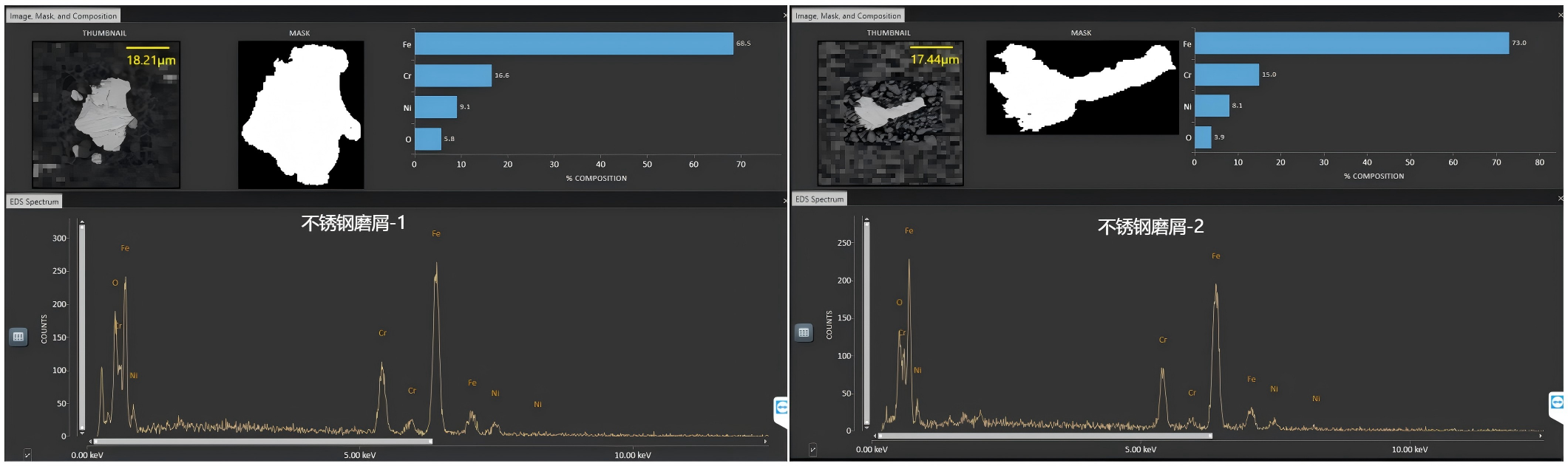
There are several general rules for the protection of metal foreign objects in the design of positive electrode material production lines: all equipment and parts in direct contact with materials on the production line must be made of non-metallic materials, or sprayed with coatings on the surface of metal substrates for protection.

In order to prevent foreign objects from entering the positive electrode material workshop from the external environment, control measures are generally taken from the following aspects:
The workshop doors and windows are sealed, and a fresh air system is installed. The fresh air is filtered by a high-efficiency filter before entering the workshop. The fresh air volume is slightly greater than the exhaust volume, and the workshop maintains a slight positive pressure of+3 Pa~+5 Pa;
The workshop gate adopts a double-layer chain structure and is equipped with an air shower room;
Special transfer tools or vehicles are used in the workshop, and external transfer tools or vehicles are prohibited from entering the workshop;
Foreign personnel entering and leaving the workshop must change their clothing and shoes, and it is prohibited to bring metal items such as watches, keys, coins, etc. into the workshop;
The workshop floor is regularly demagnetized using permanent magnet rods;
Develop corresponding regulations and checklists, regularly inspect the replacement of fresh air filters;
Place specialized containers in the workshop, regularly monitor the level of airborne objects in the environment, and promptly investigate and rectify any abnormalities.
03 [How to detect metal foreign objects]
So, how should metal foreign objects be detected? Phenom Particle X, based on scanning electron microscopy and energy dispersive spectroscopy, can automatically identify, analyze, classify and statistically analyze metal impurity particles, providing customers with fast, accurate and reliable quantitative data support for research and production.
Its working principle is to identify particles through the brightness contrast of backscatter imaging, and then perform energy spectrum composition analysis on the particles, and automatically classify them based on their morphology and composition information.
The following table shows the results of collecting samples using sieving method and testing metal impurities in lithium iron phosphate using Phenom ParticleX. It can be seen that in the screening method, the main material of lithium iron phosphate occupies the vast majority of particles, with an average oxygen content of 44.2%, while the content of iron phosphate and iron oxide is relatively low. The oxygen content in iron phosphate is relatively low, only 10.6%, while iron oxide does not contain phosphorus.

Statistical results of metal foreign objects (screening method)
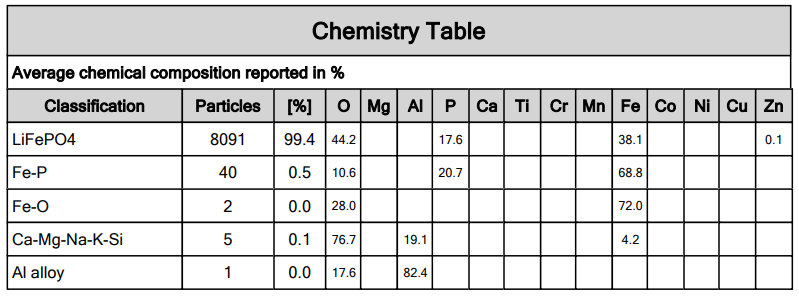
Average composition of metal foreign objects (sieving method)
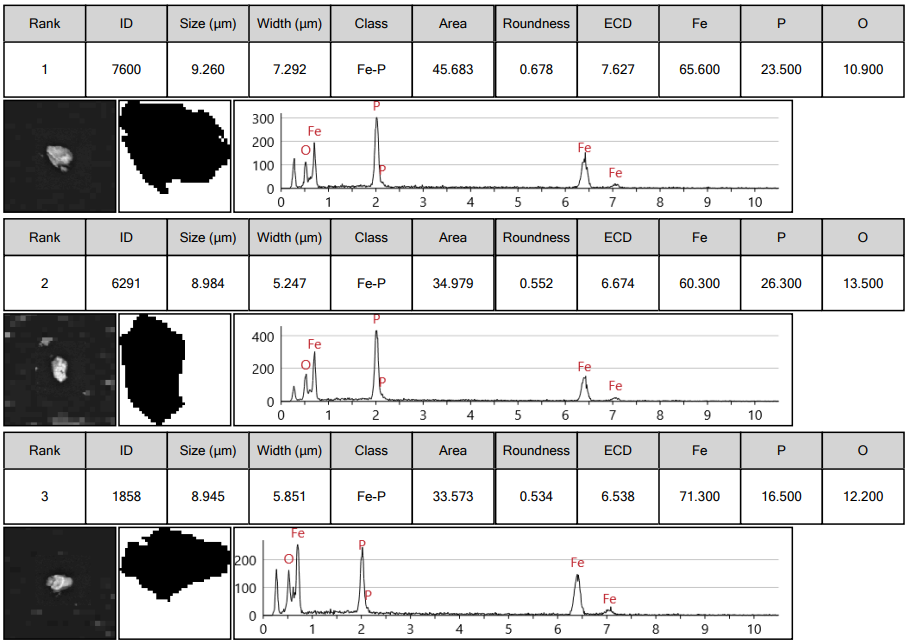
Detailed information of automatically obtained iron phosphide

Detailed information of automatically obtained iron oxide