-
E-mail
chinainfo@fesks.com.cn
-
Phone
13795339399
-
Address
2nd Floor, Building A, No. 135 Yinyu Road, Jiading District, Shanghai
Fisker Instruments (Shanghai) Co., Ltd
Guidelines and Techniques for Purchasing Online Dissolved Solid TDS Analyzer for Water Quality and Avoiding Pits
Date: 2025-09-16Read: 0
Online dissolved solids TDS analyzer for water qualityIt is a key equipment for monitoring the total amount of dissolved substances (such as inorganic salts and organic matter) in water, widely used in fields such as drinking water treatment, industrial circulating water, and environmental pollution monitoring. The measurement results directly affect water quality safety assessment and process control. When purchasing, it is necessary to avoid common "traps" and master core skills.
1、 Clear requirement: Parameter matching is the foundation
Specific requirements for application scenarios need to be clarified before procurement:
Measurement range: TDS of drinking water is usually 50-500mg/L, industrial boiler water may reach 1000-5000mg/L, and seawater can exceed 35000mg/L. If the range is too small (such as 0-1000mg/L) for monitoring seawater, it will cause sensor saturation; If the range is too large (such as 0-20000mg/L), the accuracy of monitoring purified water will be insufficient.
Accuracy and Resolution: Conventional monitoring requires an accuracy of ± 5% FS (full scale), while high-precision scenarios (such as laboratories or water treatment) require ± 1% FS. The recommended resolution is 0.1mg/L (low concentration) or 1mg/L (high concentration).
Output signal: Industrial systems typically require 4-20mA current signals or Modbus RTU protocol to interface with PLCs, while laboratories may only require RS232/USB data transmission.
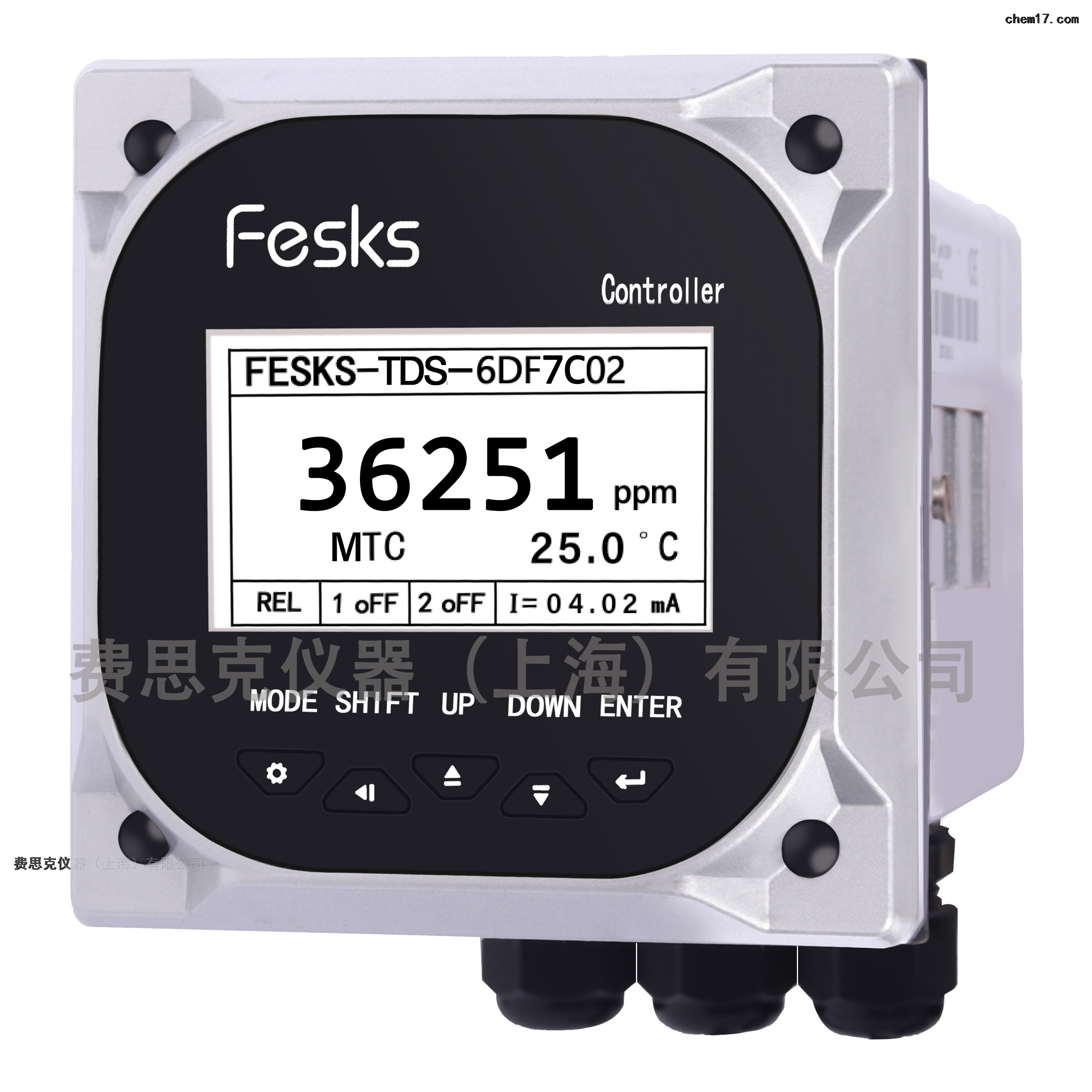
2、 Technical principle: Choose the appropriate detection method
TDS analyzers are mainly divided into electrode method and optical method:
Electrode method (conductivity conversion): By measuring the conductivity (EC) of water, and then calculating the TDS value according to the formula TDS=K × EC (K is the conversion coefficient, usually 0.5-1.0, depending on the water quality composition). The advantages are fast response (≤ 10 seconds) and low cost, but it is easily affected by the types of ions in water (such as Na ⁺ and Ca ² ⁺, which have different contributions to conductivity), and requires regular calibration (recommended once a week).
Optical method (turbidity compensation): indirectly estimating TDS by measuring the scattering of light by particles in water, suitable for water samples with high suspended solids (such as sewage), but with low accuracy (± 10% FS) and requiring frequent cleaning of the optical window.
3、 Key points for avoiding pitfalls: Details determine success or failure
• Calibration convenience: Prioritize models that support automatic calibration (built-in standard solution or one click calibration through buttons) to avoid errors caused by manual adjustment; Some models support "dry calibration" (no standard solution required, drift compensated through algorithms).
• Maintenance costs: The electrode method requires regular replacement of electrodes (usually every 6-12 months, depending on the degree of water pollution), the optical method requires cleaning of lenses (weekly), and consumable prices (such as electrode unit price and cleaning solution cost) need to be inquired when purchasing.
Environmental adaptability: If installed outdoors or in humid environments, equipment with a protection level of IP65 or above (dustproof and waterproof) should be selected; In high temperature environments (>50 ℃), it is necessary to confirm the temperature tolerance range of the sensor (usually ≤ 80 ℃) to avoid electronic component failure caused by high temperatures.
Brand and after-sales service: Priority should be given to brands with good market reputation (such as Hash, Mettler Toledo), and the manufacturer should be confirmed to provide installation guidance, regular calibration services, and 24-hour technical support (to avoid long repair cycles in case of malfunctions).
4、 Practical Skills: Trial and Contract Terms
Before procurement, the manufacturer can be requested to provide a prototype for trial use (to test the measurement stability and response speed of actual water samples). The contract should specify clauses such as "return and exchange if the measurement error exceeds the calibration value ± 10%" and "free consumables provided during the calibration period" to avoid disputes in the later stage.
Mastering these pitfalls avoidance techniques can help users choose cost-effective and low maintenance optionsOnline dissolved solids TDS analyzer for water qualityTo provide reliable guarantee for water quality safety monitoring.