-
E-mail
qianjuan@laserdl.cn
-
Phone
13451510854
-
Address
Building A1, Phase 1.1, Intelligent Manufacturing Industrial Park, Dachang Hui Autonomous County, Langfang City, Hebei Province
Deresheke (Langfang) Technology Co., Ltd
Chasing the Light Classroom | Surprised! This' artificial little sun 'accurately replicates the solar spectrum
Date: 2025-10-24Read: 0
Is the photovoltaic test case stuck on rainy days? Do indoor plants always lack the "sun flavor"? Has the material aging test been "pitted" by natural light? Don't panic! Today, Xiaozhui is going to unveil a black technology that can accurately replicate the solar spectrumLED combination steady-state light sourceIt can be called walking“Artificial small sun”Help you bring the 'sun' home!
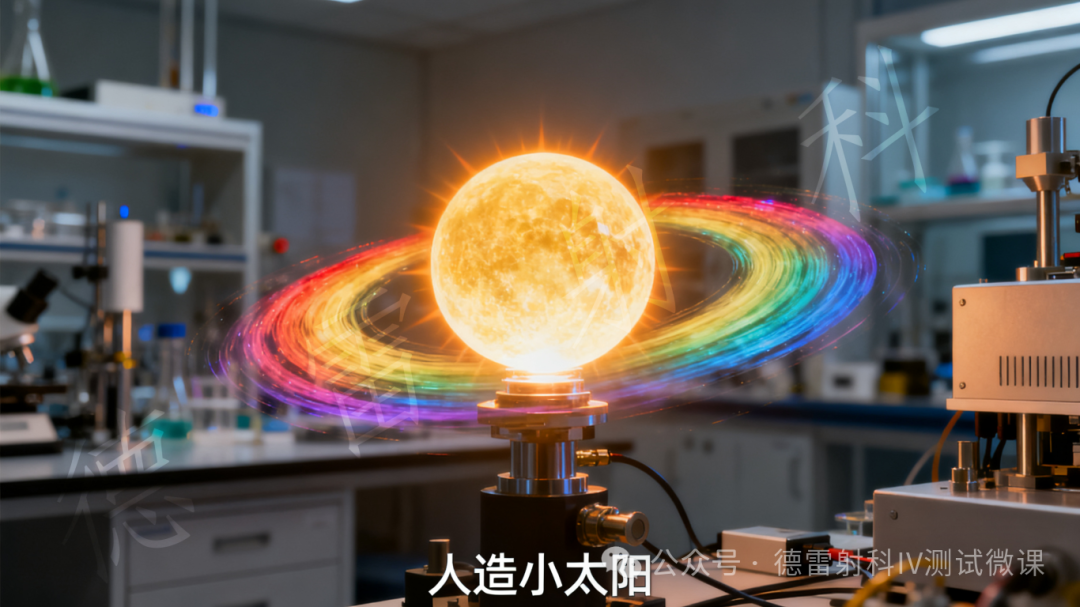
The 'solar spectrum' we speak of hides the energy code of 300-1200nm - fromdeep ultravioletFrom visible light to near-infrared, whether it's photovoltaic power generation, plant growth, or material experiments, they all rely on this' formula of light '.
But to create an 'artificial sun', you have to pass three levels:Spectral matching error should be ≤ 12.5% (up to IEC A+level standard)、The illumination must be stable at 1000W/m ²、Radiation non-uniformity ≤ 1% (up to IEC A+level standard)Previously, mercury lamps and tungsten halogen lamps either did not cover the entire wavelength range or had unstable performance, making it impossible to withstand.
Fortunately, LED technology saved the scene! The combination of multi band LED and laser diode not only replicates the full spectrum, but also comes with an efficient, long-life, and precisely controllable buff, directly bringing the "artificial sun" from the laboratory to practical scenarios.

4 major technical dimensions to solve replication problems
To cover the entire range of 300-1200nm, it is necessary to provide precise lighting for each band: 310nm UVC LED is used to complete the deep ultraviolet region; The visible light region is smoothly connected by 465nm blue light, 525nm green light, etc; In the near-infrared region, 760nm and 850nm LEDs are paired with 1150nm laser diodes. Connect 1-3 light sources of each type in series, and the 'Sun Formula' will be activated together.

Drive control: Install a "voltage regulator" on the light source
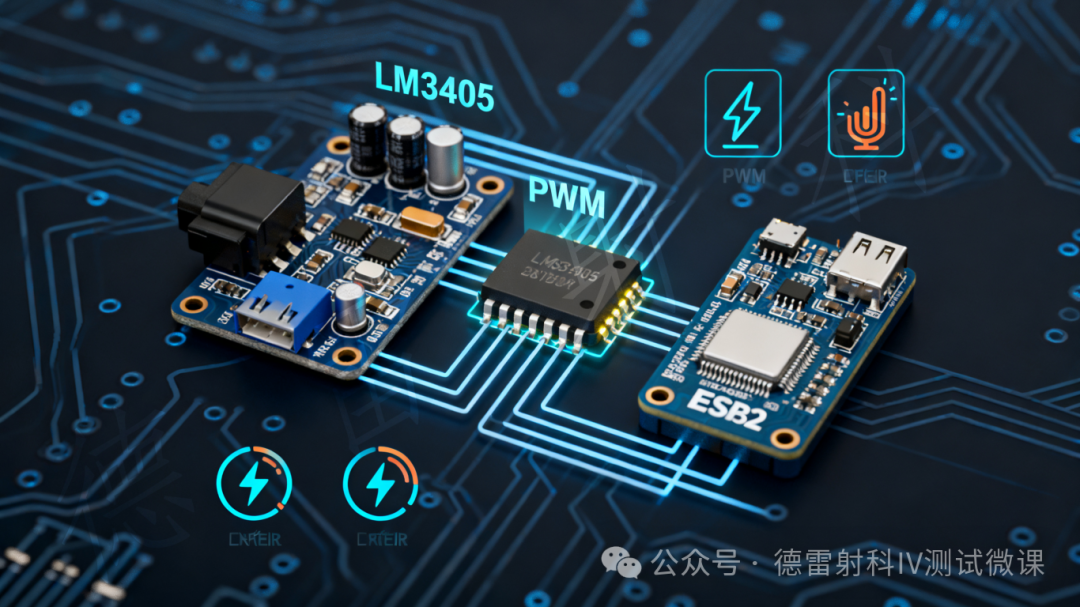
The stability of the light source depends entirely on the "field control force" of the electronic system. There are three guarantees here: using LM3405 chip for constant current drive to prevent voltage fluctuations from affecting light intensity; By using PWM dimming technology to adjust the duty cycle of each band and accurately match the spectrum; Let the ESP32 microcontroller monitor the temperature in real time and dynamically compensate - it should be noted that for every 10 ℃ increase in LED junction temperature, the performance may drop by 5%, and the temperature control must be fully set!
Optical Design: Say Goodbye to 'Rainbow Spot', Achieve Full Uniformity
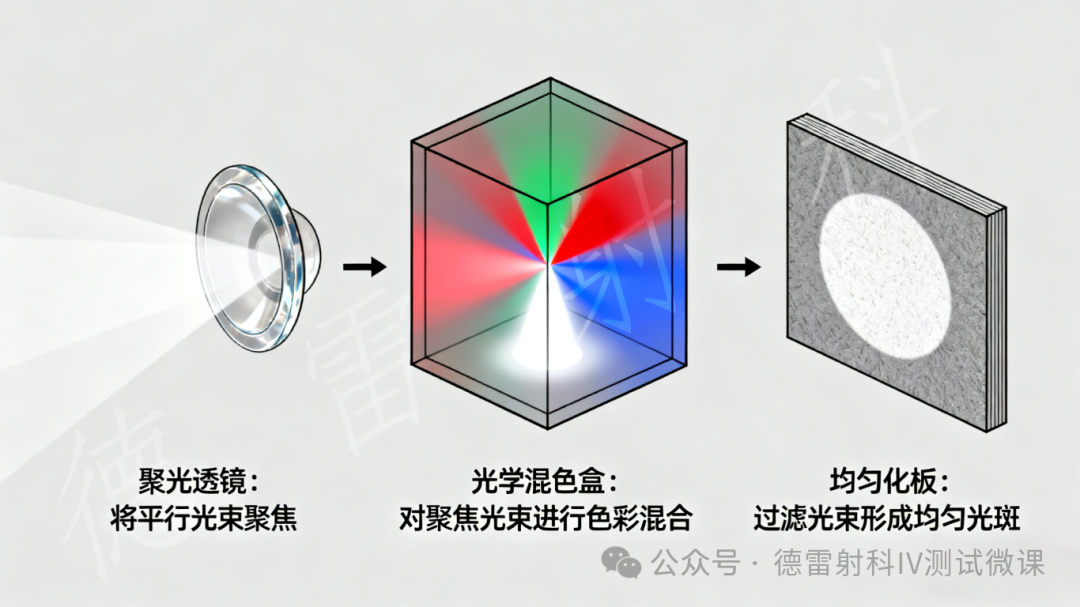
Does uneven mixing of multi-color light sources result in "rainbow spots"? Three steps can solve the problem: first, use a condenser lens to focus all light beams onto the same plane; Then throw it into the optical mixing box and rely on the scatterer to fully "mix" it; Finally, filter through a uniform plate with a 0.2mm aperture. With this set of operations, the irradiation non-uniformity is ≤ 1%, easily meeting the A+level!
Calibration tip: Adjust the spectrum like "tuning"
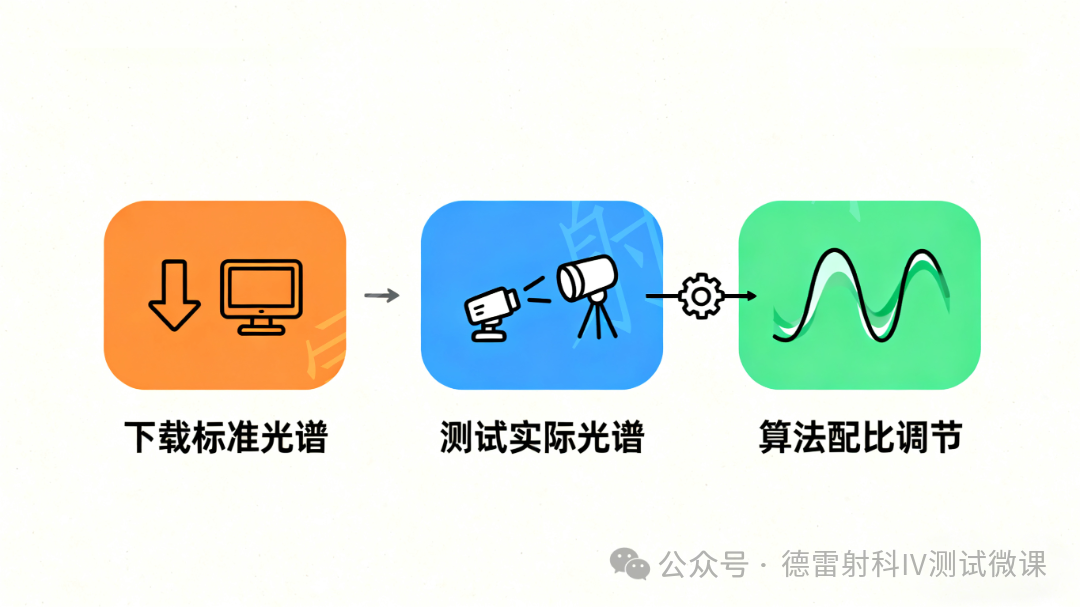
Spectral accuracy is crucial, calibration is the key, and the steps are as hardcore as tuning an instrument: the first step is to download the NREL AM1.5G standard solar spectrum as the "target score"; Step two, use a spectrometer to measure the "actual timbre" of each light source; The third step is to calculate the optimal ratio using the least squares algorithm, which can reduce the spectral error to within 5%. After calibration and 100 hours of continuous testing, the stability is directly maximized!
Full performance and worry free
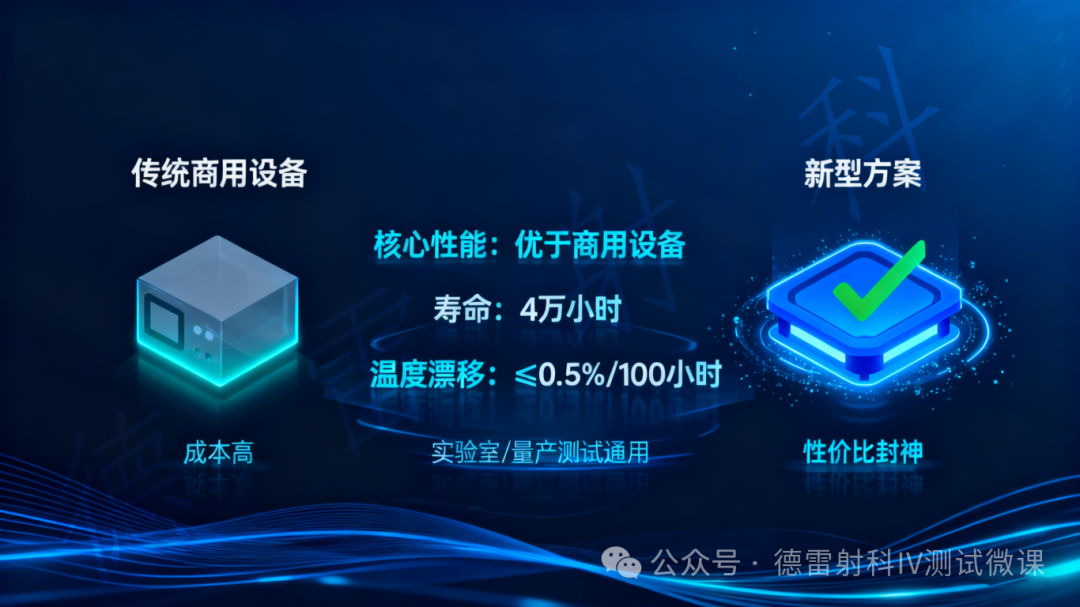
Compared to traditional commercial useSun simulatorThe cost-effectiveness of this solution is directly attributed to its core performance parameterscanCompared to many commercial devices, the key is that the cost is more advantageous! And the performance has not shrunk at all - with a lifespan of 40000 hours and a temperature drift of ≤ 0.5%/100 hours. Whether it's laboratory research and development or mass production testing, it can be used directly!
These fields enter with closed eyes
-
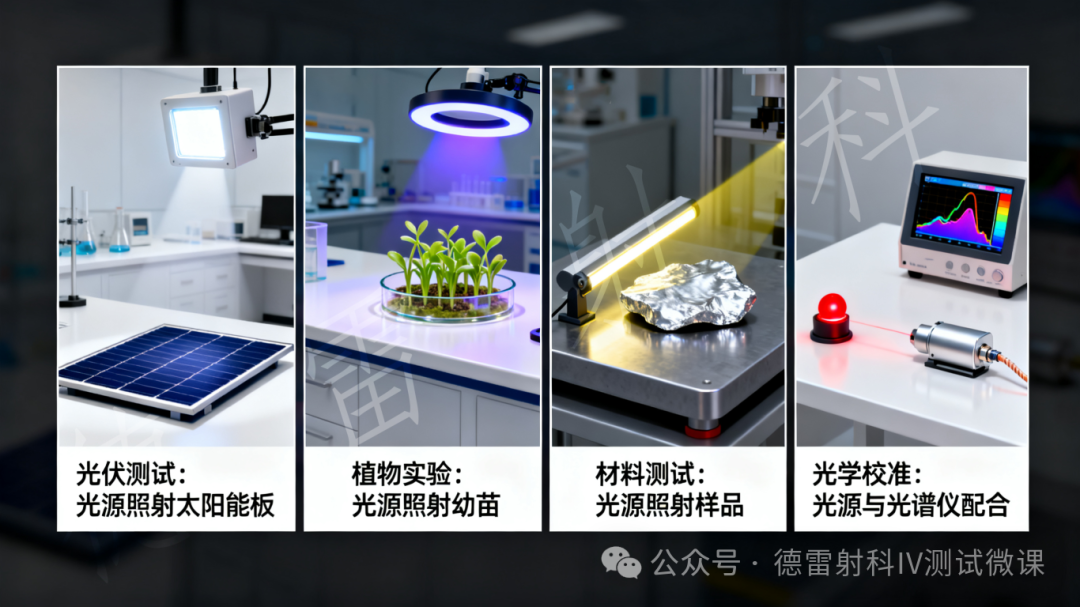
Photovoltaic field:Accurately match each sub battery band, comply with IEC 609049 standard, and provide more reliable test data;
-
Biological research:Full spectrum coverage+low heat output, no need to worry about burning plant leaves, breeding experiments are more efficient;
-
Material testing:Mercury free ultraviolet external source+long-term stable irradiation, suitable for various experiments such as photochemical aging and weather resistance;
lightSchool regulations:Low noise+high consistency, calibrate filters and spectrometers to achieve high accuracy.
summary
Finally, highlight a key point:The core secret of this "artificial little sun" lies in thermal management and spectral calibration - good heat dissipation+precise algorithm matching, LED can alsopreciseReproduce the solar spectrum!
What other scenarios do you think it can be used in?Chat in the comment section,Draw 1 treasure and receive a gift blind box~