-
E-mail
1315940635@qq.com
-
Phone
13167984542
-
Address
Building 2, Building 35, Liandong U Valley, No. 619 Xiangfu Avenue, Shuangfu New District, Chongqing
Chongqing Chuangce Technology Co., Ltd
Quick troubleshooting of 5 high-frequency faults in PM2.5 constant temperature and humidity laboratory
Date: 2025-12-13Read: 0
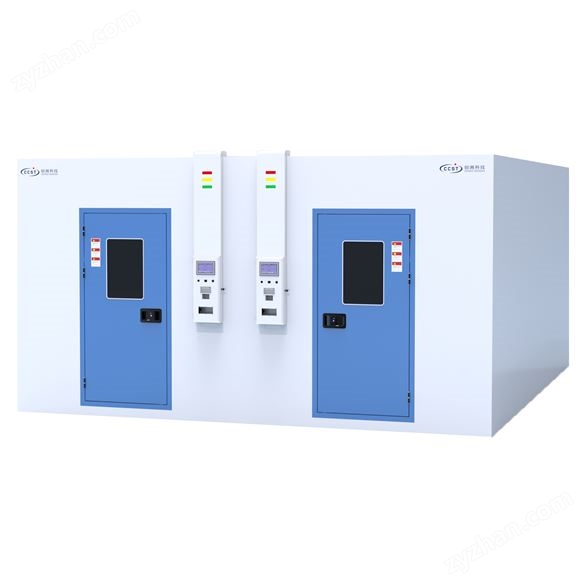
In many fields such as scientific research quality inspection and product production, the PM2.5 constant temperature and humidity laboratory is like a rigorous "environmental examiner", accurately simulating various temperature and humidity conditions to ensure material performance and product quality. But once it gets angry and malfunctions, the experimental process will be deadlocked. Don't worry, this guide to avoiding pitfalls is here to help you quickly overcome 5 high-frequency faults.
1、 Temperature out of control: deviation from the set value, abnormal fluctuations
Root cause exploration: Heating element "strike" is a common cause, such as long-term aging and breakage of heating wires, or damage to solid-state relays, resulting in abnormal current transmission and interruption of heat supply; The refrigeration system often experiences malfunctions, such as compressor failures and refrigerant leaks, making it difficult to cool down. In addition, sensor failure can mislead the control system, erroneously perceive room temperature, and issue chaotic commands.
Quick tip for troubleshooting: Listen to the sound first. If there is no "sizzling" sound when heating, check the appearance of the heating wire and replace it immediately if it is damaged; Refrigeration start, pay attention to compressor vibration and running sound. If it is weak, there may be a lack of fluorine or mechanical failure. Use a pressure gauge to check the refrigerant pressure and add fluorine to fill the leak. Hold the calibrated thermometer in hand, place it indoors, compare the displayed values, replace the sensor if there is a large deviation, and restartPM2.5 constant temperature and humidity laboratoryCheck if the temperature stabilizes.
2、 Humidity imbalance: excessive dryness or humidity
Root cause analysis: The lack of water in the humidification water tank and blockage of the waterway result in insufficient steam generation, making it difficult for humidity to rise; The dehumidification wheel is stuck, the condensation drainage pipeline is not smooth, and it is difficult to discharge moisture, resulting in a continuously humid environment. At the same time, the humidity sensor is contaminated and cannot sense accurately, which can also disrupt the regulation rhythm.
Solution steps: Check the water level in the water tank, replenish water if it is low, and clean the inlet filter screen; To clear the humidification waterway, a thin wire can be used to poke open the blockage. For dehumidification, manually rotating the wheel can clean the bearings and replace the lubricating oil if the flexibility is poor; Pour out the condensed water and blow through the drainage pipe. Then, wipe the humidity sensor probe and replace it with a new one to observe whether the humidity curve conforms to the set value.
3、 Circulating air failure: poor air circulation
Problem source: Dust accumulation and deformation of fan blades, limited speed, and sharp decrease in air volume; Foreign objects blocking the air duct, or cotton fibers accumulating in the filter, hinder airflow circulation and cause uneven indoor temperature and humidity.
Repair strategy: Turn off the power, open the maintenance door, extract the fan, brush off dust, and correct the blade shape; Go deep into the air duct, remove debris, regularly clean or replace coarse and medium efficiency filters, ensure sealing during installation, feel the wind force at the air outlet after restart, quantify with an anemometer, and meet the standard to be normal.
4、 Circuit malfunction: frequent short circuits and trips
Hidden danger excavation: aging and wear of the circuit, damage to the insulation layer, and collision between live and neutral wires; Instantaneous power overload of the device, if multiple high-power heating instruments are activated simultaneously, triggers the protection mechanism. Moreover, loose wiring terminals, increased resistance, overheating, and potential dangers.
Risk mitigation method: Sort the wires along the wiring groove, wrap insulation tape around the damaged areas, and replace severely aged sections; Reasonably allocate loads and operate high-power equipment off peak. Tighten the screws of the wiring terminals, apply anti rust paint to prevent oxidation, conduct a closing test, monitor current and voltage, and ensure smooth operation to eliminate potential hazards.
5、 Leakage and seepage: water droplets on the ground, box walls, and walls
Leakage analysis: The insulation layer is damaged, and condensed water droplets from the intersection of hot and cold are leaking out; Corrosion and perforation of the humidification water tray, aging of the sealing ring of the water pipe joint, and overflow of water flow. In addition, poor sealing of doors and windows can cause external humid and hot air to enter and liquefy when exposed to cold.
Leak sealing trick: Fill the cracks in the insulation layer with foam adhesive; Replace the water tray, reinforce the water pipe interface, and wrap the raw material tape to enhance the seal. Check the door and window rubber strips, replace them if they are deformed, ensure that they are tightly closed, dry the indoor water stains, and observe for recurrence afterwards.
By mastering these troubleshooting techniques, you can calmly deal with PM2.5 constant temperature and humidity laboratory failures, ensuring smooth experiments, uninterrupted production, and stable protection of quality defense lines.