-
E-mail
583008888@qq.com
-
Phone
13606116836
-
Address
Building 244, Linjiang Community, Weicun Town, Xinbei District, Changzhou City, Jiangsu Province
Changzhou Xinhua Instrument Factory
Magnetic float level gauge has a long service life and good stability
Date: 2025-12-21Read: 42
Magnetic float level gauge is a widely used liquid level measuring instrument in industrial automation and process control. It combines magnetic floats with electromagnetic principles to achieve liquid or solid particle level measurement. The device has a simple structure, high precision, and good stability, and is widely used in industries such as petrochemicals, electricity, metallurgy, food, and pharmaceuticals.
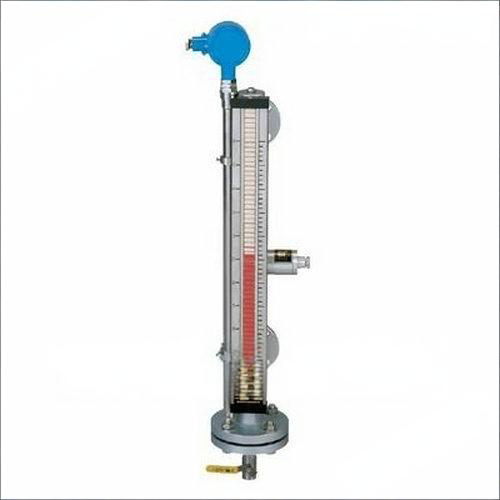
Magnetic float level gaugeWorking principle:
1. Float principle: Floats are made of materials with low density and can float on the liquid surface. As the liquid level rises and falls, the float moves up and down accordingly.
2. Magnetic principle: The float is embedded with a strong magnet inside, and when the float moves, the magnet will act on the magnetic field indicator on the outer shell. The shell is equipped with a series of magnetic materials or magnetic sensors that can sense changes in the position of the float.
3. Indicator device: The change in float position is reflected through indicator devices (such as magnetic buoys, displays, transmitters, etc.), ultimately achieving the display of liquid level. Common indication methods include digital display, analog dial, alarm system, etc.
Structural characteristics:
1. Float: The float is the core component that contains a magnet. The float can float freely with the change of liquid level. The outer shell material of the float is usually a corrosion-resistant and anti-oxidation material, such as stainless steel, plastic, etc.
2. Pipeline shell: The shell of the level gauge is mainly used to wrap around the float and sensor, usually made of corrosion-resistant materials to meet the needs of different working environments. There are grooves inside the shell, and the float can float freely in the grooves.
3. Magnetic sensor: The sensor inside the housing can sense the position of the float and convert it into corresponding electrical signals for subsequent processing. There are generally two types of magnetic sensors: one is a magnetic switch located near the float, and the other is a sensor that utilizes the Hall effect principle.
4. Indicator device: The indicator device displays the high or low liquid level through signal connection with the sensor. Common indicator devices include digital display screens, analog dials, alarm devices, etc.
5. Transmitter (optional): In some high-precision applications, it can be used in conjunction with a transmitter to convert liquid level information into standard electrical signals (such as 4-20mA signals) for remote monitoring and control.
Advantages of magnetic float level gauge:
1. High precision: Due to the use of magnetic and buoyancy principles, it has high accuracy and can accurately reflect changes in liquid level.
2. Good stability: The structure is simple and there is no mechanical contact, avoiding mechanical wear problems, and has a long service life and good stability.
3. Strong adaptability: able to adapt to harsh working environments such as high temperature, high pressure, and strong corrosiveness, widely used in industries such as chemical, petroleum, food, and pharmaceuticals.
4. Contactless measurement: Since the float does not have direct contact with the housing, it avoids problems such as friction and wear caused by direct contact, and improves the accuracy and stability of liquid level measurement.
5. Easy maintenance: Due to the absence of complex mechanical transmission parts, maintenance is simple and the cost of inspection is low.
6. Diverse display modes: Different indication modes can be selected, such as mechanical display, digital display, remote signal transmission, etc., to meet the needs of different users.