-
E-mail
wyssee@qq.com
-
Phone
18600834361
-
Address
Chinese Academy of Agricultural Sciences, Haidian District, Beijing
Beijing Zhongnong High tech Soil Fertilizer Testing Equipment Co., Ltd
Soil testing and fertilization equipment, the "nutrition diagnostician" of precision agriculture
Date: 2025-10-26Read: 1
In modern agricultural production, scientific fertilization has become a key link in improving crop yield, ensuring agricultural product quality, and reducing environmental pollution.Soil testing and fertilization equipment, as specialized instruments capable of quickly measuring soil nutrients, is playing a crucial role.It is like a professional 'nutrition diagnostician', providing accurate data support for scientific fertilization through soil 'physical examination', and promoting agricultural production from experience oriented to data-driven.
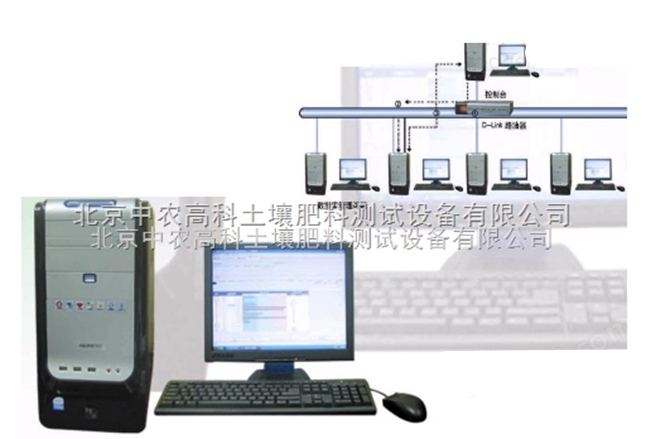
1、 Core function: Rapid and accurate determination of soil nutrients
The core value of soil testing and fertilization equipment lies in its fast and accurate detection capability. Traditional soil analysis requires sending samples to a professional laboratory, which is a cumbersome and time-consuming process. Modern soil measuring instruments, especially portable devices, can achieve rapid determination of large amounts of elements such as nitrogen, phosphorus, potassium, as well as key indicators such as organic matter, pH value, and salt content in fields or on-site laboratories. Its working principle is mainly based on electrochemical analysis (such as ion selective electrode method, potentiometric method) or photoelectric colorimetric method. Operators only need to prepare soil extract according to the regulations, and the instrument can quickly analyze and directly display nutrient content results, reducing the detection time from weeks to minutes or even shorter, greatly improving the efficiency of fertilization decisions.
2、 Technical core: Data chain from samples to intelligent decision-making
An efficient soil testing and fertilization equipment is not only an analytical instrument, but also a complete data acquisition and processing system:
1. Standardized pre-treatment: The equipment is equipped with simple pre-treatment tools such as extraction and filtration, ensuring standardized and uniform sample preparation, which is a prerequisite for data accuracy.
2. High precision sensing and detection: The built-in sensors or optical systems are responsible for converting chemical information in soil solutions into electrical signals, and their stability and sensitivity directly determine the reliability of the results.
3. Built in algorithms and fertilization suggestions: Advanced devices not only display nutrient content, but also have built-in fertilization model algorithms based on a large amount of agricultural experimental data. After users input information such as target crops and expected yields, the instrument can directly generate personalized fertilizer recommendation plans (including fertilizer types, dosages, and application periods), and convert the detection data into "prescriptions" that can directly guide production.
3、 Application value: Achieving precise fertilization and empowering sustainable agriculture
The widespread application of soil testing and fertilization equipment has brought about profound impacts on multiple levels:
1. Improve fertilizer utilization efficiency and reduce costs: By accurately understanding the abundance and deficiency of soil nutrients, it is possible to achieve "what is lacking, what is lacking, and what is lacking," avoiding blind excessive fertilization, significantly improving fertilizer utilization efficiency, and directly saving production costs for farmers.
2. Ensuring crop yield and quality: Balanced nutrient supply is the foundation for robust crop growth, stress resistance, increased yield, and improved quality. Precise fertilization can effectively prevent nutrient deficiency or imbalance.
3. Protecting the agricultural ecological environment: Overfertilization is the main cause of environmental problems such as eutrophication of water bodies and soil acidification and compaction. Soil testing and fertilization control fertilizer input from the source, reduce agricultural non-point source pollution, and are important technical means for green and sustainable development of agriculture.
4. Promoting the development of smart agriculture: Soil measurement data is the foundation for building agricultural geographic information systems and implementing precision agriculture practices such as variable fertilization. The accumulation of massive soil data provides the possibility for regional soil nutrient management and big data analysis.
summary
Soil testing and fertilization equipment has become an intelligent hub connecting soil, crops, and fertilizer management. It transforms traditional experience based fertilization into scientific on-demand fertilization through fast and accurate "diagnosis". It is not only a "good helper" for farmers to save costs and increase income, but also an "accelerator" for promoting efficient utilization of agricultural resources and realizing the strategy of storing grain in the land. With the advancement of technology, more portable, intelligent, and comprehensive soil testing instruments will continue to play an irreplaceable role in ensuring national food security and sustainable agricultural development.
Last Article: Instructions for using a pump suction sampler
Next Article: Calibration Method for Automatic Liquid Dilution Device