-
E-mail
sales@eco-tech.com.cn
-
Phone
18210150760
-
Address
101B, Unit 1, Building 6, Courtyard 3, Gaolizhang Road, Haidian District, Beijing
Beijing Yiketai Ecological Technology Co., Ltd
Plant Phenotype Research Institution Tour (1) - NPEC, Netherlands Plant Ecological Phenotype Center
Date: 2025-11-06Read: 0
Dutch Plant Ecological Phenotype Center(Netherlands Plant Eco-phenotyping Centre,NPEC)fromWageningen University, Netherlands(Wageningen University & Research, WUR)University of Utrecht(Utrecht University)Collaborative construction and operation. Center in2017Submit proposals annually,2022year9Formally launched at the end of the month, research focuses on plant phenotypesandenvironmentThe mutual relationship, striving toPlant researchintroduceThe era of automation and big data.

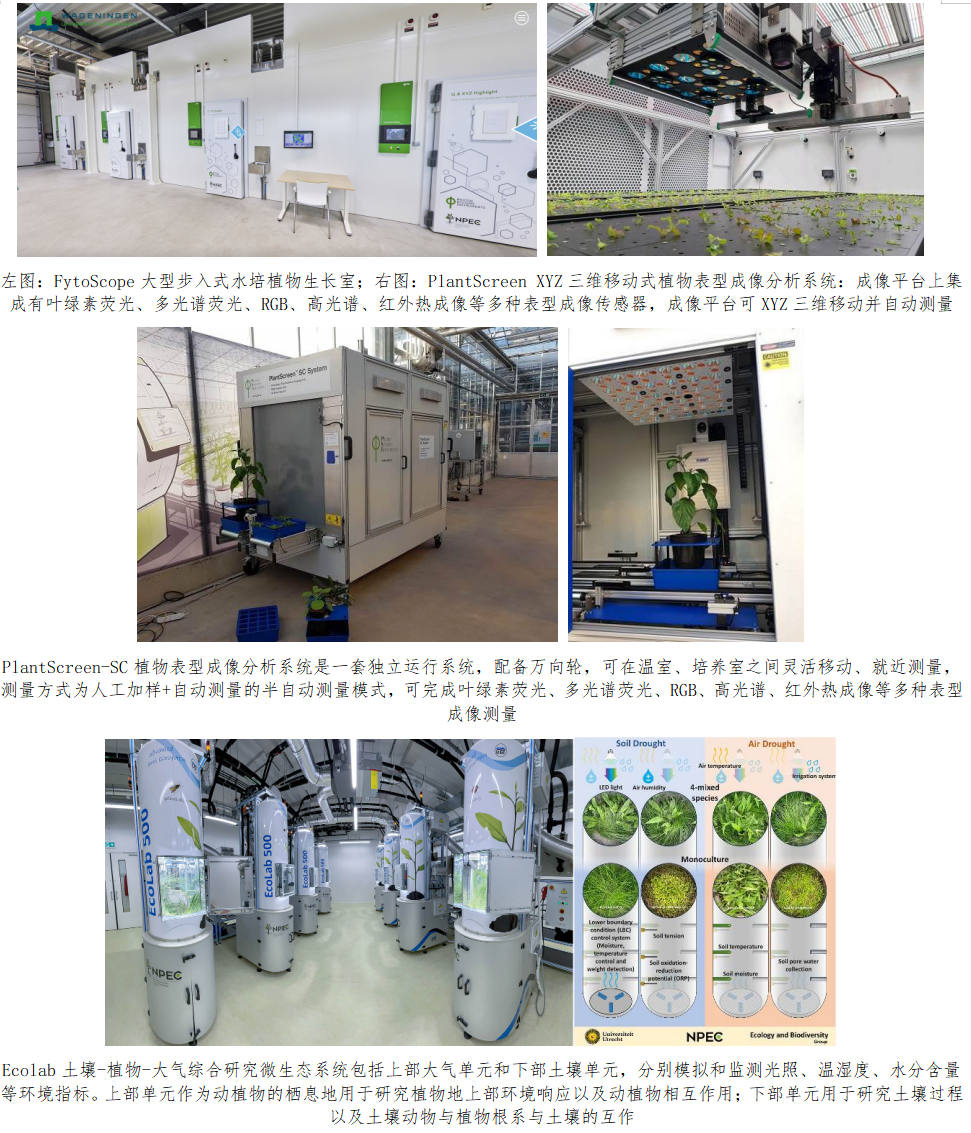
NPECOver the course of several years, the construction has been gradually completedSix research modules, including3Installed in setsFytoScopeLarge walk-in stylehydroponicsPlant growth roominPlantScreen XYZThree dimensional mobile plant phenotype imaging analysis system1setPlantScreen-SCMobile Plant Phenotype Imaging Analysis System36unitEcolabsoil-plant-Comprehensive atmospheric research on micro ecosystems, multiple setsFluorCamChlorophyll fluorescence imaging system, etc.
2023-2024In the year,NPECTwo latest plant phenotype imaging systems have been installed and completed.NPECName them separately as“Sun God”(Helios)and “Pluto”(Hades). among which“Sun God”(Helios)The system is a set ofPlantScreenConveyor version high-throughput plant phenotype imaging analysis system. This system uses a conveyor belt to transport plants to the imaging room for measurement, achieving high-throughput, high-precision, low interference, multi angle plant phenotype imaging measurement. At the same time, it can automatically control the growth environment of plants, including irrigation, lighting, temperature, and dynamic cycle changes.
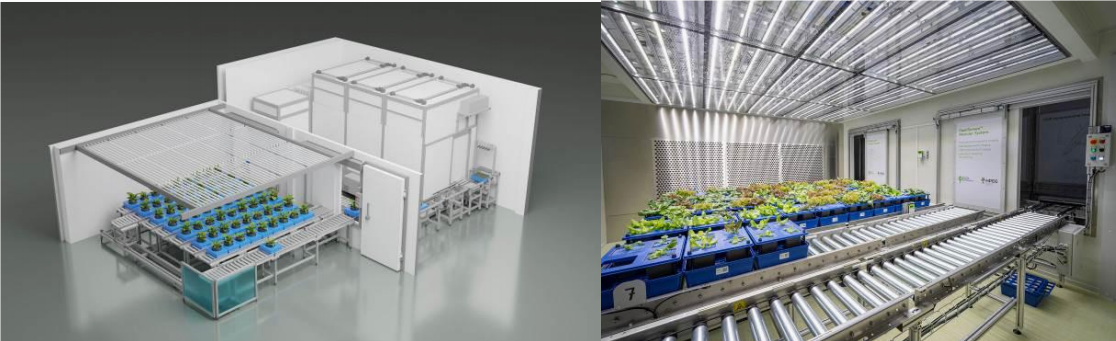
“Pluto”(Hades)The system is a set ofPlantScreenHigh throughput agar culture plant phenotype imaging analysis system. thisIt is a system specifically designed for automatic inoculation, cultivation, and phenotype imaging analysis of plants grown on agar plates. The system is operated by a fully automated robot, including pouring agar, sowing, layering germination, inoculation, and imaging analysis. can accommodate2160Fully automated high-throughput phenotype analysis of a specially designed culture dish. The system is equipped withGMOThe control area for genetically modified organisms consists of an environmental control room, operating platform, cultivation cabinet (including a layer seeding cabinet), robots, and imaging workstations, which can perform root morphology imaging analysisGFPFluorescence protein imaging analysis, chlorophyll fluorescence imaging analysis, multispectral imaging analysis, hyperspectral imaging (transmitted light) analysis, and fluorescence hyperspectral imaging analysis, etc

NPECA series of research works have been carried out using these phenotype omics devices and a large number of scientific research results have been achieved. Some research cases are as follows:
1. Non invasive and pre symptomatic detection of potato cyst nematode infection in tomatoes using chlorophyll fluorescence analysis
Potato cyst nematode(PCN)It is one of the destructive pathogenic nematodes in potato producing areas worldwide, causing huge economic losses every year.PCNThe infection in the field usually occurs in a "lesion" pattern, that is, only concentrated in certain areas. However, early and accurate localization of these lesions is very difficult because traditional soil sampling and nematode identification methods are time-consuming and laborious. Therefore, developing a rapid, non-destructive, and pre symptom detection technology is of great significance for achieving precise local prevention and control, reducing pesticide use, and minimizing economic losses. This study aims to explore whether chlorophyll fluorescence analysis, as a cutting-edge plant physiological monitoring technology, can indirectly and early diagnose the root system of underground plants by detecting subtle changes in the aboveground photosynthetic systemPCNInfection.
Researchers plant tomatoes inPlantScreenIn the sample tray of the high-throughput conveyor phenotype system5Different gradientsPCNVaccination density, utilizationPlantScreensystematicFluorCamContinuous automatic monitoring of chlorophyll fluorescence imaging unit after inoculation26Dynamic imaging of chlorophyll fluorescence in the sky.
Research has found that chlorophyll fluorescence parameters have an impact onPCNThe response to infection is much earlier than traditional growth indicators:
1)Early response: after vaccination1The sky, which reflects the rate of photosynthesis, is represented by ΦPSIIThermal dissipation of photosynthetic systemsNPQThere has been a significant change. At this point, nematodes may not have invaded the root system yet, and researchers speculate that it may be due to the spontaneous hatching of nematode eggs or the specific molecules (effectors) secreted by them triggering the early immune response of plants.
2)High sensitivity: ΦPSIIIt is the most sensitive indicator to low-level infection. Even in terms of vaccination density(5egg/Under the soil, from the1You can detect its decline from the sky. ButNPQThen in the1The sky responds to high vaccination density.
maximal photochemical efficiencyFv/FmThePSIIPotential activityFv/F0It responds later and is not sensitive to low infection levels.
This study successfully demonstrated that chlorophyll fluorescence analysis, especiallyNPQAnd with ΦPSIIThese two parameters can serve as an extremely sensitive tool to effectively detect potato cyst nematode infection in the underground part of tomato plants before any visible symptoms appear.

2. High throughput phenotype imaging analysis of potatoes under single and compound stress
With the intensification of climate change, frequent weather events such as heatwaves, floods, and droughts pose a serious threat to crop production. Potatoes, as an important global food crop, are highly susceptible to adverse environmental conditions affecting their growth and yield. The purpose of this study is to investigate the cultivation of potatoes 'Desired')A comprehensive analysis was conducted to address single and complex abiotic stresses (high temperature, drought, waterlogging). By integrating high-throughput phenotype analysis and multi omics data, the stress response mechanism of potatoes under simulated future climate scenarios was deeply understood, and a bioinformatics analysis process was established to integrate these complex data. This study includesWageningen University, NetherlandsandUtrecht UniversitySeveral European academic and research institutions, including the EU, participatedADAPTOne of the important research achievements of potato breeding project.

Researchers apply a single stress (heat stress) to potato plants HDroughtD, waterloggingW)And compound stress (heat)+droughtHD, Hot+drought+WaterloggingHDW), and set a recovery period to simulate the continuous stress that may occur in the field, and usePlantScreeThe high-throughput phenotype imaging analysis system performs continuous phenotype analysis, monitoring morphological indicators such as plant volume, height, leaf area, compactness, as well as chlorophyll fluorescence (such as...)QY_Lss, Fv/Fm_Lss, qL_Lss)And thermal imaging (canopy temperature Δ)T)Waiting for physiological indicators. The results showed that all stresses inhibited growth, but to varying degrees. Compound stressHDThe impact is greater than a single coercion; Waterlogging(W)The impact is the most rapid and severe; Triple coercion(HDW)Causing the plants to almost die. In the damage of the photosynthetic system, all stresses were reducedPSIIThe photochemical efficiency(QY_Lss)Among them, heat stressHCoercion has the greatest impact.
Combined with other omics data, this study confirms that potatoes are resistant to compound stress, especially heat+drought+WaterloggingHDW)Sensitivity to high temperature stress was identified, and it was clarified that high temperature stress inhibits photosynthesis and tuber formation signals(SP6A)The key link that affects production. This study can provide important candidate targets and diagnostic tools for potato stress resistance breeding, which can help accelerate the cultivation of potato varieties that are adaptable to future climate change.

3. Tracking and measuring the photosynthetic capacity of a single leaf in a high-throughput phenotype system
The study of plant photosynthesis is crucial for productivity and yield. With the development of high-throughput phenotype system facilities, the measurement of photosynthetic phenotypes has become reliable and efficient. However, despite the automation of plant level phenotype analysis, leaf level information often still relies on manual annotation, limiting research efficiency. This study proposes a new method for automatic detection, segmentation, and tracking of individual leaves in time series of images taken from the top of plants (taking Arabidopsis as an example).
Researchers have identified two Arabidopsis thaliana ecological types(Col-0andEly)InPlantScree XYPerforming different light treatments (constant light and fluctuating light) in a three-dimensional mobile phenotype imaging system and analyzing their photosynthetic parameters (maximum photon yield)Fv/FmAnd optical systemIIActual efficiency ΦPSII). Plant level chlorophyll fluorescence imaging analysis shows thatCol-0ofFv/FmAnd with ΦPSIIAll significantly higher thanEly, andElyThe response of photosynthetic parameters to fluctuating light processing is more pronounced. Leaf level chlorophyll fluorescence imaging analysis further indicates that leaf age and leaf sequence significantly affect photosynthetic capacity and its response to light treatment. InElyMiddle, leavesFv/FmIt reaches its peak about a week after its appearance and then decreases; Young leaves' response to fluctuating lightPSIIThe response is stronger than that of Lao Ye.
This method can efficiently and automatically track individual leaves, providing a powerful new tool for studying leaf development, photosynthesis dynamics, and their genetic basis.

4. The effect of different light intensities on the post harvest cold tolerance of basil
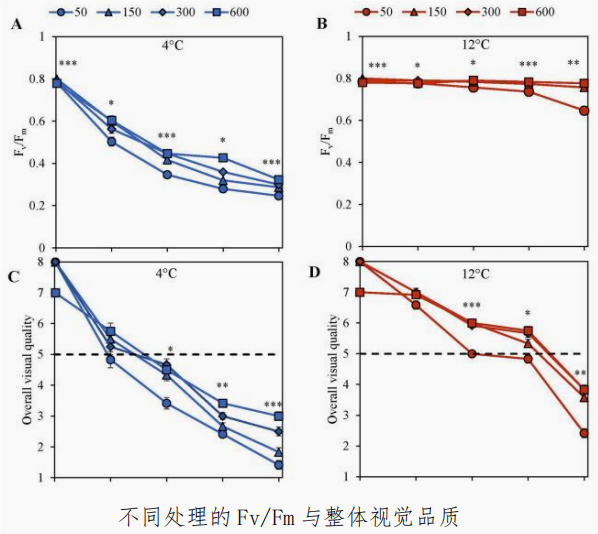
Basil(Eight basesL.)As a tropical herbaceous plant, below10–12Cold damage is prone to occur during low-temperature storage at ℃, manifested as leaf brown spots, necrosis, and loss of luster. This study aims to achieve short-term high light treatment before harvesting(EOP)Increase the carbohydrate and antioxidant content of basil to see if it can enhance its post harvest cold tolerance. Researchers combine two varieties of basil(EmilyandDolly)In vertical agricultural systems, usingLEDLight source(150 μmol·m⁻²·s⁻¹)Cultivate. Before harvesting5Heaven, apply separately50、150、300The600 μmol·m⁻²·s⁻¹The intensity of light exposure. Post harvest leaves4°C(Cold damage conditions) and12°CDark storage under non cold damage conditions12Daily sampling and analysis.
利用FluorCamAfter measuring with chlorophyll fluorescence imaging system, it was found that the maximum photochemical efficiency of basil leavesFv/FmIn4°CSignificantly decreased during storage, butEOPLight intensity has no significant effect on it.Fv/FmIt reflects the degree of damage to plant photosynthetic response centers under stress conditions and is currently one of the indicators for measuring the degree of plant stress and resistance. Therefore, the results indicate that,EOPHigh light can effectively enhance the nutritional value of basil (carbohydrates, rosmarinic acid, ascorbic acid), but it does not enhance the cold tolerance of basil.
References:
1. van Himbeeck R, Binnebösz E L, Amora D, et al. Noninvasive, Presymptomatic Detection of Potato Cyst Nematode Infection in Tomato Using Chlorophyll Fluorescence Analysis[J]. Phytopathology, 2025, 115(1): 77-84.
2. ZagoršNoak M, Abdelhakim L, Rodriguez-Granados N Y, et al. Integration of multi-omics data and deep phenotyping provides insights into responses to single and combined abiotic stress in potato[J]. Plant physiology, 2025, 197(4): kiaf126.
3. Jurado-Ruiz F, Nguyen T P, Peller J, et al. LeTra: a leaf tracking workflow based on convolutional neural networks and intersection over union[J]. Plant Methods, 2024, 20(1): 11.
4. Larsen D H, Li H, van de Peppel A C, et al. High light intensity at End-Of-Production improves the nutritional value of basil but does not affect postharvest chilling tolerance[J]. Food Chemistry, 2022, 369: 130913.
Beijing Yiketai Ecological Technology Company provides a comprehensive solution for plant phenotype analysis technology and provides relevant references:
ØinternationalPlantScreenPlant high-throughput phenotype imaging analysis system, including conveyor belt versionXYZVersionPlantScrone SCDifferent functional specifications such as root phenotype analysis are available for selection
ØPhenoTron®Plant Phenotype Imaging Analysis System, Yiketai's New Generation Agricultural Sensor Technology+AIPlatform technology can be flexibly configured and customized according to the actual needs and installation scenarios of domestic users, with hyperspectral imaging capabilitiesUV-MCFUV induced plant fluorescence (stress-induced secondary metabolite fluorescence) hyperspectral imaging, chlorophyll fluorescence imagingThermo-RGBInfrared thermography andRGBImaging fusion analysis3DPhenotypic analysis techniques such as laser scanning imaging analysis,AIPlatform technology includes automatic transmission systemsXYZDifferent intelligent platforms such as platform, suspended dual standard platform, robot platform, etc. are available for selection

ØFluorCamChlorophyll fluorescence imaging system, with thousands of international scientific literature available for reference
ØFluorTron ®The plant photosynthetic phenotype imaging analysis system can customize chlorophyll fluorescence dynamic imaging and chlorophyll fluorescence spectral imaging with different imaging areas according to customer needsLEDIF(Plant population) canopy chlorophyll fluorescence imaging system, etc

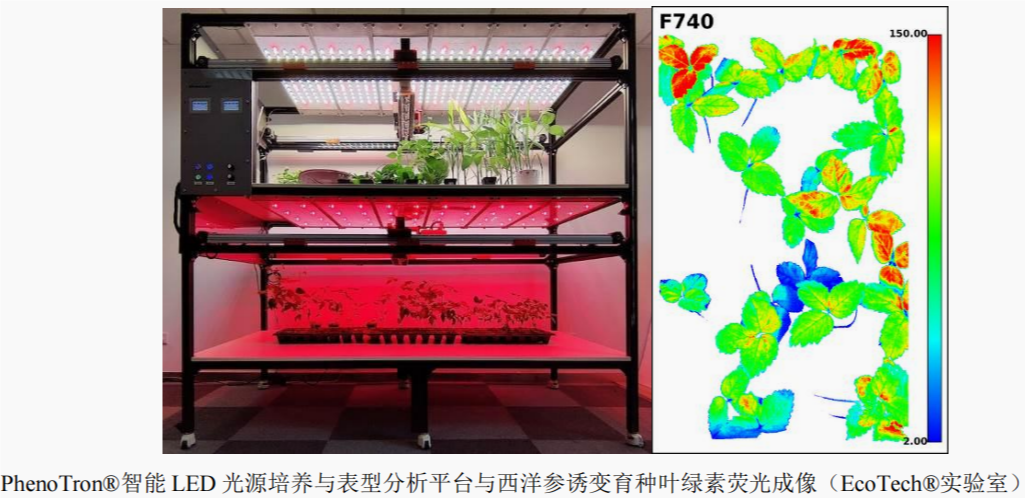
ØPhenoTron®intelligenceLEDLight source cultivation and phenotype analysis platform, integrating multi-channel intelligenceLEDCombining light source and multi-source phenotype sensor technology, it can provide precise light training for plants while achieving imaging of chlorophyll content and chlorophyll fluorescenceThermo-RGBOnline day and night monitoring and analysis of plant phenotypes, including imaging and multifunctional hyperspectral imaging.
ØFluorPenSeries handheld chlorophyll fluorescence analyzer (with probe type and leaf clamp type, for algae)AquaPenThe test tube chlorophyll fluorescence analyzer can be used withLCiTheLCproA portable field crop phenotype analysis and measurement system composed of a photosynthesis analyzer
ØFluorTronSeries multispectral chlorophyll fluorescence imaging/Multi functional hyperspectral imaging analysis system
ØPhenoPlot®Lightweight field or greenhouse crop phenotype imaging analysis system
ØPhenoTron® PTSPlant Phenotype Imaging Analysis System
ØPhenotype Analysis Platform for Field Intelligent Inspection Robots
ØET-LEDIFChlorophyll Fluorescence Monitoring System
ØModular Crop Phenotype Imaging Analysis System