-
E-mail
sales@eco-tech.com.cn
-
Phone
18210150760
-
Address
101B, Unit 1, Building 6, Courtyard 3, Gaolizhang Road, Haidian District, Beijing
Beijing Yiketai Ecological Technology Co., Ltd
Application of Yiketai Respiratory Carbon-13 Stable Isotope Technology in Animal Physiological and Ecological Research
Date: 2025-11-14Read: 0
The energy metabolism measurement system obtainsVO2, VCO2, and RER indicators are used to infer animal energy consumption and total metabolic substrate utilization (such as carbohydrates, fats, and proteins), which is a continuous measurement technique for animal energy consumption. However, it cannot distinguish or quantify exogenous (such as food intake) and endogenous (the animal's own tissue composition) substrates, as well as the oxidative consumption of certain nutrients.
Through metabolic tracers such as carbon-13 markers, like precise GPS locators attached to biomolecules, for tracking, as well as respiratory stable isotope analyzers for real-time monitoring of exhaled gases from animals13Using CO2 to distinguish and quantify which energy substances are consumed in animal energy metabolism can provide a deeper understanding of metabolic physiological mechanisms, such as metabolic flexibility. However, this quantitative measurement of specific energy substance oxidation rates often requires knowledge of VCO2.
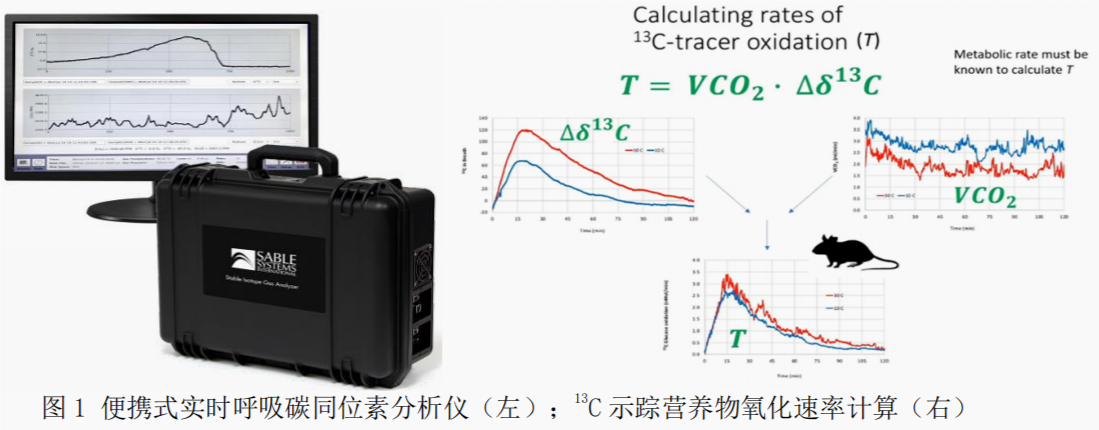
Animal energy metabolism and respiration13Partial application cases of C stable isotope technology:
1) Oxidation of endogenous amino acids in water restricted sparrows
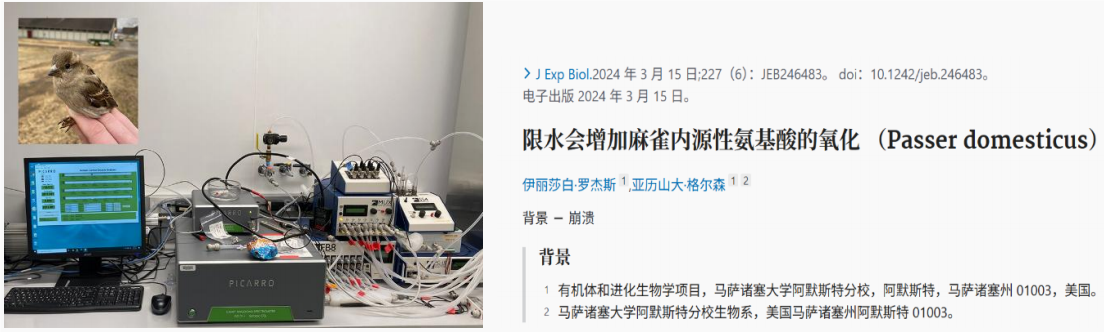
Animals can cope with dehydration in various ways, including behavioral and physiological responses. Each kilojoule of protein oxidation produces more metabolic water than fat or carbohydrates, and birds increase protein breakdown metabolism due to high water loss rates. However, the mobilization of amino acid oxidation in response to water limitation has not been extensively studied.
Researchers feed captive sparrows13CLabeled Leucine9Week, to label endogenous proteins. A weekly experiment was conducted, during which physiological responses to water restriction were measured, such as changes in lean body mass, fat mass, metabolism, and exhaled carbon dioxide13CEnrichment of(δ13Cbreath). Research has found that water restricted birds metabolize more lean meat tissue and also accumulate itδ13CbreathIn response to water restrictions. However,δ13CbreathIt varies with metabolic rate and the length of water restriction period, indicating that birds may save protein when other physiological strategies can be used to achieve water balance.
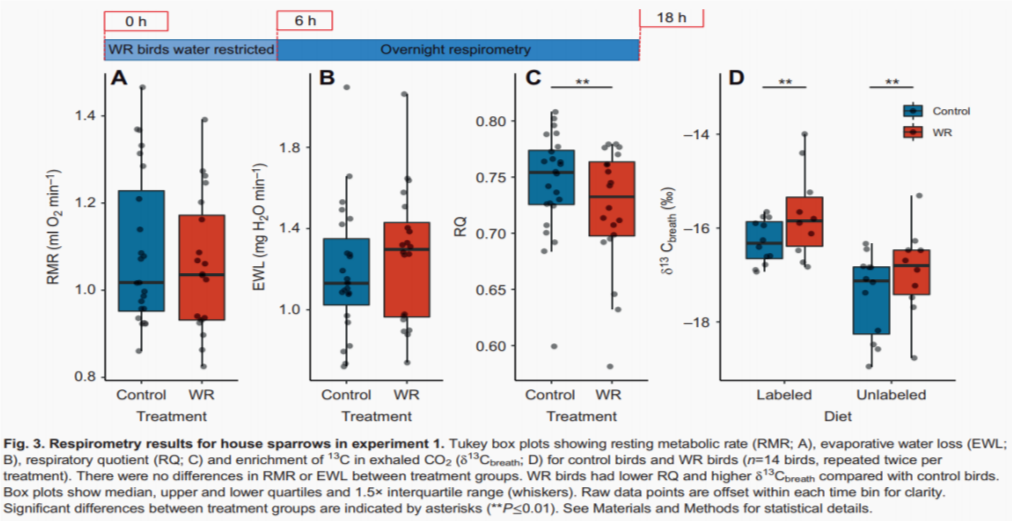
Instrument technology used in the article: quantitative magnetic resonance imaging for body composition analysis;G2131-I isotope carbon analyzer measurement13C δ exhalation; The SSI standard flow-through respiration measurement technique measures RMR simultaneously with evaporative water loss (EWL) and δ 13C respiration.It should be noted that the United StatesSable Company's newly launched13CStable isotope analyzers have many advantages such as portability, high precision, real-time measurement, no need for consumables and external calibration, compatibility with energy metabolism measurement systems, and high cost-effectiveness to meet the expectations of scientists in multiple fields.
2)Yak fecal bacteria help plateau mice and rabbits recover nitrogen sources and adapt to low protein environments in winter
Nitrogen balance is the main challenge faced by herbivores when consuming low nitrogen diets. The urea nitrogen cycle mediated by gut microbiota promotes protein homeostasis during nitrogen deficiency, but its correlation with wild non hibernating small mammals is still unclear. The experiment in the article combines isotope tracing, energy metabolism measurement, metagenomics, targeted short chain fatty acid analysis, and fecal microbiota transplantation to study the effects of winter protein restriction on mice and rabbits in the Qinghai Tibet Plateau(Ochotona curzoniae)The impact of urea nitrogen cycle.
In the experiment of measuring stable isotopes in respiration,Place each mouse rabbit into a cylindrical polyethylene metabolism chamber,This chamber passes throughTygon tube connected toFMS new portable modelbreatheMetabolic measurement instrumentTo regulate airflow and maintain itThe CO2 concentration is about 1%, ensuring reliable δ13C measurement.After placing the mouse rabbit into the chamber, immediately collect baseline respiratory samples in an aluminum foil balloon. eachCollect follow-up samples every 30 minutes. Each air sample13C:12The C ratio (referred to as δ)13C, Expressed in%)ByElemental analyzer and isotope ratio mass spectrometer(IRMS)Discrete measurement methodFrom thisgetofδ13The C value is expressed as per mil (‰),referenceReganwait2022yearScience paper formula:
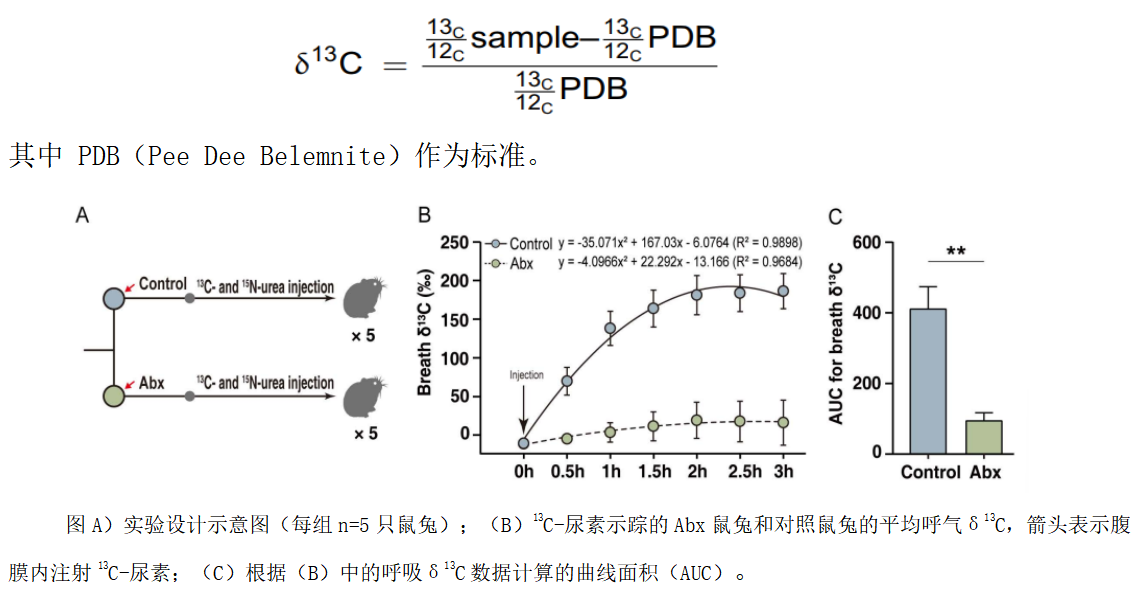
During the winter protein restriction period, liver urea cycle metabolism is downregulated, accompanied by beneficial bacteria with urea solubilization ability, such asThe increase in the activity of intestinal urease and urea transporters, as well as the production of acetate, leads to an increase in nitrogen reintroduction into the protein pool of mice and rabbits. It is crucial to supplement the low protein diet with yak fecal microbiota to enhance urea solubility by increasing the abundance of alispeptide, revealing a key mechanism that inter species level microbial transfer between same domain species enhances host protein homeostasis.
The author's research findings reveal the functional role of gut microbiota in the urea nitrogen cycle to maintain protein balance in winter active herbivorous small mammals and contribute to understanding species coexistence and mammalian adaptation to high-altitude environments. The research results indicate that the microbial driven urea nitrogen cycle is a key adaptive strategy for protein homeostasis in winter active herbivores. This work provides new insights into the mechanisms by which mammals adapt to high-altitude environments and the dynamics of interspecific coexistence.
References
Rogers EJ, Gerson AR. Water restriction increases oxidation of endogenous amino acids in house sparrows (Passer domesticus). J Exp Biol. 2024 Mar 15; 227(6):jeb246483. doi: 10.1242/jeb.246483. Epub 2024 Mar 15. PMID: 38380522; PMCID: PMC11093224.
Shi F, Zou D, Zhang L, Guo N, Yu J, Degen AA, Tang X, Ren S, Ru Y, Zheng S, Zhang Y, Wang D. Increased urea nitrogen salvaging by a remodeled gut microbiota helps non hibernating pikas maintain protein homeostasis during winter. PLoS Biol. 2025 Oct 16; 23(10): e3003436. doi:10.1371/journal.pbio.3003436.
Yiketai Ecological Technology Company has accumulated more than ten years of experience in animal energy metabolism measurement technology research and service, and has cooperated with international energy metabolism technology companies in the United States, Europe, etc. to provide comprehensive and accurate technical solutions for domestic animal physiological ecology, biomedical research, etc
uSSI respiratory metabolic system (modular or portable)+stable isotope gas analyzer
uFMS portable multifunctional energy metabolism measuring instrument+small animal treadmill+stable isotope gas analyzer
uCustomized animal (including wind tunnels, etc.) or human respiratory stability isotope analysis systems;
uPurchasedUpgrade customer system configuration for all Sable product series, including small animal treadmills, respiratory isotope analysis, etc
uImplantable animal temperature and heart rate detectionThermo-RGB high-sensitivity infrared thermal imaging temperature monitoring technology, animal behavior and activity monitoring technology, element analyzer system
uCollaborate with customers to develop new products in the field of animal physiology and ecology research based on animal energy metabolism measurement technology