-
E-mail
acrichi@qq.com
-
Phone
18401471972
-
Address
801A, Building A, U Valley Science and Technology Innovation Center, Xingmao 1st Street, Tongzhou District, Beijing
Beijing Juxin Chasing Wind Technology Co., Ltd
Composition of fully automatic solid-liquid integrated blowing and capturing instrument system
Date: 2025-11-22Read: 2
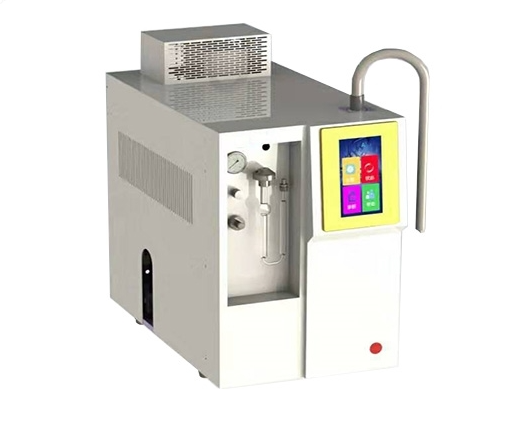
The instrument system of the fully automatic solid-liquid integrated blowing and capturing instrument mainly consists of blowing device, capturing system, analysis and transmission system, temperature control system, gas path control system, automatic sampling system, software control system, and auxiliary modules. The following is a detailed introduction:
1. Purging device:
Liquid sample interface: usually a blow bottle with a sealed lid, with a capacity of 20-40mL, connected to the blow gas through a needle or tubing to ensure that the liquid sample is blown in a closed environment.
Solid Sample Adapter: Designed for solid samples such as soil and sediment, it has a dedicated sample boat or extraction tank that can release volatile components through inert gas blowing. Some devices support dynamic headspace mode.
Blowing tube/nozzle: inserted into the sample matrix (liquid) or close to the sample surface (solid), allowing the carrier gas to evenly blow the sample and efficiently remove volatile organic compounds (VOCs).
2. Fully automatic solid-liquid integrated blowdown and capture system:
Capture trap: core component, equipped with adsorbent, used for adsorbing VOCs blown out. According to the different boiling points of the target substance, different packing combinations can be selected to improve the capture efficiency. Some devices support multi trap switching, which allows for quick replacement of capture traps for different samples to avoid cross contamination.
Capture trap refrigeration device: usually electronic refrigeration or liquid nitrogen refrigeration, which operates the capture trap at low temperatures to enhance the retention capacity of the adsorbent for VOCs.
3. Analysis and transmission system:
Analysis heater: used to quickly raise the temperature of the capture trap, allowing the adsorbed VOCs to be quickly analyzed and enter the subsequent detection system (such as gas chromatography).
Transmission line: the pipeline connecting the trap and the gas chromatography (GC) sample inlet, usually made of inert material (such as fused silica tube), and equipped with a heating jacket to maintain the temperature to prevent VOCs from condensing during transmission.
Multi way valve: It is mostly a six way valve or ten way valve, which achieves the transition between "capture" and "analysis" states through automatic switching. During capture, VOCs enter the trap; During analysis, the carrier gas will blow back the analyzed VOCs to the transmission line and enter GC separation.
4. Fully automatic solid-liquid integrated blowing and capturing instrument temperature control system:
Accurately control the temperature of key components such as blow off tubes, sampling heads, six way valves, injection systems, sample transfer lines, capture tubes, cold traps, and water separators to ensure the stability and repeatability of experimental conditions.
5. Gas path control system:
Gas source interface: Connect high-purity nitrogen (or helium), equipped with pressure regulating valves and flow meters to control the flow rate of purge gas.
Exhaust gas outlet: Connect the exhaust pipeline and export the purged carrier gas (including uncaptured impurities) to the outdoor or exhaust gas treatment device.
6. Automatic sampling system:
If the device is equipped with automatic sampling function, it includes automatic sampling components such as sample tray and robotic arm to achieve automatic sampling and analysis of samples and improve experimental efficiency.
7. Software control system for fully automatic solid-liquid integrated blowing and capturing instrument:
It includes a touch screen or button operation interface, which can set parameters such as blowing time, temperature, capture temperature, analysis time/temperature, transmission line temperature, etc. At the same time, the system can automatically store the sample injection work report, making it convenient for users to view.
8. Auxiliary module:
Waste liquid collection bottle: Collect the sample waste liquid after blowing, and some equipment has an automatic emptying function.
Body frame and shock-absorbing foot pads: ensure stable operation of the equipment.
Last Article: The steps of full process automation of online gas sampler
Next Article: What are the advantages of a dynamic diluter