-
E-mail
email@jzpykj.com
-
Phone
18910378570
-
Address
3rd Floor, Building C, No. 6 Chaoqian Road, Changping District, Beijing
Beijing Jiuzhou Pengyue Technology Co., Ltd
Mastering the correct usage method of a large range laser dust analyzer is the key to ensuring the scientific and reliable monitoring results
Date: 2025-11-24Read: 1
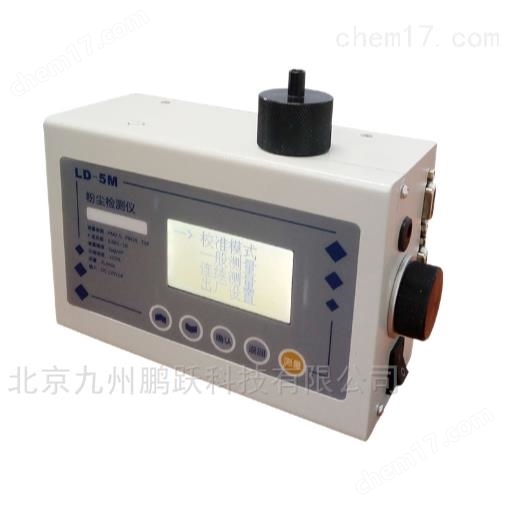
The large range laser dust analyzer, with high sensitivity, wide measurement range (usually 0.1-10000mg/m3), and real-time online monitoring capability, is widely used in high dust concentration scenarios such as mines, cement plants, steel smelting, and construction sites to evaluate the safety and emission compliance of work environments. It is based on the principle of light scattering, and uses laser irradiation to generate scattered light intensity to invert dust concentration. However, improper operation or lack of maintenance can easily lead to data distortion, sensor contamination, and even equipment damage. Mastering the correct usage method of a large-scale laser dust analyzer is the key to ensuring the scientific and reliable monitoring results.
1、 Installation location selection: balance representativeness and safety
The measuring point should be located downstream of the dust generation source, in a stable and representative straight pipe section, avoiding vortex zones, bends, or fan outlets. The sampling port of the instrument should be facing the direction of the airflow, avoiding leeward or blind spots. In high temperature, high humidity or corrosive environments, cooling protection covers or pre filtration devices should be installed, and the equipment protection level should be ensured to be above IP65.
2、 Power on preheating and zero calibration
Before each use, power on and preheat for 15-30 minutes to achieve thermal equilibrium between the laser and the optoelectronic system. Perform automatic or manual zero calibration in clean air (such as using high-efficiency filters to provide zero gas) to eliminate optical window contamination or electronic drift effects. Do not directly turn on the device for measurement in high dust environments to avoid significantly overestimating the initial data.
3、 Parameter settings matched with operating conditions
Select the corresponding K value (mass concentration conversion coefficient) in the instrument based on the type of dust being tested (such as coal powder, cement, metal dust). Particles with different particle size distributions and refractive indices have different responses to light scattering, and incorrect K values can lead to errors exceeding 50%. Simultaneously setting reasonable time weighted average (TWA) periods (such as 8 hours) or short-term exposure limits (STEL) to meet the needs of occupational health monitoring.
4、 Monitoring and anti-interference during operation
Avoid water vapor, oil mist, or high concentration condensate from entering the sampling chamber, as they may adhere to the lens and cause signal attenuation. If used in a humid flue gas environment, a heating sampling probe (≥ 120 ℃) must be installed to prevent condensation. Regularly observe the self diagnostic information of the instrument, such as laser intensity and signal-to-noise ratio, and clean or maintain it promptly in case of abnormalities.
Last Article: Advantages of unorganized emission monitoring system
Next Article: How to install and calibrate the laser dust analyzer probe