-
E-mail
2822343332@qq.com
-
Phone
15810615463
-
Address
Mapo Xiangyue Sijisan District, Shunyi District, Beijing
Beijing Jingke Zhichuang Technology Development Co., Ltd
Kunming University of Science and Technology purchases a three piece set of ZJ-3 precision D33 tester (D33 tester+polarization+impedance)
Date: 2025-10-17Read: 0
Kunming University of Science and Technology purchases a three piece set of ZJ-3 precision D33 tester (D33 tester+polarization+impedance)

Piezoelectric ceramics, as a key branch of electronic ceramics, are functional ceramic materials that can achieve the conversion of mechanical and electrical energy. Its unique positive and negative piezoelectric effects make it play an important role in various fields such as piezoelectric sensors, drivers, ultrasonic transducers, piezoelectric buzzers, and filters. At present, piezoelectric ceramics mainly use solid solutions such as lead zirconate titanate (PZT) and lead magnesium niobate as raw materials. Although these materials have significant brittleness, they can be easily prepared into sheet-like piezoelectric ceramics through forming processes such as dry pressing, isostatic pressing, film rolling, and casting. At present, the mainstream and reliable instrument in the market: ZJ-3 precision D33 tester (developed by Chinese Academy of Sciences&Jingke Zhichuang, with functionsD31 block fixture, D15 block fixture, D15 circular tube fixture, D31 block fixture, thin film stretching fixture (new function), coplanar electrode function (new))PZT-JH10/4 piezoelectric polarization device (10KV, 4 channels), PZT-JH30/1 piezoelectric composite polarization device (thin film+block+air+silicone oil), FE-5000 ferroelectric tester (thin film+block+variable temperature+probe station), JKZC-03A piezoelectric impedance analyzer, these complete sets of equipment are included.
However, with the continuous improvement of device performance and practical applications, the structural design of piezoelectric ceramics has become increasingly complex and precise, and conventional molding methods are no longer able to meet these new demands. Therefore, how to effectively prepare piezoelectric ceramics with complex structures has become a common focus of attention among current researchers.
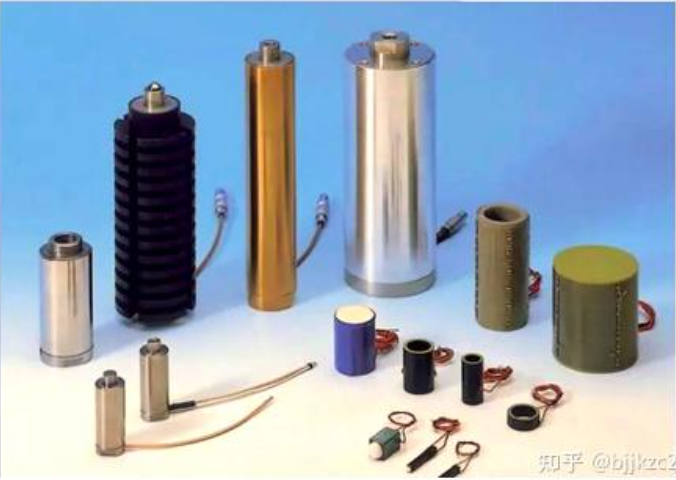
1. Principle and preparation process of piezoelectric ceramics
The piezoelectric effect of piezoelectric ceramics originates from the difference in charge distribution of ceramic crystals and the conductivity of electrodes. In its natural state, ceramic crystals exhibit electrical neutrality. However, when piezoelectric ceramics are subjected to mechanical stress or pressure, their crystal structure undergoes minor distortions, resulting in uneven distribution of positive and negative charges, which in turn generates an electric field. This electric field is then effectively collected by the electrodes and used by external circuits. Therefore, ceramic crystals and electrodes can be regarded as the core components of piezoelectric ceramics. The preparation process includes four key steps: the production of ceramic embryos, sintering, electrode coating, and polarization treatment.
2. Principle of piezoelectric effect
The piezoelectric effect is the core principle of piezoelectric ceramics. When piezoelectric ceramics are subjected to external forces such as mechanical stress or pressure, their crystal structure undergoes slight deformation, leading to the redistribution of positive and negative charges in the crystal and the generation of an electric field. This electric field can be effectively captured by electrodes and output to external circuits, achieving energy conversion and utilization.
★ Adopting key testing equipment:
At present, our country is paying more and more attention to material testing. Many units and research institutions have encountered significant problems in product identification. However, to truly test materials, it is necessary to choose a precise and reliable testing product. This will have a great impact on our testing results and research, and provide great guidance for our production.
ZJ-3 piezoelectric tester (static pressure coefficient d33 measuring instrument), PVDF piezoelectric film tester
Keywords: piezoelectric, ceramic materials, polymers, d33/d15

1、 Product Introduction:
The ZJ-3 piezoelectric tester (static pressure coefficient d33 measuring instrument) is a specialized instrument designed to measure the d33 constant of piezoelectric materials. It can be used to measure piezoelectric ceramics with large piezoelectric constants, piezoelectric single crystals with small piezoelectric constants, and piezoelectric polymer materials. In addition, it can also measure the equivalent piezoelectric d'33 constant of any oriented piezoelectric single crystal and certain piezoelectric devices. The instrument has a wide measurement range, fine resolution, high reliability, simple operation, and no special requirements for sample size and shape. Circular discs, rings, tubes, blocks, strips, columns, and hemispherical shells can be measured, and the measurement results and polarity are directly displayed on a three and a half digit panel meter. The ZJ-3 model has added functions such as discharge protection, discharge prompt, and waveform output for the tested components, enabling the instrument to provide high-voltage discharge prompt and protection when measuring non discharged (especially large-sized) piezoelectric components. This instrument is used in the production, application, and research departments of piezoelectric materials and piezoelectric components.
2、 Main application areas: non-destructive testing ultrasonic testing, medical ultrasonic testing, aerospace, oil and gas equipment, automotive IoT, industry, consumer programs, etc.
GB3389.4-82 "Testing Methods for Properties of Piezoelectric Ceramic Materials - Static Test of Longitudinal Piezoelectric Strain Constant d33"
GB/T3389.5-1995 "Testing methods for properties of piezoelectric ceramic materials - Circular thickness expansion vibration mode"
GB000? Tj1.1/T3389.4-1982 "Testing Method for Properties of Piezoelectric Ceramic Materials - Longitudinal Length Expansion Vibration Mode of Column"
GB/T 3389.7-1986 "Test Methods for Properties of Piezoelectric Ceramic Materials - Test for Strong Field Dielectric Properties"
GB/T3389.8-1986 "Testing Method for Properties of Piezoelectric Ceramic Materials - Test for Pyroelectric Coefficient"
4、 Main functions of the product:
Measure the d33 constant of bulk piezoelectric materials
Measurement of piezoelectric ceramics with large piezoelectric constants
Measurement of small piezoelectric constants in piezoelectric single crystals and piezoelectric polymer materials
Measure the equivalent piezoelectric d'33 constant of arbitrary orientation piezoelectric single crystals and certain piezoelectric devices
Measure the d33 constant of thin film materials such as PVDF
5、 Main technical indicators
D33 measurement range:
★× 1st gear: 10 to 2000pC/N, 20 to 4000pC/N, can be upgraded to 10000PC/N
★× 0.1 gear: 1 to 200pC/N, 2 to 400pC/N.
★ Can be used with PZT-JH10/4/8/12 piezoelectric polarization device
★ Can be used with ZJ-D33-YP15 voltage chip machine
Error: * 1 gear: ± 2% ± 1 digit, when d33 is between 100 and 4000pC/N;
D31 block fixture, D15 block fixture, D15 circular tube fixture, D31 block fixture, thin film stretching fixture (new function), coplanar electrode function (new)
★ Measurement calibration standard sample size: 18mm * 0.8mm, aging time: 2-3 years (one of the important criteria for evaluating the accuracy performance of piezoelectric testers)
± 5% ± 1 digit, when d33 is between 10 and 200pC/N;
0.1 gear: ± 2% ± 1 digit (when d33 is between 10 and 200pC/N)
± 5% ± 1 digit, when d33 is between 10 and 20pC/N.
Resolution: 1 gear: 1 pC/N; 0.1 gear: 0.1 pC/N.
Size: Force application device: Φ 110 × 140mm; Instrument body: 240 × 200 × 80mm.
Weight: Force application device: approximately 4 kilograms;
Instrument body: 2 kilograms.
Power supply: 220V, 50Hz, 20W.
★ Supplementary parameters:
| bandwidth | DC~7MHz |
| Y deflection coefficient | 10mV/div~5V/div, Divided into 9 levels |
| X deflection coefficient | 0.2μS/div~0.1S/div, Divided into 18 levels |
| X Expansion | ×2 |
| trigger source | Internal, External, and Television Field |
| synchronization method | Automatic, triggered |
| Effective display surface | 6div×10div(1div=0.6cm) |
| Use power supply | AC 220V/50Hz |
| Overall dimensions | 240B×100H×300Dmm |
3. Embryo preparation
The preparation of the embryo is a crucial step in the production of piezoelectric ceramics. In terms of raw material selection, lead zirconate titanate (PZT) system is currently mainly used, while lead-free systems such as barium titanate based (BTO), bismuth sodium titanate based (NBT), and potassium sodium niobate based (KNN) are also available for selection. The raw material ratios within these systems can be flexibly adjusted according to actual needs to ensure that the performance of the final product meets the requirements. After completing the raw material ratio, it is necessary to make it into a uniform and delicate slurry, and then shape the slurry into the desired shape of ceramic embryo through appropriate molding processes.
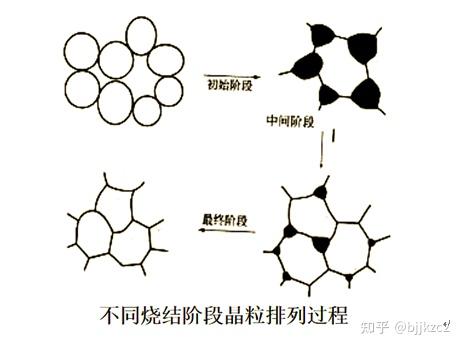
4. Sintering
Initial stage (particle binding stage, before 1050 ℃)
Mid stage (grain growth stage, 1050-1200 ℃)
Final stage (grain correction stage, optimal sintering temperature of 1200 ℃)
5. Upper electrode fabrication
In the production process of piezoelectric ceramics, the manufacturing of the upper electrode is a step. This involves covering the ceramic surface with a layer of conductive material, usually using metals such as Cu, Ag, Ni, Au, etc., through techniques such as sintering, chemical deposition, or vacuum coating. This step is crucial to ensure that piezoelectric ceramic components have excellent conductivity and performance.
6. Polarization processing
Polarization is a crucial step in the production process of piezoelectric ceramics. Although the grains inside ceramics have spontaneous polarization characteristics, namely ferroelectricity, the orientation of their spontaneous polarization domains is random, resulting in no macroscopic polarization strength. Therefore, after the production of piezoelectric ceramic components is completed, polarization treatment is necessary to exhibit the piezoelectric effect. This process is achieved by applying a high-voltage direct current electric field, which causes the electric domains to align in a specific direction. It is worth noting that even after the electric field is removed, this oriented arrangement can still be largely retained, thereby endowing the ceramic with piezoelectric effect.

★ Adopting key polarization devices:
PZT-JH10/4 High temperature piezoelectric ceramic polarization device (polarization of 1-4 pieces of piezoelectric ceramics below 10KV simultaneously)
Keywords: piezoelectric polarization, piezoelectric ceramic materials, 1-4 pieces
The PZT-JH10/4 high-voltage piezoelectric polarization device is mainly used for polarization treatment of piezoelectric ceramics or other piezoelectric materials below 10KV, and is widely used in universities and research and production units engaged in piezoelectric material research or production.
Key Features:
1. Able to polarize 1-4 samples simultaneously
2. Provide three sets of testing fixtures (capable of testing powders, single samples, and thin piezoelectric ceramic sheets)
3. Each circuit has a cut-off protection function when the leakage current exceeds the specified value, which does not affect the polarization of other samples. Other circuits can complete polarization according to normal polarization time.
4. Any sample size of 3-40mm, whether it is a square or circular specimen, can be clamped
7. Working power supply: AC220V 50/60HZ
8. Rated power: 2.0kw
9. Polarization or voltage withstand test of piezoelectric materials: DC: 0-10KV (± 5%+2 words) continuously adjustable
10. Total current: 10mA
11. Cut off current for each channel: 0.5mA
12. Heating time: can be automatically set
13. Heating element: high-quality resistance wire
14. Number of test samples per test: 1-4 samples can be loaded
15. Rated temperature: ≤ 180 ℃
16. Maximum temperature: 200 ℃
17. Temperature control method: intelligent constant temperature control (imported meter), multi-stage program controllable
18. Sample size: 3-40mm square or circular sample
19. Dimensions: 875 * 470 * 400 (mm)
20. ★ Polarization probe: high-quality copper electrode (0.2mm)
21. ★ Standard polarized samples: 8 pieces (10mm * 1.5mm)
22. ★ Supporting equipment and devices: can be configured with 10MM, 20MM, 30MM, and 40MM tablet pressing fixtures
1. Changes in domain orientation before and after polarization
During the polarization process of piezoelectric ceramics, the orientation of the electric domains undergoes significant changes. Unpolarized ceramics exhibit random orientation of their spontaneously polarized domains, resulting in no macroscopic manifestation of polarization strength. However, after being treated with a high-voltage direct current electric field, the electric domains are oriented in a specific direction. Although this oriented arrangement can still be largely preserved after the electric field is removed, thus endowing the ceramic with piezoelectric effect. This change is crucial for the performance and functionality of piezoelectric ceramics.