-
E-mail
16637147536@163.com
-
Phone
16637147536
-
Address
Room 301, 3rd Floor, No. 4 Songfang Garden, Shangdi Xili, Haidian District, Beijing
Beijing Huatong Kechuang Automation Control Technology Co., Ltd
Basic structural design of the Infineon power unit
Date: 2025-10-15Read: 42
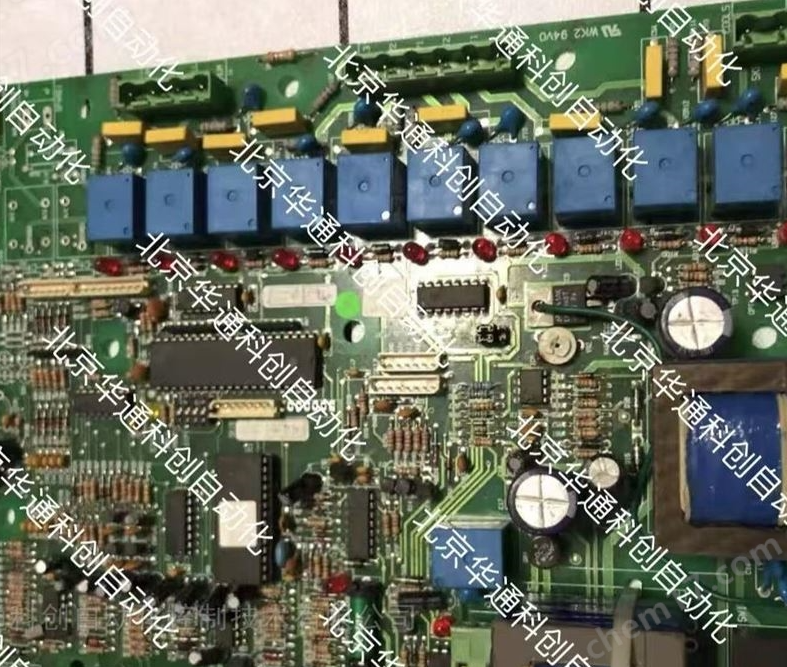
The basic structural design of the Infineon power unit focuses on modularity, compactness, and efficient heat dissipation. Its core components include multiple functional modules and support systems. The following is a specific analysis of the structure:
1. Separation design of main circuit and control circuit: an integrated power module is installed on the power board to form the main circuit; The control board integrates drive circuits, control circuits, and detection circuits to form an independent control circuit. This separated layout facilitates optimized heat dissipation management and reduces the impact of electromagnetic interference on signals. For example, by concentrating the high current main circuit on the power board and utilizing copper cladding technology to enhance heat dissipation, performance degradation or limited operating current caused by temperature rise can be avoided.
2. Collaborative configuration of capacitor components and heat sink system in the Infineon power unit: Some models adopt a separate design of capacitor mounting brackets and heat sink component mounting brackets, which can be independently assembled and then connected. This structure not only simplifies the production process, but also improves maintenance convenience - when maintenance is needed, the capacitor or heat sink can be disassembled separately for processing. In addition, in some schemes, capacitors are directly placed above the power module and combined with vertical blowing fans to achieve forced convection heat dissipation, further improving the reliability and heat dissipation efficiency of the system.
3. Modular internal architecture: The box usually contains components such as DC conversion copper bar modules, absorption modules, IGBT modules, AC busbars, etc. These modules are installed in order from top to bottom, with the DC converter copper bar module located at the top, the absorption module in the middle, and the IGBT module at the bottom. The electrical connections between each layer are achieved through busbars. This hierarchical arrangement makes the assembly process more orderly, while reducing the overall volume and saving equipment space.
4. Integrated solution for compact enclosure of Infineon power units: Some high-voltage power units use a combination of interconnected power boards, capacitor boards, and control boards. Among them, the power board and the capacitor board are on the same plane and interconnected through copper bars, while the control board is placed above them and signal transmission is completed through PCB terminals. This design effectively utilizes the three-dimensional dimensions within a limited space, especially suitable for size sensitive application scenarios.
5. Strengthening measures for thermal management: In configurations involving IGBT and other heating elements, dedicated heat sink bases and matching heat dissipation tooth structures will be equipped. The fan is installed at the bottom of the teeth and facing the blowing direction, ensuring that the airflow directly acts on the heat dissipation surface, thereby quickly dissipating heat. This precise air cooling system can significantly reduce the operating temperature of key components and extend their service life.
6. Electrical connection and signal processing optimization of the Infineon power unit: The temperature detection circuit on the control board (such as the design based on temperature sensitive resistors) monitors the temperature status of the power module in real time to ensure stable system operation. At the same time, the detection circuit can also integrate functions such as input phase loss protection and bus voltage monitoring to enhance fault response capability and safety.
7. Standardized interfaces and scalability: Standardized connectors or copper bars are commonly used for electrical connections between modules, ensuring low impedance conduction paths and facilitating later maintenance and replacement. For example, by using copper bars as intermediate hubs for communication and collection, the collection and distribution of multiple output signals can be managed uniformly, enhancing the flexibility and scalability of the system.
Last Article: Emerson Power Unit User Manual
Next Article: The Infineon power unit has strong adaptability