-
E-mail
info@tvscope.cn
-
Phone
15261811715
-
Address
Super dimensional scenery
Beijing Chaoweijing Biotechnology Co., Ltd
Revealing the characteristics and mechanisms of temporal changes in neuronal activity in the hind limb motor cortex induced by simulated weightlessness
Date: 2025-10-31Read: 5
During long-term manned flights, the changes in exercise behavior caused by weightlessness directly affect the work ability of astronauts, which is due to the combined effect of changes in central nervous system function and muscle atrophy. Although studies have shown that spaceflight can cause changes in brain structure and function, the specific characteristics of changes in the central motor nervous system have not been clear. Therefore, monitoring neuronal activity in the motor cortex under simulated weightlessness environment and exploring its regulatory mechanism on changes in motor behavior is of great significance. However, previously, due to the lack of real-time monitoring, long-term dynamics, and single-cell resolution neuron activity recording tools, it was impossible to monitor the dynamic changes of motor cortex neurons in simulated weightlessness mice during free movement behavior in real time.
In order to further analyze the neural mechanism of longitudinal functional changes in the motor cortex caused by simulated weightlessness, and to obtain the dynamic changes in the activity of hind limb motor cortex neurons during simulated weightlessness and recovery periods at the single-cell level, the ultra dimensional miniaturized two-photon technology was used to achieve continuous dynamic monitoring of L2/3 neuron activity in the hind limb motor cortex of mice during the unloading (HU) simulation weightlessness and subsequent recovery stages.
Research
2025/09
On September 19, 2025,China Astronaut Research and Training CenterLi Yingxian/Li Jianwei research team in internationally renowned journalsResearchPublished under the title“Dynamic Changes in Hindlimb Motor Cortex Neurons During Simulated Weightlessness Revealed by Miniature 2-Photon Microscopy”Research paper (DOI: 10.34133/research.0877).

Screenshot of the online publication of the paper
This study used miniaturized two-photon imaging technology and other research methods to find that long-term simulated weightlessness leads to a gradual decline in motor function in mice, accompanied by sustained changes in the activity of L2/3 layer neurons in their hind limb motor cortex. These neurons can be divided into three categories: "activated", "inhibited", and "unresponsive". They exhibit highly heterogeneous response characteristics in simulated weightlessness environments. The activity of activated neurons increases over time in both active and passive movements, but the proportion of activated neurons related to passive movements decreases, while the proportion related to active movements remains unchanged. It is worth noting that after two weeks of recovery, the motor behavior of the mice returned to normal. Although there was a certain delay in the recovery of some neuronal activity, the proportion and activity level of neurons of the same type mostly returned to the baseline state (Figure 1).
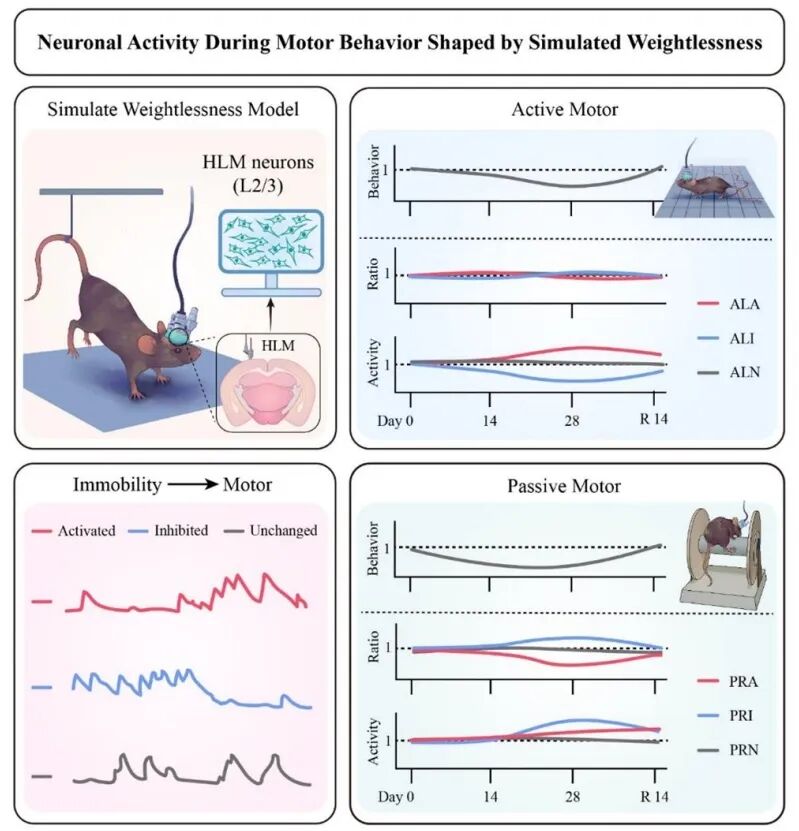
Figure 1. Pattern diagram of changes in motor behavior and hind limb motor cortex neuron activity under simulated weightlessness
In this study, researchers first conducted behavioral tests on mice subjected to simulated weightlessness at different times. The results showed that with the prolongation of simulated weightlessness time, the exercise ability of mice showed a gradual decline. In the open field active movement experiment, the active movement behavior of mice under simulated weightlessness for 28 days further decreased compared to 14 days, indicating that in addition to muscle atrophy, the functional changes of the nervous system (especially the hind limb motor cortex) caused by simulated weightlessness are also very important for the asymptotic changes in this movement ability (Figure 2).
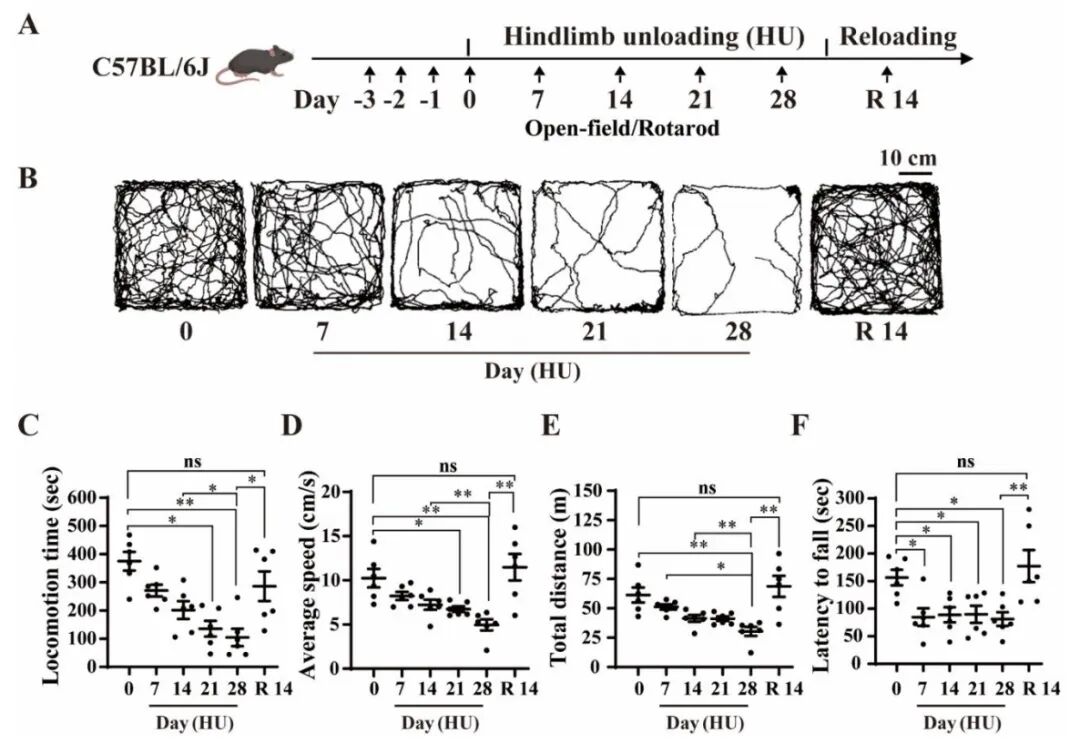
Figure 2. Gradual decline in motor function caused by simulated weightlessness, which returns to normal two weeks after the end of tail suspension
Next, the researchers found that under long-term simulated weightlessness, the neuronal activity in the hind limb motor cortex exhibited three different response patterns, with 22.9% of neurons showing a significant decrease in activity, 18% showing a significant increase, and the remaining 59.1% showing no significant change in activity (Figure 3, Video 1). The above results confirm at the single-cell level that simulated weightlessness leads to sustained disturbances in neuronal activity, providing important evidence for a deeper understanding of the impact of simulated weightlessness on neural function.
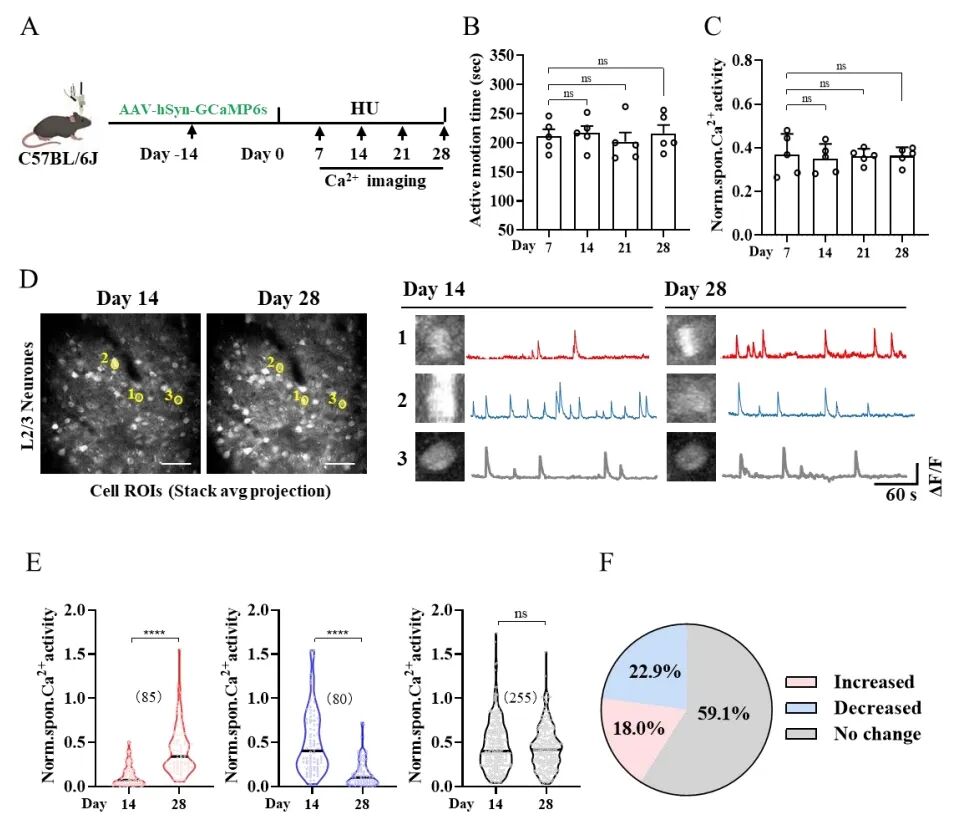
Figure 3. Two photon calcium imaging reveals heterogeneous changes in neuronal activity in the hind limb motor cortex of mice induced by simulated weightlessness
Using two-photon imaging for single-cell level calcium activity analysis of hind limb motor cortex neurons, researchers found that in the behavioral paradigms of active movement (open field experiment) and passive movement (baton experiment), hind limb motor neurons can be divided into three categories: "activated", "inhibited", and "unresponsive". Under simulated weightlessness, the calcium activity characteristics and proportional changes of these three types of neurons show high heterogeneity. Specifically, when maintaining high-speed active movement behavior, the activity of activated neurons in the hind limb motor cortex of mice subjected to simulated weightlessness for 28 days was significantly enhanced compared to 14 days, indicating that as the simulated weightlessness time prolonged, more neuron activation was required to maintain high-speed movement behavior (Figure 4). In the passive movement behavior of the spinning stick experiment, although there was no difference in the drop time of the spinning stick between the 14 day and 28 day simulated loss of weight, significant changes were observed in the activity and proportion of neurons in the hind limb motor cortex that maintained passive movement on the spinning stick, confirming the sustained changes in neuronal activity in this area caused by simulated weightlessness.

Figure 4. Changes in the activity of motor cortex neurons in the hind limbs of mice under simulated weightlessness in open field experiments
In addition, the study also revealed the molecular mechanism by which simulated weightlessness affects the hind limb motor cortex. Under simulated weightlessness, significant changes occurred in genes related to dopaminergic nerve differentiation, synaptic transmission and plasticity, and neuroendocrine regulation in the mouse motor cortex. Among them, the expression of dopaminergic signaling pathway genes, which are crucial for motor control, showed significant changes. At the same time, unloading the hind limbs significantly enriches immune inflammation related pathways in the motor cortex, upregulating the expression of neuroinflammation related genes such as Ccl3 and Il31ra, and neuroinflammation is an important cause of changes in neuronal function in this area.
This study elucidated the dynamic adaptation patterns of hind limb motor cortex neurons under simulated weightlessness at the single-cell level, revealing the important role of the central nervous system in changes in aerospace motor function. The pattern of "neuronal heterogeneity response" discovered in research andDopamine signalThe potential regulatory mechanism of neuroinflammatory pathway activation on the functional changes of neurons caused by weightlessness provides a theoretical basis and new ideas for the development of targeted protective measures for aerospace neurological disorders. At the same time, this study also provides a more modal data basis for analyzing the neural regulation patterns of motor function during spaceflight, and offers a new perspective for exploring the neural plasticity regulation mechanisms of the central system adapting to simulated weightlessness environments.
//
The co corresponding authors of this paper are Researcher Li Yingxian and Associate Researcher Li Jianwei from the China Astronaut Research and Training Center, Researcher Zhang Lifeng from the Nanjing Institute of Translational Medicine at Peking University, and Researcher Ling Shukuan from the Oujiang Laboratory. Fan Yuanyuan, a postdoctoral fellow at the China Astronaut Research and Training Center/Associate Professor at the School of Life Sciences, Henan University, and Li Jianwei, Associate Researcher at the China Astronaut Research and Training Center, are co first authors of this paper. This study has received funding support from multiple projects, including the Science and Technology Innovation 2030- "Neuroscience and Brain like Research" Major Project, the National Natural Science Foundation of China, the Nanjing Brain Observatory Exploration Program, and the China Postdoctoral Science Foundation.