-
E-mail
85405976@qq.com
-
Phone
13955096002
-
Address
No. 20 Renhe South Road, Tianchang City
Anhui Tiankang (Group) Co., Ltd
Selection Guide for Tiankang 3051 Pressure Transmitter: Core Strategy for Precise Adaptation to Industrial Scenarios
Date: 2025-10-26Read: 48
As a core equipment in the field of industrial process control, the selection of Tiankang 3051 pressure transmitter requires comprehensive consideration of four dimensions: measurement range, accuracy level, medium characteristics, and environmental adaptability.This article systematically sorts out the key elements of selection from the perspectives of technical parameters and engineering applications, providing scientific decision-making basis for industrial users.
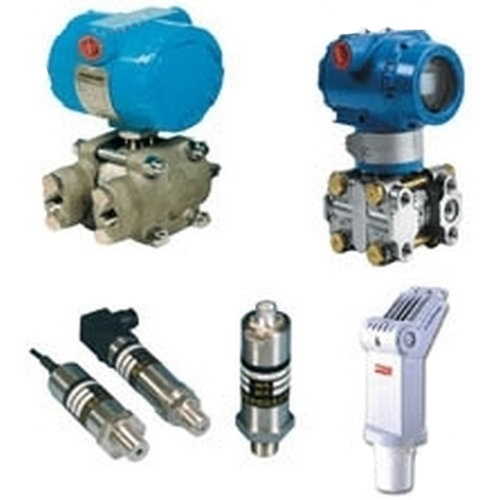
1、 Measurement range and range ratio adaptation
The Tiankang 3051 pressure transmitter supports wide range measurement from 0.1kPa to 100MPa, covering micro differential pressure to ultra-high pressure scenarios. When selecting, the "range redundancy principle" should be followed, which means that the ordered range should be greater than 1/3 of the maximum pressure on site. For example, when the maximum pressure on site is 2MPa, it is recommended to choose a 3MPa range model to cope with instantaneous overload impact. Its 100:1 range ratio design allows a single device to adapt to multiple operating conditions, significantly reducing inventory costs.
2、 Balance between accuracy level and stability
This series offers four levels of precision: 0.05%, 0.1%, 0.25%, and 0.5%. The selection needs to match the process control requirements. The petrochemical industry typically requires a precision of 0.075% to ensure accurate flow measurement, while general process control can use 0.25% grade products. Its long-term stability reaches 0.25%/60 months, thanks to the monocrystalline silicon sensing membrane and digital compensation technology, which can effectively resist temperature drift and static pressure effects.
3、 Media compatibility design
For corrosive media, it is necessary to choose Hastelloy C-276 or tantalum diaphragm material; It is recommended to install a flange type remote transmission device for high viscosity media to avoid blocking the pressure pipe. For slurry containing particulate matter, a flat membrane structure should be selected to prevent sediment accumulation. If the medium has strong permeability, a double-layer isolation membrane design should be used to ensure sealing reliability.
4、 Enhanced environmental adaptability
The device has a protection level of IP65 and can withstand working temperatures ranging from -40 ℃ to 85 ℃. In high-temperature steam scenarios, measuring elements filled with high-temperature silicone oil need to be selected, with a maximum tolerance of 315 ℃. For environments with severe electromagnetic interference, it is recommended to use the HART protocol for digital signal transmission, combined with shielded twisted pair cables to reduce noise impact. Its explosion-proof type (ExdIIBT4) and intrinsic safety type (ExiaICT6) designs can meet the safety requirements of Zone 1 and Zone 2 explosion-proof areas.
5、 Output signal and power supply scheme
The standard configuration is 4-20mA two-wire output, supporting HART protocol intelligent communication for remote configuration and diagnosis. If compatibility with traditional control systems is required, 0-5V or 0-10V voltage output models can be selected. The power supply range is 12-45VDC, with 24VDC being a typical application value. It is necessary to ensure power stability to avoid output fluctuations.
The selection of Tiankang 3051 pressure transmitter is essentially a precise match between process requirements and technical parameters. Users need to conduct on-site pressure distribution analysis, medium characteristic detection, and environmental condition assessment, combined with core parameters such as equipment range, accuracy, and material, to construct an optimal configuration plan. Its modular design and self diagnostic function can further reduce maintenance costs throughout the entire lifecycle, providing reliable support for industrial process control.
Last Article: Maintenance Techniques for Electric Energy Meters