-
E-mail
85405976@qq.com
-
Phone
13955096002
-
Address
No. 20 Renhe South Road, Tianchang City
Anhui Tiankang (Group) Co., Ltd
Intelligent Water Quality Monitoring in the New Era: The Path of Empowering Microprocessors for Conductivity Meters
Date: 2025-07-21Read: 43
Driven by both industrial production and environmental protection, water quality monitoring has shifted from traditional laboratory analysis to real-time online monitoring. As the core equipment of this transformation, the conductivity meter with microprocessor has become a 'digital sentinel' for water quality safety due to its high precision, intelligence, and multifunctionality. It achieves closed-loop management from data acquisition to decision support through deep integration of microprocessors and conductivity sensors, providing key technical support for fields such as water treatment, chemical engineering, and power.
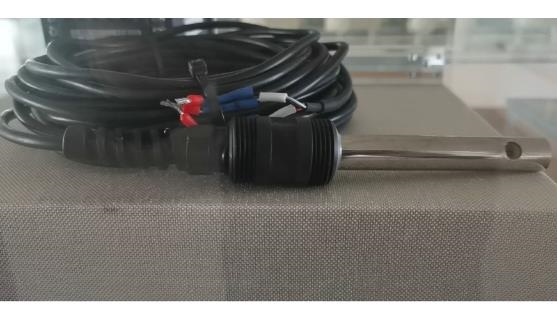
1. Microprocessors: Empowering Instruments with a 'Smart Brain'
Traditional conductivity meters can only measure a single parameter, while modern instruments have built-in microprocessor systems that construct a complete chain of 'perception analysis decision'. Taking a certain model of online conductivity meter as an example, it adopts a 32-bit ARM processor, which can synchronously process 6 sets of parameters such as conductivity, temperature, salinity, etc., and achieve multi parameter correlation analysis through algorithm models. For example, in the monitoring of boiler feedwater in power plants, the system can automatically determine whether the abnormal ion concentration is caused by condenser leakage based on sudden changes in conductivity (such as a sudden increase from 0.1 μ S/cm to 1 μ S/cm) combined with temperature data (from 25 ℃ to 80 ℃), and trigger a three-level alarm mechanism.
2. Intelligent algorithms: breaking through the limitations of traditional measurements
The introduction of microprocessors has pushed the instrument beyond its physical limits. In response to the difficulty of monitoring ultrapure water, a certain brand of instrument adopts the 'dual frequency pulse excitation method', which applies 1kHz and 10kHz dual frequency signals to the electrodes controlled by a microprocessor, effectively eliminating polarization effects and extending the lower limit of pure water conductivity measurement to 0.001 μ S/cm. In the sewage treatment scenario, the neural network algorithm installed in the system can establish a conductivity COD (chemical oxygen demand) correlation model based on historical data, achieving indirect water quality assessment with an error controlled within ± 8%.
3. Industrial Internet of Things: Building a Monitoring Ecosystem
Modern instruments have evolved into industrial IoT nodes. Taking an application case of a chemical plant as an example, its 50 conductivity meters are connected to the edge computing gateway through the RS485 bus, and the microprocessor compresses the original data and uploads it to the cloud platform. The system can generate real-time 3D thermal maps to visually display the conductivity distribution of the entire plant's water system. When the conductivity of a certain area continues to exceed the standard, the platform automatically pushes process adjustment suggestions, such as increasing the frequency of reverse osmosis membrane cleaning or adjusting the dosage, to increase the effluent qualification rate from 92% to 98.5%.
From millisecond level response of boiler feedwater in power plants to long-term stability monitoring of urban pipelines, conductivity meters with microprocessors are redefining the boundaries of water quality monitoring. With the integration of AI chip and edge computing technology, future instruments will have self-learning and self diagnosis capabilities, play a more critical role in the digital twin system, and provide Chinese technical solutions for global water resources protection.