-
E-mail
739915789@qq.com
-
Phone
19941565709
-
Address
No. 788 Shuangying Road, Wuyi Industrial Park, Nanqiao District, Chuzhou City, Anhui Province
Anhui Hilbert Environmental Testing Instrument Co., Ltd
Understanding common troubleshooting methods for constant temperature and humidity test chambers to help you quickly eliminate problems
Date: 2025-07-23Read: 0
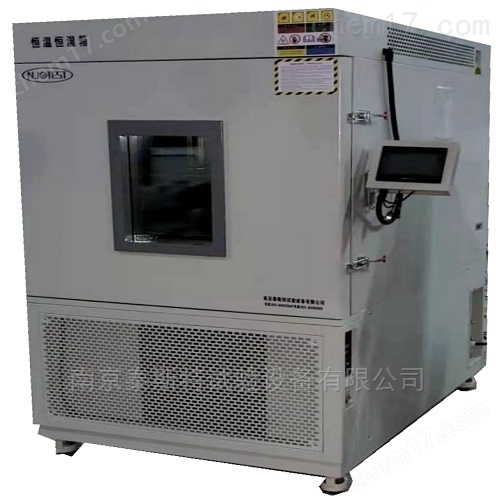
The constant temperature and humidity test chamber may encounter some malfunctions in practical operation, which may affect the accuracy of experimental results and the normal operation of the equipment. This article will provide a detailed introduction to several common faults and their corresponding solutions in constant temperature and humidity test chambers, helping you quickly troubleshoot and ensure stable operation of the equipment.
1、 Temperature out of control: large fluctuations or instability
Fault phenomenon: The temperature continues to deviate from the set value, or the fluctuation range exceeds ± 2 ℃.
Self inspection steps:
Refrigeration system inspection: Observe whether the compressor continues to operate. If the R23 refrigerant of the host group leaks, it will cause a decrease in cooling rate. It is necessary to use a leak detector to locate the leakage point (such as a crack in the valve stem of the hot gas bypass solenoid valve), replace the seal, and recharge the refrigerant.
Heating system troubleshooting: Use a multimeter to check the resistance value of the heating tube, and replace it if it is abnormal; Check the input and output signals of the solid-state relay to confirm whether it can turn on and off the heating power supply normally.
Wind cycle optimization: Clean the dust accumulation in the condenser to ensure normal fan speed; Adjust the air duct baffle to avoid local temperature unevenness caused by sample obstruction.
2、 Abnormal humidity: unable to adjust or fluctuating violently
Fault phenomenon: The humidity display is 100 or below the set value for a long time.
Self inspection steps:
Humidification system maintenance: Check whether the wet bulb sensor gauze is dry or hardened, replace it in a timely manner, and ensure that the lower end of the gauze is immersed in the water tank; Clean the scale of the humidifier to prevent pipeline blockage.
Water supply system inspection: Confirm that the water level in the tank is sufficient and the water quality is distilled water or deionized water; Check if the float ball of the water level controller is stuck, causing the inability to trigger the humidification signal.
Environmental factor intervention: If the external air is dry, humidifiers can be placed around the test chamber to reduce the humidity regulation load.
3、 Device not starting: power or control failure
Fault phenomenon: There is no response after power on, or the display screen is black.
Self inspection steps:
Power system troubleshooting: Check if the power cord is loose and use a multimeter to measure if the voltage is stable; Replace the blown fuse and confirm that the leakage switch has not tripped.
Control system detection: Restart the device and observe the instrument output signal. If there is still no response, replace the damaged contactor or control motherboard.
4、 Sealing failure: leakage of temperature and humidity
Fault phenomenon: There is air leakage around the box door, causing temperature and humidity fluctuations.
Self inspection steps:
Sealing strip inspection: Heat the aging magnetic adhesive strip with a hot air gun to restore its elasticity; If the sealing strip cracks, it needs to be replaced as a whole.
Door lock adjustment: Confirm that the door lock is securely fastened without any looseness or deformation, and adjust the locking position if necessary.