-
E-mail
6066510@qq.com
-
Phone
15802770555
-
Address
13th Floor, Unit 1, Building 2, Fifth Ring Plaza, No. 271 Zhuodao Street, Hongshan District, Wuhan City (13th Floor, Camus Hotel)
Product Categories
Wuhan Huatong Xinda Technology Co., Ltd
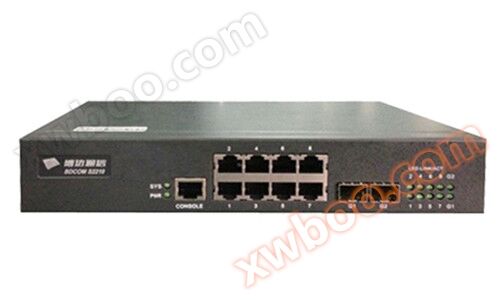
Wuhan Wuhan Layer 2 Network Management Switch 8 100Mbps POE Electrical Port+2 Gigabit/100Mbps Optical Port POE Power 150W
NegotiableUpdate on 08/07
- Model
- Nature of the Manufacturer
- Producers
- Product Category
- Place of Origin
Overview
Wuhan Layer 2 Network Management Switch
Product Details
Product Overview:
The BDCOM S2200PB series switch is a new generation of intelligent POE access switch designed for telecom operators' residential and enterprise networks. The S2200PB series is based on the new generation of high-performance hardware and Boda's proprietary BDROS software platform, which supports powerful ACL, QinQ, QoS and other functions. Its simple and rich management methods, flexible installation methods, enable this series of products to meet the access needs of various complex scenarios.
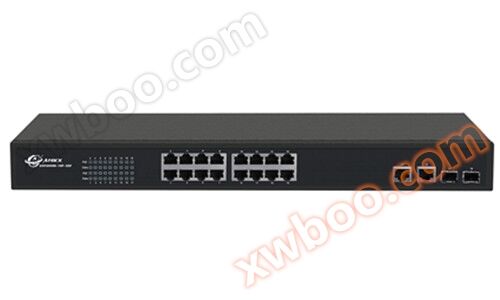
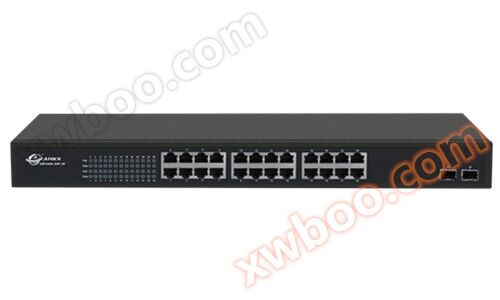
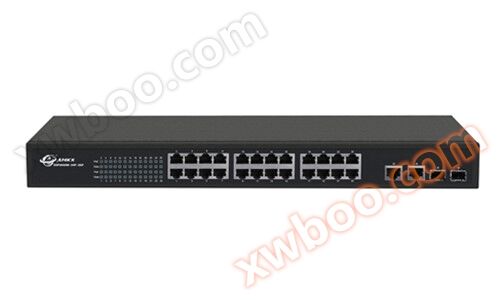
The BDCOM S2200PB series POE switches come in three product forms: S2210PB, S2218PB, and S2226PB, which can meet the access needs of networks of different scales.
Product Features:
Carrier grade Ethernet access switch
Supports carrier grade Ethernet ring protection protocol with protection switching time<50ms; also supports STP/RSTP protocol, dual uplink primary and backup link protection, LACP link aggregation and other simple and efficient redundancy protection mechanisms to meet users' requirements for high reliability.
Powerful ACL function, supporting access and control of L2~L7 layer data, providing users with flexible and diverse policy control methods.
Support ISSU (In Service Software Upgrade) business uninterrupted system upgrade, ensuring uninterrupted forwarding of user data during system upgrade.
Support rich layer 2 multicast functions, including IGMP Snooping, user quick departure mechanism, and cross VLAN multicast replication function.
Complete POE power supply function
Supports 802.3AF/AT standard, built-in high-power power supply, no external power supply required, can support 24 port AF full load power supply.
Supports uninterrupted POE power supply during device hot restart.
When the power supply is insufficient, the priority of the power supply port can be configured, with high priority given to power supply to ensure important business.
POE ports and power lightning protection support up to 2KV.
Rich QoS strategies
Support the classification function of complex flows based on VLAN, MAC, source address, destination address, IP protocol, priority, etc., and support the re labeling of priority, providing a reliable and effective means for users to optimize their business.
Provide flexible bandwidth control strategies, support port based or flow based speed limiting functions, ensure line speed forwarding at each port, and effectively ensure the quality of network services.
Support multiple queue scheduling algorithms such as SP, WRR, or SP+WRR.
Perfect security mechanism
Device level security protection: Advanced hardware architecture design, hardware implementation of hierarchical scheduling and protection of packets, supporting prevention of DoS, TCP SYN Flood, UDP Flood, broadcast storm, high traffic and other attacks on devices; Support command line hierarchical protection, with different levels of users having different management permissions;
Complete security authentication mechanism: Supports IEEE 802.1x, Radius, BDTacacs+, etc., providing users with a comprehensive security authentication mechanism.
Support the suppression function of broadcast, multicast, and unknown unicast messages to ensure the normal operation of devices under harsh network conditions.
A comprehensive loop detection mechanism can ensure the stable operation of the network for a long time.
Provide port isolation within the same VLAN, as well as security features such as DHCP Snooping, IP+MAC+port binding, further ensuring user data security.
Flexible and convenient management and maintenance
Supports multiple management methods such as Console, Telnet, SSH, etc.
Support WEB management, which is simpler and more efficient, and easier for engineering and maintenance personnel to install and debug.
Supports TFTP file upload and download management.
Support ISSU (In Service Software Upgrade) business without interrupting system upgrades.
Supports standard SNMP protocol and, in conjunction with the "NMS" intelligent network management platform, can achieve functions such as automatic device discovery, network topology management, device configuration management, performance data statistical analysis, and fault management, simplifying network management and providing users with a brand new user experience.
Product specifications:
project |
S2210PB |
S2218PB |
S2226PB |
|
Whole machine exchange capacity |
10Gbps |
21.2Gbps |
22.8Gbps |
|
Complete package forwarding rate |
5.6Mpps |
8.4Mpps |
9.6Mpps |
|
MAC capacity |
8K |
8K |
8K |
|
Business Port Description |
8 100Mbps electricity+2 Gigabit light |
16 100MB+2 Gigabit Comb |
24 100MB+2 Gigabit Comb |
|
Chassis size mm (width x depth x height) |
280*179*45 |
440×232×44 |
440×232×44 |
|
Local power consumption |
<15W |
<15W |
<15W |
|
POE/POE+ |
support |
support |
support |
|
POE power supply |
150W |
330W |
400W |
|
power supply |
AC:100V-240V,50Hz±10% |
|||
Environmental requirements |
Working temperature/humidity: 0 ℃ -50 ℃, 10% -90% without condensation Storage temperature/humidity: -20 ℃ -70 ℃; 5% -95% no condensation |
|||
MAC switching function |
Support static configuration and dynamic learning of MAC addresses Support viewing and clearing MAC addresses MAC address aging time can be configured Support MAC address learning quantity limit Support MAC address filtering function |
|||
VLAN |
Support 4K VLAN table entries Support GVRP Support QinQ function Support Private VLAN |
|||
STP |
Supports 802.1D (STP), 802.1W (RSTP), 802.1S (MSTP) Support BPDU protection, root protection, and loop protection |
|||
Multicast |
Support IGMP v1/v2/v3 Support IGMP Snooping Support IGMP Fast Leave Support multicast group strategy and limit the number of multicast groups Support cross VLAN replication of multicast traffic (not supported by Docker8POE) |
|||
QoS |
Support traffic classification based on L2/L3/L4 protocol header fields (not supported by S928POE) Support CAR traffic restriction Support 802.1P/DSCP priority re labeling (not supported by S928POE) Support queue scheduling methods such as SP, WRR, SP+WRR, etc Support congestion avoidance mechanisms such as Tail Drop and WRED Support traffic regulation and traffic shaping |
|||
Security features |
Support ACL flow recognition and filtering security mechanism based on L2/L3/L4 (not supported by Docker8POE) Support anti DDoS attacks, TCP SYN Flood attacks, UDP Flood attacks, etc Support the suppression function for multicast, broadcast, and unknown unicast messages Supports port isolation Support port security, IP+MAC+port binding (not supported by S928POE) Supports DHCP Snooping and DHCP Option 82 (not supported by Docker8POE) Support IEEE 802.1x authentication Support Radius, BDTacacs+certification Support command line hierarchical protection |
|||
reliability |
Support static/LACP link aggregation Supports EAPS and ERPS Ethernet ring protection protocols (not supported by Docker8POE) Support uninterrupted system upgrade for ISSU business |
|||
Management and Maintenance |
Support Console, Telnet, SSH 2.0 Support browser based WEB management Support SNMP v1/v2/v3 Support TFTP file upload and download management Support RMON event history recording |
|||
Ordering information:
project |
describe |
S2200PB series POE switch | |
S2210PB |
8-port 100Mbps power+2 port Gigabit power, Ethernet POE switch (1 Console port, 8 100Mbps POE electrical ports, 2 Gigabit optical ports, standard power supply AC220V, POE power 150W, fan cooling, 1U height, desktop installation) |
S2218PB |
16 port 100Mbps power+2 port Gigabit Comb, Ethernet POE switch (1 Console port, 16 100Mbps POE ports, 2 Gigabit Comb ports (optical ports support 100Mbps adaptive), standard power supply AC220V, POE power 330W, fan cooling, 1U height, standard 19 inch rack mounted installation) |
S2226PB |
24 port 100Mbps power+2 port Gigabit Comb, Ethernet POE switch (1 Console port, 24 100Mbps POE ports, 2 Gigabit Comb ports (optical ports support 100Mbps adaptive), standard power supply AC220V, POE power 400W, fan cooling, 1U height, standard 19 inch rack mounted installation) |
Optical Module | |
100Mbps optical module | |
FSFP-SX-1310 |
100Mbps SFP multimode (2Km, 1310nm, LC, DDM) |
FSFP-LX-15 |
100Mbps SFP single-mode (15Km, 1310nm, LC, DDM) |
FSFP-LX-40 |
100Mbps SFP single-mode (40Km, 1310nm, LC, DDM) |
FSFP-ZX-80 |
100Mbps SFP single-mode (80Km, 1550nm, LC, DDM) |
|
FSFP-LX-SM1310-20-BIDI FSFP-LX-SM1550-20-BIDI |
100Mbps SFP single-mode, single core bidirectional (20Km, TX1310/RX1550, LC, DDM) 100Mbps SFP single-mode, single core bidirectional (20Km, TX1550/RX1310, LC, DDM) |
|
FSFP-LX-SM1310-40-BIDI FSFP-LX-SM1550-40-BIDI |
100Mbps SFP single-mode, single core bidirectional (40Km, TX1310/RX1550, LC, DDM) 100Mbps SFP single-mode, single core bidirectional (40Km, TX1550/RX1310, LC, DDM) |
|
FSFP-LX-SM1310-80-BIDI FSFP-LX-SM1550-80-BIDI |
100Mbps SFP single-mode, single core bidirectional (80Km, TX1310/RX1550, LC, DDM) 100Mbps SFP single-mode, single core bidirectional (80Km, TX1550/RX1310, LC, DDM) |
Gigabit optical module | |
GSFP-TX-B |
Gigabit SFP optical to RJ45 electrical port module |
GSFP-SX-D |
Gigabit SFP multimode (500m, 850nm, LC, DDM) |
GSFP-LX-10-D |
Gigabit SFP single-mode (10Km, 1310nm, LC, DDM) |
GSFP-LX-20-D |
Gigabit SFP single-mode (20Km, 1310nm, LC, DDM) |
GSFP-LX-40-D |
Gigabit SFP single-mode (40Km, 1310nm, LC, DDM) |
GSFP-ZX-80-D |
Gigabit SFP single-mode (80Km, 1550nm, LC, DDM) |
GSFP-ZX-120-D |
Gigabit SFP single-mode (120Km, 1550nm, LC, DDM) |
|
GSFP-LX-SM1310-10-BIDI GSFP-LX-SM1550-10-BIDI |
Gigabit SFP single-mode, single core bidirectional (10Km, TX1310/RX1550, LC, DDM) Gigabit SFP single-mode, single core bidirectional (10Km, TX1550/RX1310, LC, DDM) |
|
GSFP-LX-SM1310-20-BIDI GSFP-LX-SM1550-20-BIDI |
Gigabit SFP single-mode, single core bidirectional (20Km, TX1310/RX1550, LC, DDM) Gigabit SFP single-mode, single core bidirectional (20Km, TX1550/RX1310, LC, DDM) |
|
GSFP-LX-SM1310-40-BIDI GSFP-LX-SM1550-40-BIDI-1310 |
Gigabit SFP single-mode, single core bidirectional (40Km, TX1310/RX1550, LC, DDM) Gigabit SFP single-mode, single core bidirectional (40Km, TX1550/RX1310, LC, DDM) |
|
GSFP-LX-SM1490-80-BIDI GSFP-LX-SM1550-80-BIDI |
Gigabit SFP single-mode, single core bidirectional (80Km, TX1490/RX1550, LC, DDM) Gigabit SFP single-mode, single core bidirectional (80Km, TX1550/RX1490, LC, DDM) |
|
GSFP-LX-SM1490-120 GSFP-LX-SM1550-120 |
Gigabit SFP single-mode, single core bidirectional (120Km, TX1490/RX1550, LC, DDM) Gigabit SFP single-mode, single core bidirectional (120Km, TX1550/RX1490, LC, DDM) |
Similar Product Recommend