-
E-mail
2356253838@qq.com
-
Phone
18918225919
-
Address
206, Building 5, No. 319 Tongli Road, Jiuting Town, Songjiang District, Shanghai
Product Categories
Shanghai Spectral Analysis Instrument Co., Ltd


UV visible spectrophotometer absorbance tester
NegotiableUpdate on 01/14
- Model
- Nature of the Manufacturer
- Producers
- Product Category
- Place of Origin
Overview
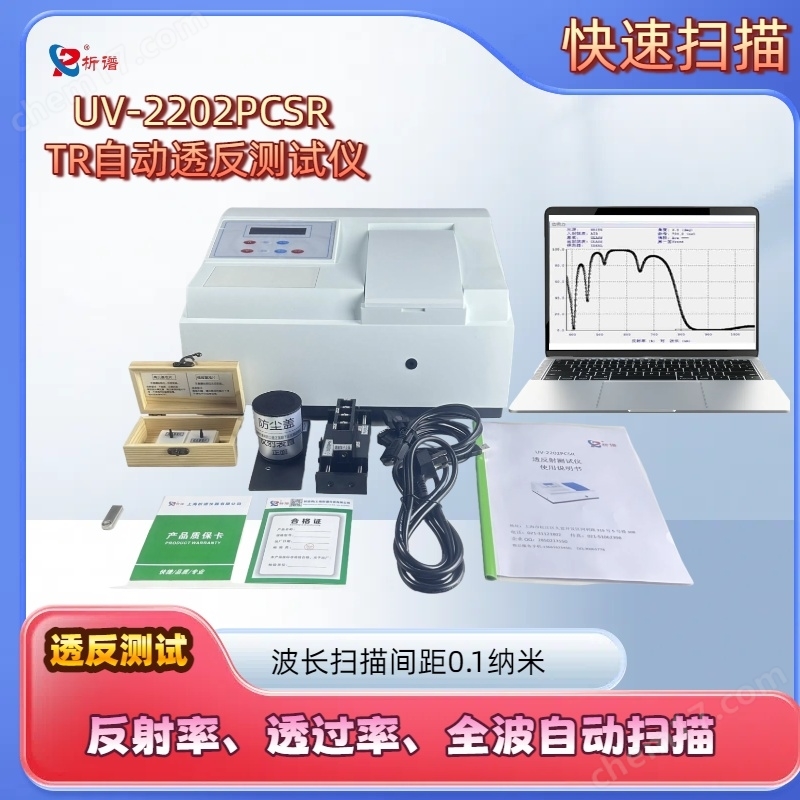
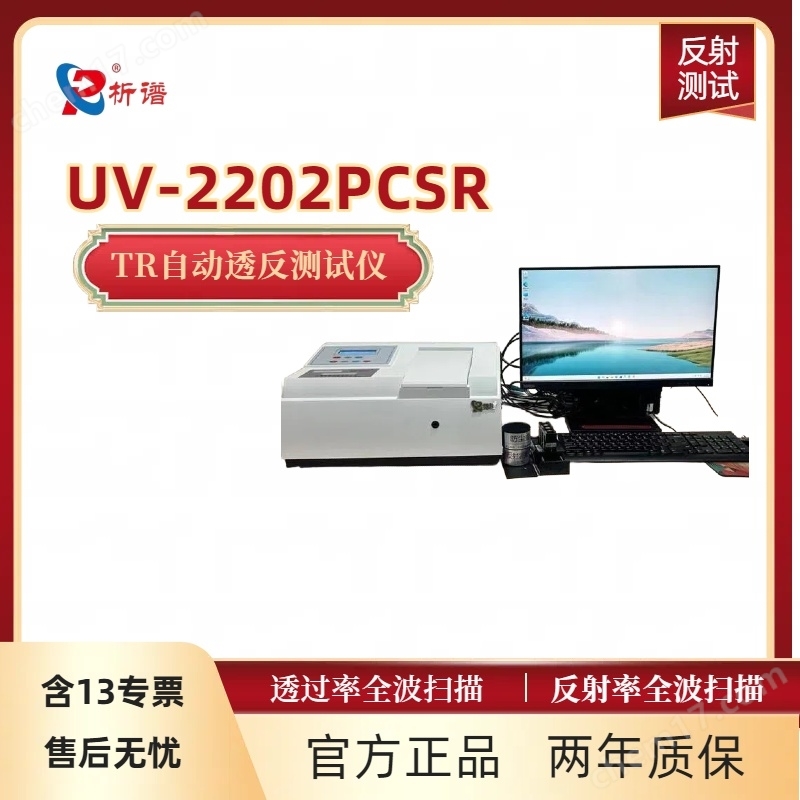
UV-2202PCS UV Visible spectrophotometer absorbance tester $n UV Visible spectrophotometer is an instrument that analyzes the absorption characteristics of substances for ultraviolet (200-380 nm) and visible light (380-780 nm). Due to its simple operation, fast speed, relatively low cost, high sensitivity, and wide application range, it has become a basic instrument for laboratories in multiple fields such as chemistry, biology, medicine, environment, materials, and food
Product Details
Spectral analysis of UV-2202PCSUV visible spectrophotometer absorbance tester
Quantitative analysis:
-
Water quality analysis:Determination of total nitrogen, total phosphorus, nitrate, nitrite, ammonia nitrogen, heavy metals (such as hexavalent chromium, lead, iron, manganese, copper, etc., usually requiring colorimetric reactions), chemical oxygen demand, phenols, surfactants, etc. in water.
-
biochemistry:
-
Drug analysis:Determine the content of active ingredients in raw materials and formulations; Dissolution test; Content uniformity inspection.
-
Food analysis:Measure the content of additives (such as preservatives, sweeteners, pigments), nutrients (such as vitamins A, C, E), pollutants (such as nitrites, heavy metals), etc. in food.
-
Chemical product analysis:Determine the purity or concentration of raw materials, intermediates, and products.
-
Protein quantification:Utilizing its UV absorption at 280 nm (mainlyTryptophan and tyrosine).
-
Nucleic acid quantification:Measure the absorption of DNA/RNA at 260 nm.
-
Enzyme activity assay:By monitoring the changes in absorbance caused by substrate consumption or product generation in enzymatic reactions (often in the visible light range, using chromogenic substrates).
-
Cell concentration:Roughly measure the turbidity of microbial culture medium (around 600 nm).
-
Concentration measurement:This is the most essential application. By measuring the absorbance of a sample solution at a specific wavelength, the concentration of a specific component in the solution is calculated using Lambert Beer's law. Widely used in:
-
Qualitative analysis:
-
Material identification:By scanning the absorption spectrum (absorption curve) of the sample in the UV visible region, the position (maximum absorption wavelength λ max) and shape of its characteristic absorption peak are obtained, and compared with standard samples or databases to assist in identifying compounds (especially unsaturated compounds and aromatic compounds).
-
Purity inspection:Observe whether the sample spectrum meets expectations and whether there are characteristic absorption peaks of impurities.
-
-
Chemical kinetics research:
-
Monitor the changes in the concentration of reactants or products over time during chemical reactions (through changes in absorbance), in order to study reaction rates, reaction orders, and determine rate constants.
-
-
Determination of complex composition and stability constant:
-
Using methods such as continuous variation and molar ratio, the composition and stability of complexes can be studied by analyzing the changes in spectral characteristics (absorption peak position, intensity) after the formation of complexes.
-
-
Spectral analysis of UV-2202PCSUV visible spectrophotometer absorbance tester
-
Molecular structure inference:
-
The characteristics of absorption spectra (such as K band, R band, B band, E band) can provide information on chromophores, chromophores, and conjugated systems in molecules, assisting in the structural analysis of organic compounds.
-
Similar Product Recommend