-
Phone
13277804090
-
Address
1st and 2nd floors, Office Area 106, Building 6, Hanlin Yujing, No. 9 Daxue East Road, Xixiangtang District, Nanning City
Product Categories
- Prepaid electricity meter
- Intelligent wireless remote control valve
- Large caliber ultrasonic water meter
- ic card water meter
- Water control machine (one meter with multiple hot water meters)
- IC card electricity meter
- Smart Water Management
- Intelligent water meter
- Intelligent gas meter
- Prepaid water meter
- Smart Agriculture and Water Conservancy
- Intelligent heat and cold meter
- smart meter
Guangxi Xintian Intelligent Technology Co., Ltd
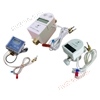
Structural characteristics of various energy meters and cooling meters
NegotiableUpdate on 03/31
- Model
- Nature of the Manufacturer
- Producers
- Product Category
- Place of Origin
Overview
Structural characteristics of various energy meters and cooling meters
Product Details
◆ Product Description
A cooling meter consists of three parts: a flow meter, a paired temperature sensor, and an integrator. Among these three parts, the technology for paired temperature sensors and integrators is relatively mature and stable. Therefore, the current focus of cooling meter technology is mainly on the flow meter, and the classification of accuracy levels and types of cooling meters are based on the flow meter. The following mainly introduces the application of various structures of flow meters in cooling meters. (Disclaimer: The product images and structures mentioned in this article are all our own products and are not related to products from other companies.)
1、 Mechanical cooling meter
The basic principle of a mechanical cooling meter is that the water flow drives the rotation of the impeller, and the number of rotations of the impeller is proportional to the flow rate. The integrator calculates the flow rate by collecting the number of rotations of the impeller. Due to the mechanical wear caused by the rotation of the impeller, the selection of the impeller shaft and shaft sleeve material determines the service life of the cooling meter. The material of the impeller shaft mainly comes in three forms: 1. Pure stainless steel, mainly used in water meters, is cheap in price but has poor wear resistance; 2. Hard alloy, mainly used in single or multi flow cooling meters, with good wear resistance; 3. Stainless steel+hard alloy head, mainly used in multi flow cooling meters, with good wear resistance at the top.
image:
Stainless steel shaft with hard alloy embedded at the top
1. Single stream cooling capacity meter
image:
Structure:
Features:
The cooling gauge of a single beam flowmeter can see the impeller inside from the inlet and outlet ports of the flowmeter. Calculate the incoming water volume by measuring the number of impeller rotations in the flowmeter. The water flow of the flowmeter directly impacts the impeller from a single direction, forming a unidirectional force on the impeller. Therefore, to ensure measurement accuracy and durability, a whole hard alloy shaft and gemstone sleeve must be used, and the cost of the movement is higher than that of a multi beam cooling gauge. Due to the fact that the number of rotations through a water impeller of the same volume is much less than that of a multi flow meter, the amount of mechanical wear is equivalent to that of a multi flow meter. The technical difficulty of production is greater than that of a multi stream cooling gauge.
Advantages:
1)Easy maintenance:Due to the visible impeller at the inlet and outlet ports of the watch body, after blockage, the property management personnel can dismantle the watch on site and remove impurities by using water to impact the impeller, a screwdriver to push the impeller, and other methods.
2)Low procurement cost:The cost of raw materials is equivalent to that of a multi beam heat meter and lower than that of an ultrasonic cooling meter.
Disadvantages:
1)High comprehensive usage cost:The rotation of the impeller causes mechanical wear, resulting in inaccurate measurement of the cold meter, which leads to periodic replacement or maintenance by users. The cold meter needs to be frequently drained during use, and the cost of later use and maintenance is high;
2)Poor measurement reliability:Small impurities passing through the front filter of the cooling meter can cause impeller blockage, resulting in the cooling meter not measuring properly, and the current cooling water quality cannot avoid this phenomenon from occurring;
3)There are many measurement disputes:Due to the intermittent blockage of the impeller with varying water volume at different stages during the use of mechanical cooling meters, some may be completely blocked while others may not, resulting in an increase in the difference in cooling capacity between units of the same type. This makes it difficult for users to understand and leads to dissatisfaction, thereby increasing the difficulty of metering and charging work.
2Multi stream cooling capacity meter
image:
Structure:
Features:
The multi beam flowmeter cold meter calculates the incoming water volume by measuring the number of impeller rotations in the flowmeter. During operation, water is divided into multiple streams and evenly pushes the impeller to rotate from all sides. Therefore, the wear of the impeller shaft is mainly concentrated at the top of the impeller shaft. Stainless steel shafts with embedded alloy heads and plastic shaft sleeves can be used to relatively reduce costs.
Advantages:
Low procurement cost:The cost of raw materials is equivalent to that of a single beam heat meter and lower than that of an ultrasonic cooling meter.
Disadvantages:
1)High comprehensive usage cost:The rotation of the impeller causes mechanical wear, resulting in inaccurate measurement of the cold meter, which leads to periodic replacement or maintenance by users. The cold meter needs to be frequently drained during use, and the cost of later use and maintenance is high;
2)Poor measurement reliability:Small impurities passing through the front filter of the cooling meter can cause impeller blockage, resulting in the cooling meter not measuring properly, and the current cooling water quality cannot avoid this phenomenon from occurring;
3)There are many measurement disputes:Due to the intermittent blockage of the impeller with varying water volume at different stages during the use of mechanical cooling meters, some may be completely blocked while others may not, which increases the difference in cooling capacity between units of the same type, making it difficult for users to understand and causing dissatisfaction, thus increasing the difficulty of measuring and charging;
4)Inconvenient maintenance:In addition to the drawbacks of having a single flow meter as mentioned above, multiple flow meters have a higher proportion of blockage compared to a single flow meter in practical use. And due to the inability to see the impeller at the inlet and outlet ends of the body, it is necessary to disassemble the body after blockage before discharging (this work usually requires returning to the factory for maintenance), causing great inconvenience in use.
In practical use and experimental data, it has been shown that as long as appropriate shafts and bushings are selected, a single flow meter can have the same service life as a multi flow meter.
Spiral wing cooling gauge
image:
Features:Suitable for large caliber cold meters, with better measuring performance than anti blocking cold meters, but poorer anti blocking performance. This structure is widely used in current large-diameter cooling meters.
Anti blocking heat meter
image:
Features: Suitable for large caliber cold meters, with the best anti blocking performance among mechanical cold meters, but poor metering performance, high starting flow rate, small flow range, generally only reaching 1:25
Common characteristics of mechanical refrigeration meters:
1)Low procurement cost; 2) High comprehensive usage cost; 3) Poor measurement reliability; 4) There are many measurement disputes; 5) Inconvenient maintenance
2、 Ultrasonic heat meter
Ultrasonic Heat Meter is a device that adds temperature measurement to an ultrasonic flow meter, and calculates the cooling capacity provided to users based on the cooling capacity of the fluid and the temperature difference between the supply and return water. The flow measurement part is an indirect measurement method that uses a pair of ultrasonic transducers to alternately (or simultaneously) transmit and receive ultrasonic waves in opposite directions. By observing the time difference between the forward and backward propagation of ultrasonic waves in the medium, the flow velocity of the fluid is indirectly measured, and then the flow rate is calculated based on the flow velocity, as shown in Figure 1.
Figure 1: Schematic diagram of ultrasonic time difference method principle
In Figure 1, we see two transducers, a forward flow transducer and a reverse flow transducer. The two transducers are installed on both sides of the fluid pipeline at a certain distance from each other. The inner diameter of the pipeline is D, the path length of the ultrasonic wave is L, the forward flow time of the ultrasonic wave is T upstream, and the reverse flow time is T downstream. The angle between the propagation direction of the ultrasonic wave and the flow direction of the fluid is θ, and the flow velocity of the fluid is V. Due to the flow of the fluid, the time it takes for the ultrasonic wave to propagate the L length of the forward flow is shorter than that of the reverse flow, and the time difference can be expressed by the following equation:
*Where C is the speed at which sound propagates in water.
So the time difference between the forward flow time and the backward flow time is:
To simplify the calculation, we can assume that the velocity of the fluid is very small relative to the speed at which sound waves propagate in the fluid. Therefore, we can simplify the above equation as:
Thus, we obtain a linear formula for the difference between the velocity and propagation time of a fluid, which is:
It should be emphasized that V is the linear velocity of the fluid along the centerline of the pipeline. Considering the uneven distribution of liquid velocity along the diameter of the pipeline, we also need to add a velocity (distribution) correction factor K. Therefore, the formula for instantaneous flow rate is:
After obtaining the instantaneous flow rate, the integration calculation of the cooling capacity in the ultrasonic cooling meter adopts the K-coefficient method popular in Europe: assuming that the water temperature of the inlet pipe is T1 and the water temperature of the outlet pipe is T2, the temperature difference between the inlet and outlet water is △ T. The instantaneous cold water flow rate Q of the supply pipe is measured by a flow sensor, and after a certain period of time, the accumulated cooling capacity value consumed by the user is obtained. Its mathematical expression is:
In the formula, E is the output cooling capacity of the cold exchange system, measured in J; t is the flow accumulation time, measured in h; K is the cold baking correction coefficient, measured in J/m3; Q is the instantaneous cold water flow rate, measured in m3/h; △ T is the temperature difference between the inlet and outlet water, measured in ℃. In this way, we can first calculate the instantaneous flow rate through the time difference of ultrasonic propagation, and then obtain the consumed cooling capacity.
1Direct ultrasonic cooling meter
image:
Large caliber structure:
Small caliber structure:
Features:Measure water volume by measuring the time difference between ultrasonic waves propagating upstream and downstream. Suitable for large caliber cold meters.
Disadvantages:
1)Significant pressure loss:In the application of small-diameter ultrasonic cooling meters, direct ultrasonic cooling meters have greater pressure loss compared to reflective ultrasonic cooling meters;
2)Easy to retain impurities:The special nature of the small-diameter direct ultrasonic cooling meter mechanism can easily cause impurities to accumulate in the flowmeter, resulting in increased pressure loss and affecting the normal measurement of the meter;
3)Low service life:Due to structural reasons, one transducer is facing the direction of water flow, and in special circumstances, the lifespan of the transducer may be reduced due to water hammer phenomenon;
4)High procurement cost:The cost of raw materials is higher than that of mechanical cooling meters.
Advantages:
1)Low comprehensive usage cost:No mechanical impeller rotation, no mechanical wear, low cost of later use and maintenance, and much longer service life than mechanical cooling meters;
2)Good measurement reliability:The small impurities passing through the front filter of the cold meter will not affect the accurate measurement of the ultrasonic cold meter;
3)Less measurement disputes:When using an ultrasonic cooling gauge, it is not blocked, not worn, and has accurate measurement, which is conducive to the smooth progress of cooling measurement work;
4)Easy maintenance:Ultrasonic cooling meters are basically maintenance free products.
2Reflective ultrasonic cooling meter
image:
Principle structure:
Characteristic: The water volume is measured by the time difference between ultrasonic waves propagating upstream and downstream. Suitable for small caliber cooling meters. It is currently the mainstream structure of small-diameter cooling meters with low pressure loss.
Disadvantages:
High procurement cost:The cost of raw materials is higher than that of mechanical cooling meters;
Advantages:
1)Low comprehensive usage cost:No mechanical impeller rotation, no mechanical wear, low cost of later use and maintenance, and much longer service life than mechanical cooling meters;
2)Good measurement reliability:The small impurities passing through the front filter of the cold meter will not affect the accurate measurement of the ultrasonic cold meter;
3)Less measurement disputes:When using an ultrasonic cooling gauge, it is not blocked, not worn, and has accurate measurement, which is conducive to the smooth progress of cooling measurement work;
4)Easy maintenance:Ultrasonic cooling meters are basically maintenance free products:
5)Less pressure loss:In the application of small-diameter ultrasonic cooling meters, the pressure loss of reflective ultrasonic cooling meters is relatively small compared to direct ultrasonic cooling meters.
3、 Evaluation of the statement about scaling in ultrasonic cooling meters
The biggest concern with the statement of fouling is the fouling problem of the reflector. In fact, with good design, it is completely possible to avoid the impact of scaling on the reflector.
1. Ultrasonic waves have their own cleaning function(High frequency oscillation signals are converted into high-frequency mechanical oscillations (ultrasonic waves) by ultrasonic transducers and propagate into the medium (water). The radiation of ultrasonic waves in water causes the liquid to vibrate and produce tens of thousands of tiny bubbles. These bubbles are generated and grow in the negative pressure zone formed by the longitudinal propagation of ultrasonic waves, and quickly close in the positive pressure zone. In this process known as cavitation effect, tiny bubbles can generate an instantaneous high pressure of over 1000 atmospheres when they close The continuously generated instantaneous high pressure, like a series of small explosions, constantly impacts the surface of the object, causing the dirt on the surface and gaps of the object to quickly peel off, thus achieving the purpose of cleaning the object.);
2. Through special structural design, the water flow can clean the surface of the transducer at any time;
3. By increasing the power of the transducer transmission circuit and improving the sensitivity of the receiving circuit, the received amplitude of the ultrasonic signal can be much larger than the actual required amplitude (at least three times or more);
4. The Institute of Metrology used adhesive tape to stick to the ultrasonic reflector in the experiment, and the experimental results did not affect the measurement accuracy; Our company did not affect the acceptance amplitude of ultrasonic waves in actual experiments using mirrors that have already formed scales (made of ordinary materials that are prone to scaling).
four、Formula for calculating cooling capacity using a cold energy meter
Total cooling consumption kwh=(inlet temperature ℃ - return temperature ℃) × instantaneous flow rate m3/h × K coefficient
From the above formula, it can be seen that the calculation of cooling capacity must know three values:
1. The K coefficient refers to the functional value of the cooling capacity that water can carry at different temperatures, and is a regular quantitative measure;
2. The temperature difference of water entering and leaving the household (measured by temperature sensors) in ℃;
3. Instantaneous flow (measured by flow meters): can be divided into mechanical flow meters and ultrasonic flow meters.


