-
E-mail
2356253838@qq.com
-
Phone
18918225919
-
Address
206, Building 5, No. 319 Tongli Road, Jiuting Town, Songjiang District, Shanghai
Product Categories
Shanghai Spectral Analysis Instrument Co., Ltd
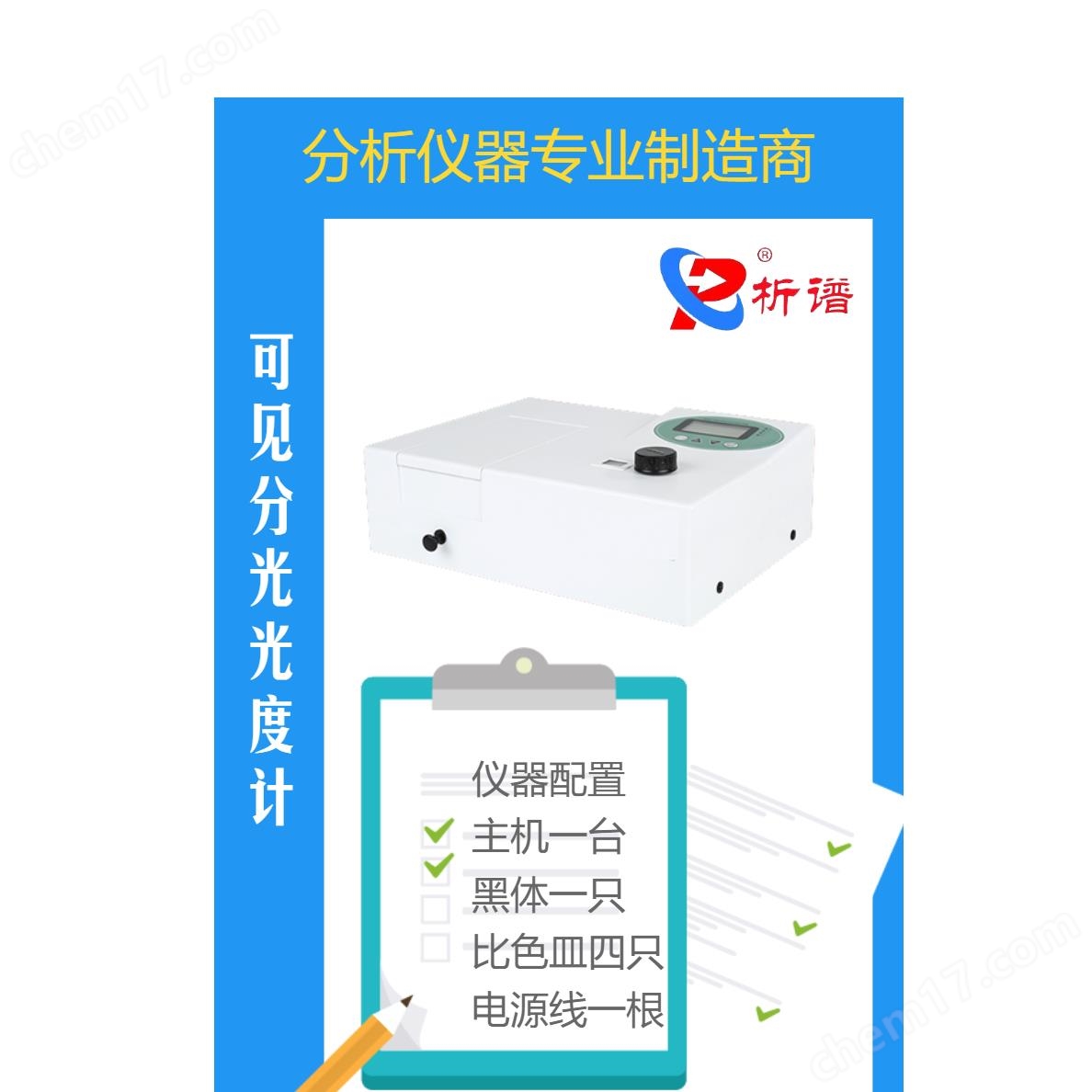


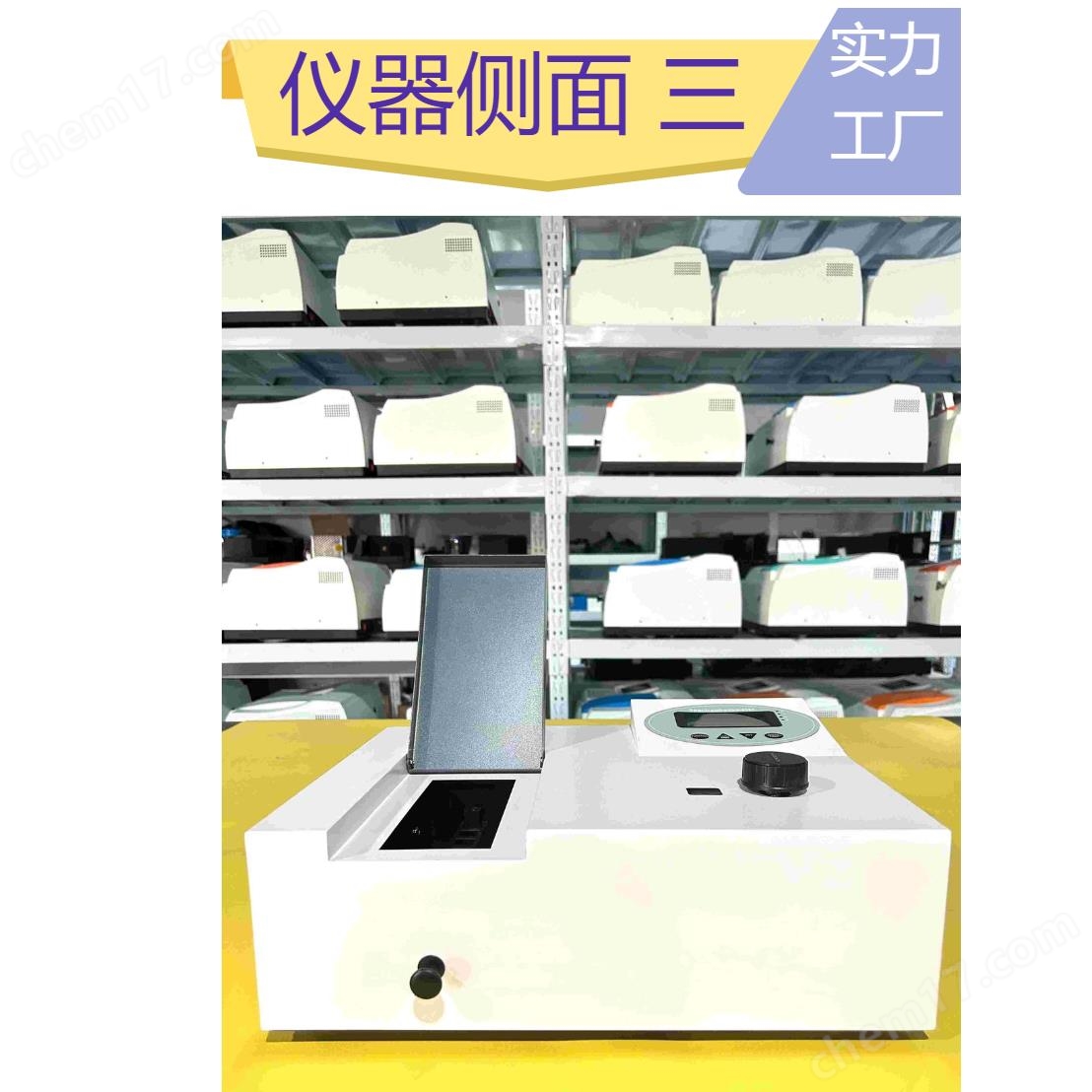
Spectral analysis, total nitrogen, total phosphorus, ammonia nitrogen, formaldehyde testing, visible spectrophotometer
NegotiableUpdate on 01/14
- Model
- Nature of the Manufacturer
- Producers
- Product Category
- Place of Origin
Overview
721 Spectral Analysis Total Nitrogen, Total Phosphorus, Ammonia Nitrogen, Formaldehyde Test Visible Spectrophotometer Visible Spectrophotometer is an analytical instrument used to measure the absorbance or transmitted light of substances in the visible light range (380-780 nm). It is based on the quantitative or qualitative analysis of the absorption characteristics of substances towards specific wavelengths of light, and is widely used in fields such as chemistry, biology, environment, and food.
Product Details
Spectral analysis, total nitrogen, total phosphorus, ammonia nitrogen, formaldehyde testing, visible spectrophotometer
Based onLambert Beer Law:
among which
A: Absorption
εMolar absorption coefficient (material characteristic constant)
cSolution concentration
l: Optical path length (colorimetric dish thickness, usually 1 cm)
Conclusion: absorbanceCompared to solution concentrationDirectly proportional, quantitative analysis can be conducted based on this.
Spectral analysis, total nitrogen, total phosphorus, ammonia nitrogen, formaldehyde testing, visible spectrophotometer
light source
Tungsten lamp or halogen lampIt emits visible light (400-800 nm) and has high stability.
Monochromator
Grating or prismSeparate composite light into single wavelength light.
Wavelength selectorManually or automatically adjust the wavelength (accuracy ± 1 nm).
sample room
cuvetteGlass or quartz material (quartz can be extended to the ultraviolet region), with a typical optical path length of 1 cm.
detector
Phototube or photodiodeConvert optical signals into electrical signals.
Signal Processor and Display
Convert the electrical signal into absorbance/transmittance values and display the results.
Main application scenarios
Concentration measurement
Quantitative analysis of dyes, metal ions (Fe ² ⁺/Cu ² ⁺), and biochemical indicators (blood glucose) in solution.
Study on Chemical Reaction Dynamics
Monitor changes in absorbance during the reaction process (such as enzymatic reaction rate).
Water quality/environmental testing
Measure COD (chemical oxygen demand), ammonia nitrogen, total phosphorus, etc. (with accompanying colorimetric reagents).
food industry
Detection of pigment content and additive concentration (such as lemon yellow in beverages).
Teaching and Research
Basic Analytical Chemistry Experiment.
5、 Operation process
Power-on preheating
Stable light source (usually takes 10-15 minutes).
Wavelength setting
Select the maximum absorption wavelength of the test substance (e.g. KMnO ₄ is 525 nm).
Blank correction
Spectral analysis 721: Use a solvent (such as distilled water) to zero the visible spectrophotometer (absorbance A=0).
Sample measurement
Inject the test solution into the colorimetric dish and place it in the sample chamber to read the absorbance value.
data analysis
Calculate the concentration based on the standard curve.
Similar Product Recommend