-
E-mail
15065698879@163.com
-
Phone
15065698879
-
Address
Gaoxin Oulong Technology Park
Product Categories
- Mercury analyzer
- Bacterial Collector
- Radon detector
- Quantitative sampling robot
- Fully automatic open flash point tester
- Karl Fischer titration method for trace moisture determination
- Multi-element rapid analyzer
- Specific surface area and pore size analyzer
- Particle strength tester
- Fermentation exhaust gas analyzer
- Food safety detector
- Cable fault tester
Shandong Hengmei Electronic Technology Co., Ltd
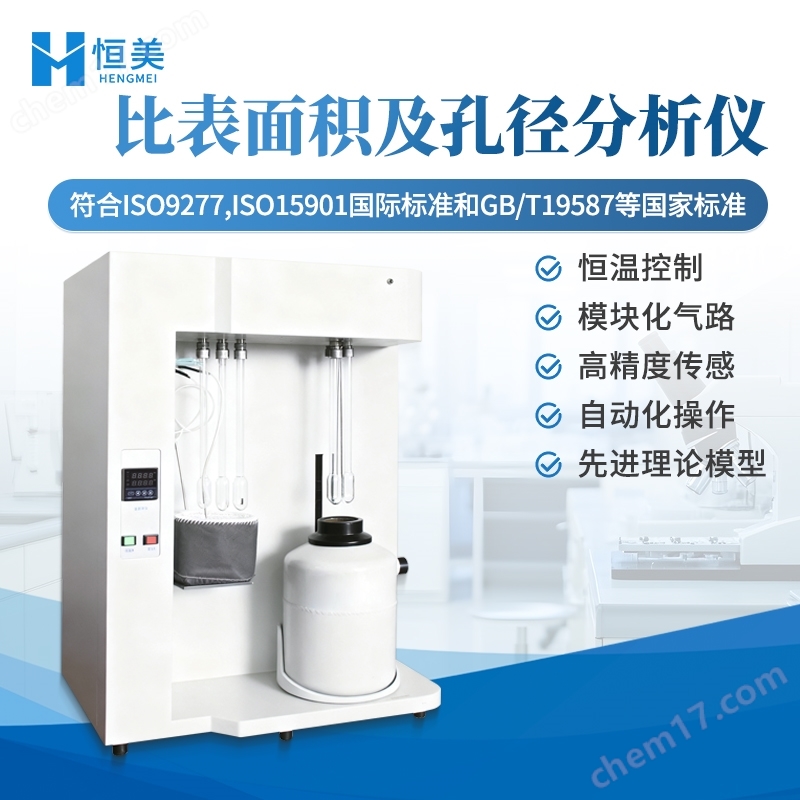
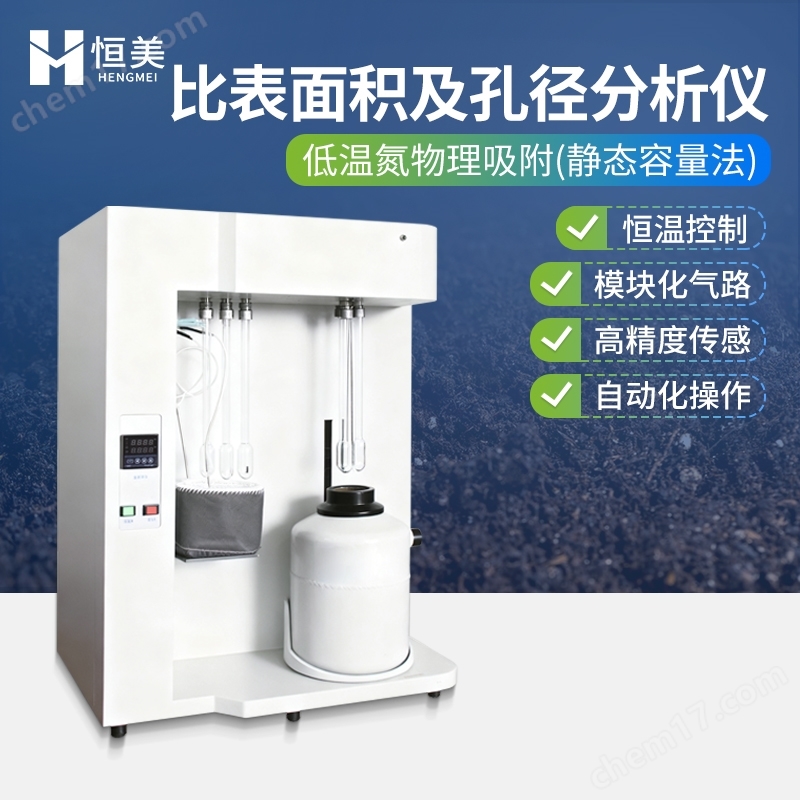
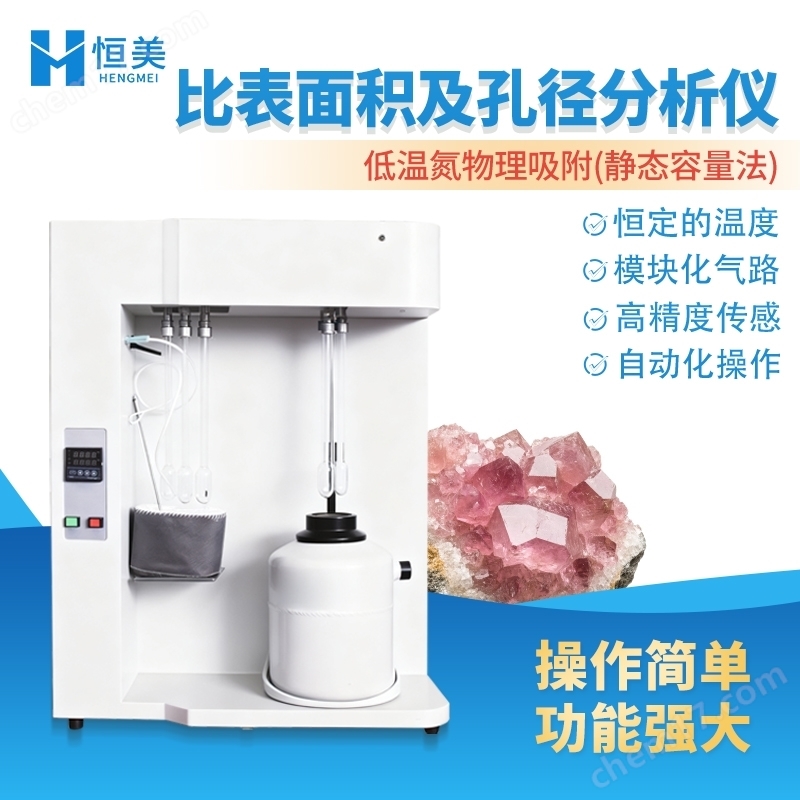
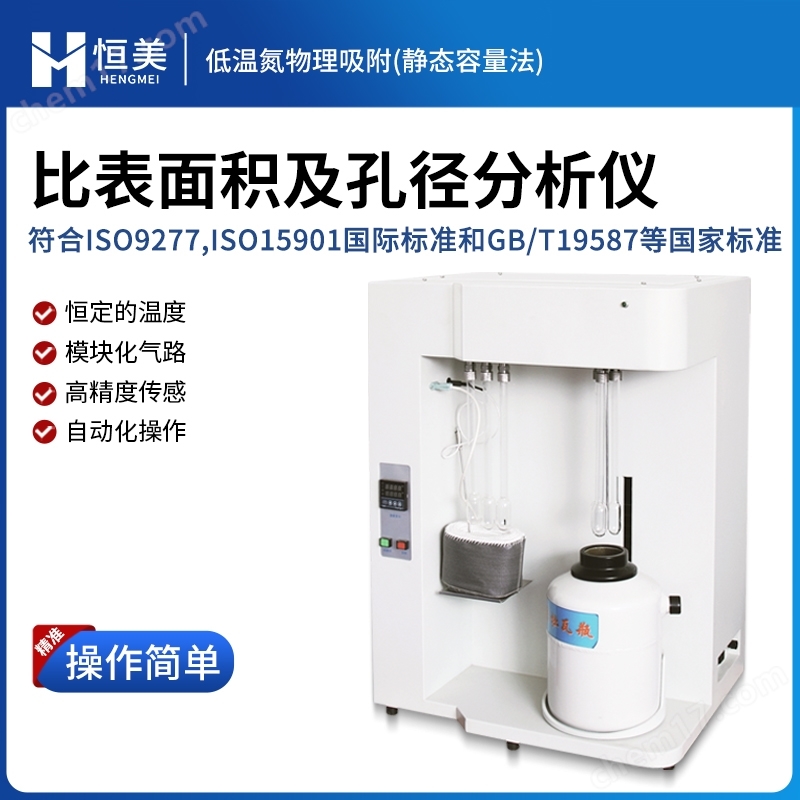
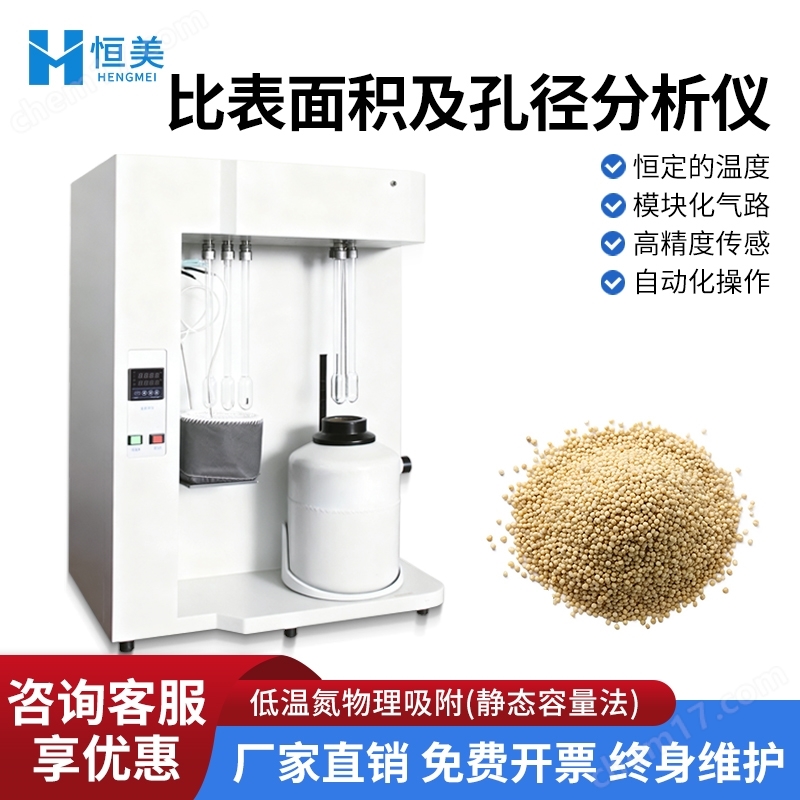
Specific surface area and pore size analyzer, fully automatic porosity detector
NegotiableUpdate on 12/29
- Model
- Nature of the Manufacturer
- Producers
- Product Category
- Place of Origin
Overview
The fully automatic porosity detector for specific surface area and pore size analyzer tests the adsorption process based on the static capacity method through mass balance equation, static gas balance, and pressure measurement.
Product Details
1Specific surface area and pore size analyzer, fully automatic porosity detectorInstrument Introduction:
Specific surface area and pore size analyzer, fully automatic porosity detectorCompliant with international standards such as ISO9277, ISO15901, and national standards such as GB/T19587, the adsorption process is tested using the static capacity method through mass balance equations, static gas equilibrium, and pressure measurements. The testing process is conducted at liquid nitrogen temperature. When a known amount of gas is injected into the sample tube through a branch, it will cause a pressure drop. Therefore, the molar mass of the adsorbed gas at adsorption equilibrium can be calculated. By measuring the equilibrium adsorption capacity, the theoretical model is used to determine the single point and multi-point BET specific surface area and Langmuir specific surface area of the tested sample; Volume and area distribution of BJH mesopores and macropores, total pore volume; T-plot micropore volume and surface area, Dubinin Astakhov micropore distribution, Horvath Kawazoe, SF micropore distribution, MP micropore distribution; Non local density function theory (NLDFT) and Monte Carlo (GCMC) aperture distribution model parameters.
model1010102010301001
aperture3.5 to 5000 angstroms (0.35-500nm)
Testing principleLow temperature nitrogen physical adsorption (static capacity method)
Adsorbed gasNon corrosive gases such as nitrogen (default) and helium
specific surface area0.0005 ㎡/g to no upper limit0.0001 ㎡/g to no upper limit
P/P0 range1×10-6―0.9981×10⁻⁸―0.998
vacuum pumpImported two-stage mechanical pumpImported two-stage mechanical pump+diffusion pump or molecular pump
ultimate vacuum1.0x10-4Torr1.0x10-6Torr
Imported pressure sensor3 with an accuracy of 0.1%4 with an accuracy of 0.1%6 precision 0.1%4, with an accuracy of 0.1%
Analysis Station1 piece2 of them3 of them1 piece
Degassing station3 of them
◆ Modular air circuit design
The fully automatic surface area and porosity analyzer has been introducedDesign concept, adopting a unique modular all stainless steel vacuum gas path design andAnti leakage and pollution-free measures ensure the realization of high vacuum, avoiding the disadvantage of easy leakage due to too many connecting pipeline joints.
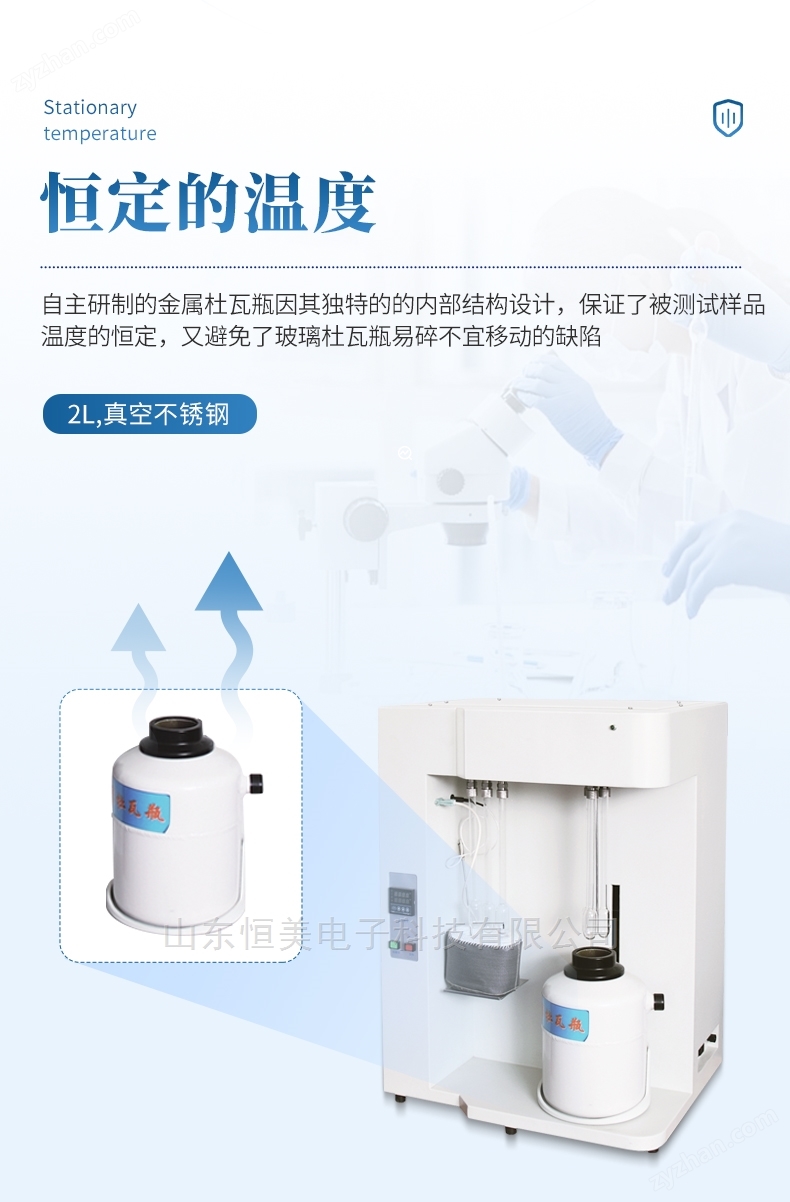
◆ Constant temperature
The independently developed metal Dewar flask, due to its unique internal structural design, ensures a constant temperature of the tested sample while avoiding the fragility and inability to move of glass Dewar flasks.
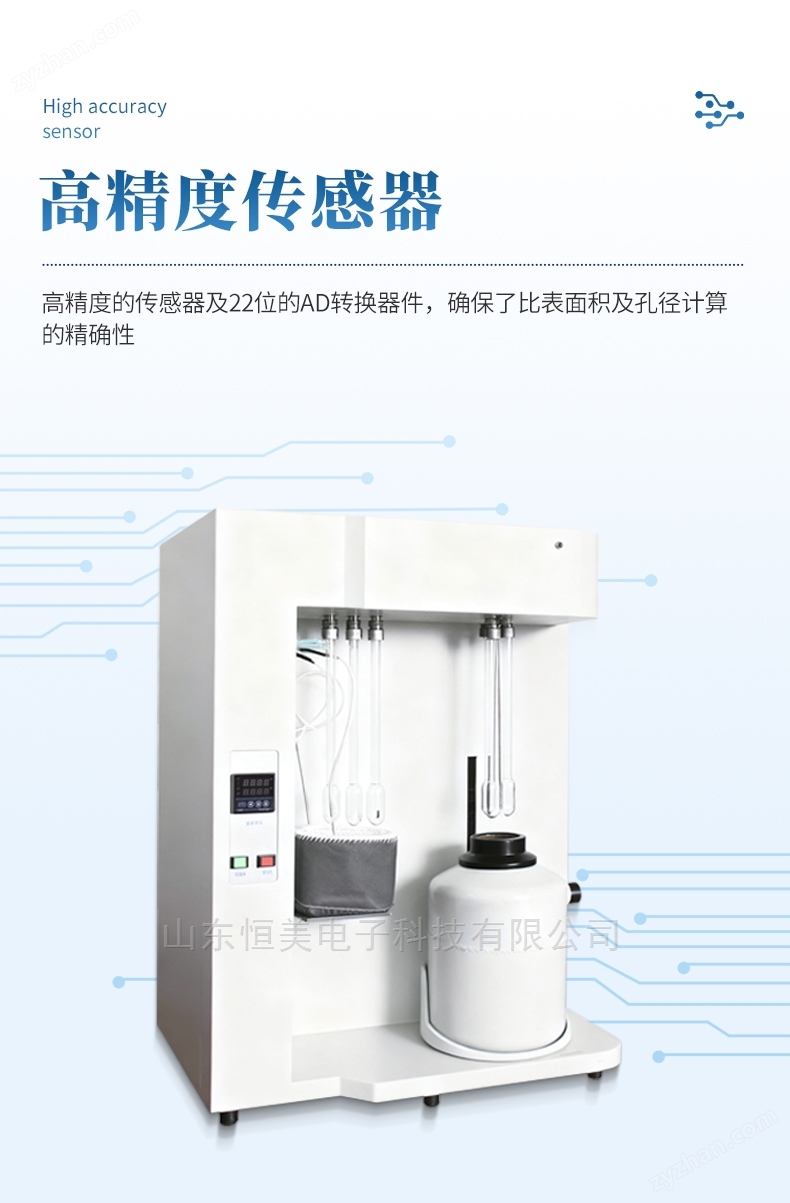
◆ High precision sensors
Multiple high-precision sensors and 22 bit AD conversion devices ensure the accuracy of specific surface area and aperture calculations.
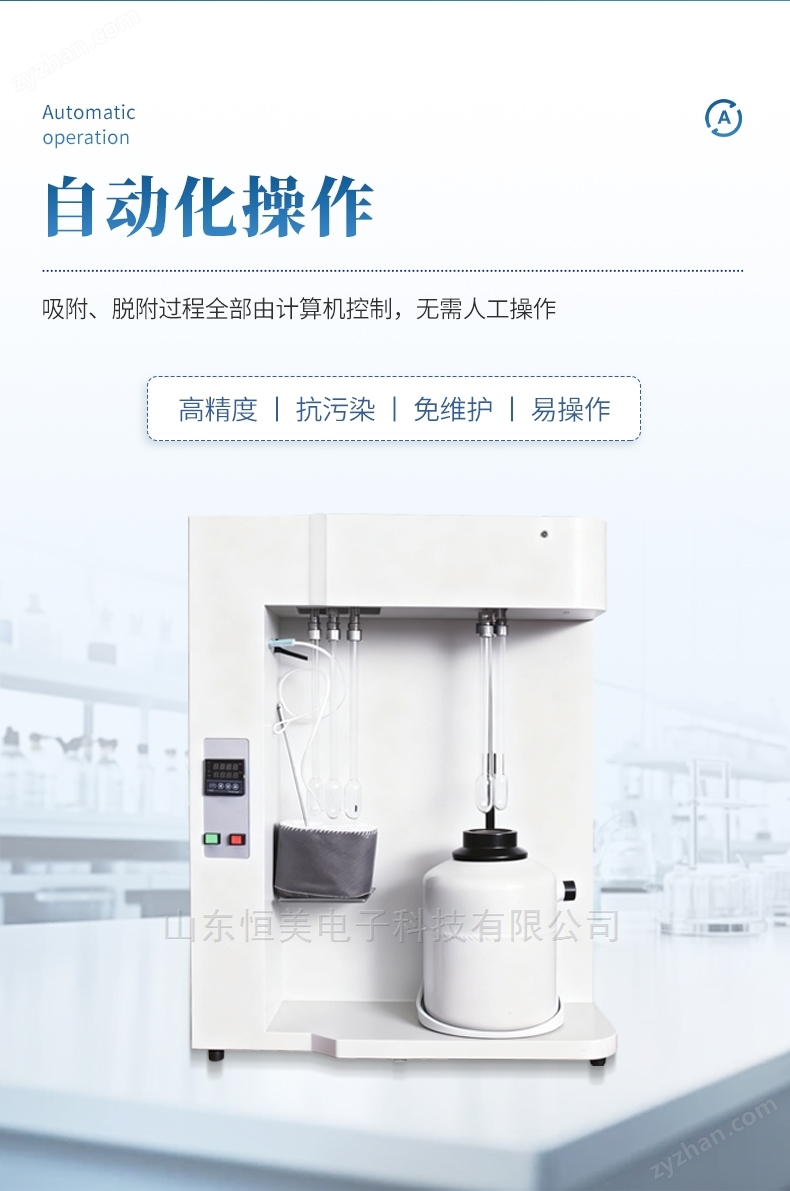
◆ Operational automation
The adsorption and desorption processes are all computer-controlled and do not require manual operation
2、 Technical features:
Single point and multi-point BET specific surface area, Langmuir specific surface area
Volume and area distribution of mesopores and macropores in lBJH, total pore volume
LT - plot micropore volume and surface area
Distribution of Dubinin Astakhov micropores
Lovath Kawazoe, SF micropore distribution
LMP micropore distribution
Density Function Theory (NLDFT) and Monte Carlo (GCMC) Aperture Distribution Model
True density test
3、 Technical parameters:
1. Specific surface area: 0.0001 ㎡/g to no upper limit
2. Aperture analysis range: 3.5 to 5000 angstroms
3. Test principle: Low temperature nitrogen physical adsorption (static capacity method)
4. Adsorbed gases: Non corrosive gases such as nitrogen (default) and helium.
5. Independent P0 saturation pressure test tube, P/P0 range 1 × 10⁻⁸-0.998
6. Pressure and temperature measurement:
ImportPressure sensor 0-120KPa, accuracy 0.1%, 2 pieces
Imported pressure sensor 0-1KPa, accuracy 0.1%, 1 piece
Imported pressure sensor 0-100Pa, accuracy 0.1%, 1 piece
Temperature sensor: PT-100, accuracy 0.1 degrees, 1 unit
7. Dewar flask: 2L, vacuum stainless steel.
8. Vacuum pump: imported two-stage mechanical pump+diffusion pump or molecular pump
9. Ultimate vacuum degree: 1.0x10⁻⁶Torr
10. Measurement software: determination of adsorption/desorption isotherms
11. There is one analysis station and three degassing stations, with a degassing temperature of up to 400 ° C. The three degassing positions are located in the same soft heating package, and the analysis position is not used as a degassing position.
Output report:
Directly print and EXCEL output adsorption desorption isotherms, BET specific surface area, Langmuir specific surface area, t-plot micropore volume, BJH pore volume, pore area, total pore volume, total pore area, Dbinin Astakhov, Horvath Kawazoe micropore distribution, NLDFT/GCMC pore distribution, and review report.
5、 Application scope:
Research and product testing of various materials, including measuring zeolites, molecular sieves, silica, alumina, soil, clay, catalysts, organic metal compound skeleton structures, and other materials.





Similar Product Recommend