- Phone
-
Address
Huirong Wansheng Technology Industrial Park, No. 9 Nanguandu Road, Yuexi Street
Product Categories
Suzhou Siqi Electronic Technology Co., Ltd
Simulated power supply for power grid
NegotiableUpdate on 05/20
- Model
- Nature of the Manufacturer
- Producers
- Product Category
- Place of Origin
Overview
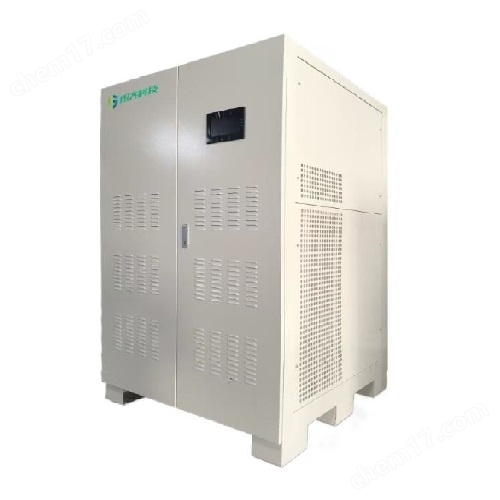
Grid simulation power supply is essentially a high-performance, programmable AC power supply. But unlike ordinary AC power sources, its core function is to accurately simulate various working conditions of the real power grid, rather than just providing stable sine wave power.
Product Details
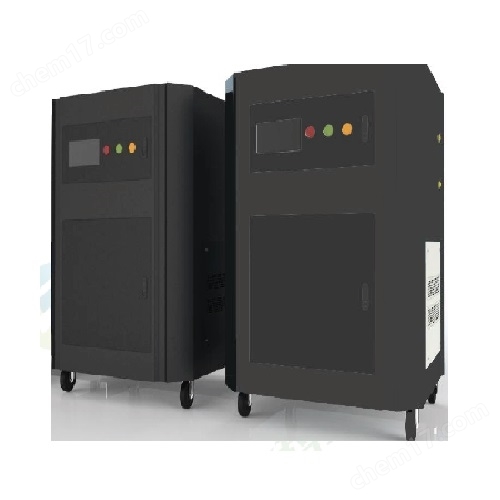
SA1000S series power grid simulation power supplyUsing a four quadrant inverter topology, it has the ability to flow energy in four quadrants, with characteristics such as timely protection, high power density, wide range output, and fast dynamic response. It is of great significance for ensuring power quality, protecting testing equipment, verifying product grid performance, and evaluating power supply abnormal immunity.
SA1000S series power grid simulation power supplyMain features:
(1) Clean energy: using a controllable rectifier four quadrant inverter topology, with energy feedback capability, saving energy, and can be used as a simulated power grid;
(2) Capacity upgrade: The output and power characteristics of each power supply under the same model are the same, and a parallel interface is reserved for easy expansion of multiple devices of the same model using Ethernet cables;
(3) High dynamic: Voltage response time ≤ 1ms, capable of conducting 1ms interruption, voltage surge, voltage sag and other tests;
(4) High power density: modular design with high integration, power density ≥ 105kVA/cubic meter, small size, light weight, easy to transport and move;
(5) Wide range output: using flexible power regulation technology to obtain higher voltage and current output at the same power;
(6) High precision: using direct sampling of output voltage as closed-loop input control, with output voltage accuracy higher than 0.1% F.S. and output frequency accuracy higher than 0.005Hz;
(7) Phase angle editing: The device's start and stop phase angles can be set, and online phase angle transformation is supported with a range of 0-359 °;
(8) Standardized testing: Built in testing standards for photovoltaic inverters/energy storage inverters from multiple countries including China, Japan, and Germany, supporting one click call testing and customizable test cases through programming;
(9) Experimental capabilities: Built in simulation functions for voltage fluctuations and flicker, frequency changes, voltage fault ride through, harmonic/interharmonic distortion, three-phase voltage imbalance, weak current network, RLC load, etc;
(10) Low distortion: Both input and output terminals are equipped with hardware filtering circuits. During operation, the input side filtering circuit reduces the impact of equipment operation on the power grid, while the output side filtering circuit filters the output voltage into a pure sine wave. The output voltage distortion within the full power range is ≤ 1%;
(11) Protection capability: It has protection functions such as overvoltage, overcurrent, overtemperature, overload, short circuit, etc. The built-in hardware disconnect component immediately cuts off the output after a fault occurs;
(12) Friendly human-machine interface: The product uses a large LCD screen for operation and data monitoring. Electrical parameters such as voltage, current, and power during product operation can be viewed on the LCD screen, and the product can be started, stopped, and programmed through the LCD screen;
(13) Local/Remote Control: Two operation modes, local and remote, can be set through software. In remote mode, all operations in local mode of the product can be completed. It has multiple communication interfaces such as RS485 and RJ45, as well as multiple communication protocols such as Modbus TCP and Modbus RTU, and supports secondary development.
Similar Product Recommend