-
E-mail
sales@hz-jh.com
-
Phone
13505819720
-
Address
No. 3 Kangle Road, Kangqiao Industrial Park, Gongshu District, Hangzhou City
Product Categories
- Ozone and photoaging test series
- Curing oven, drying oven, drying oven series
- Vibration and Drop Series
- Specialized equipment for the battery industry
- IP Protection Test Series
- Thermostatic bath (pot) series
- Formaldehyde testing chamber/formaldehyde testing laboratory
- Environmental testing equipment for the electric energy meter industry
- Temperature/Humidity Test Series
- Large scale walk-in laboratory series
- Multi functional climate simulation laboratory series
- Environmental testing equipment for photovoltaic industry
Hangzhou Jiuhuan Fuqi Industrial Co., Ltd
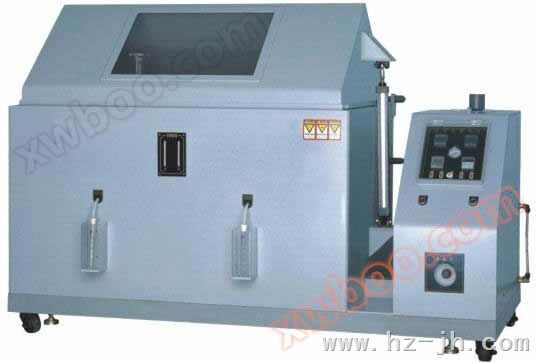
Salt spray corrosion test chamber for photovoltaic materials
NegotiableUpdate on 07/26
- Model
- Nature of the Manufacturer
- Producers
- Product Category
- Place of Origin
Overview
This device refers to IEC 61701-1995 (equivalent GB/T 18912-2002) "Salt Spray Test for Photovoltaic Modules", which references IEC 60068-1:1988 (equivalent GB/T 2421-1999) standard, mainly for environmental testing of electrical and electronic products (junction boxes); The back film may have poor breathability and permeability due to the high humidity of the salt spray environment, which can cause moisture infiltration and internal changes in the component (corrosion of solder strips, blistering or even detachment between EVA and silicon wafers). Small component testing can also be considered; Referring to GB/T 12967.3-1991 "Copper Accelerated Acetate Salt Spray Test (CASS Test) for Anodized Oxide Coatings of Aluminum and Aluminum Alloys
Product Details
| type name | Y/Q-60 | Y/Q-90 | Y/Q-120 | Y/Q-160 | Y/Q-200 |
| Interior dimensions | 60×45×40 | 90×60×50 | 120×80×60 | 160×100×60 | 200×100×60 |
| Carton size | 108×67×119 | 148×78×128 | 190×130×140 | 230×130×145 | 270×130×145 |
| test temperature | Neutral Salt Spray Test (NSS ACSS) 35℃±1℃ /Acid salt spray test (CASS) 50℃±1℃
| ||||
Salt spray corrosion test chamber for photovoltaic materialsTechnical parameters
1. Studio temperature range: 35 ℃~55 ℃
2. Saturation bucket temperature range: 37 ℃~55 ℃
3. Temperature uniformity: ≤± 2 ℃
4. Temperature fluctuation: ≤± 0.5 ℃
5. Spray mode: airflow baffle type
6. Spray features: continuous, interval optional
7. Power supply voltage: AC380V/220V 50Hz
Salt spray corrosion test chamber for photovoltaic materialsThe environmental conditions for placing the test chamber
1. Environmental temperature:+5 ℃~35 ℃
2. Relative humidity: ≥ 85% R? H
3. There is no strong vibration around
4. No direct sunlight or direct radiation from other heat sources
5. There is no strong airflow around, and when the surrounding air is forced to flow, the airflow should not directly contact the box.
6. Due to the use of water sealing between the box cover and the body, salt spray leakage is prevented. The test chamber should be placed steadily and kept level.
7. There should be a certain distance around the salt spray box for easy operation and maintenance.
8. Place it in a separate compartment and avoid placing it together with any other equipment to prevent corrosion of other devices and instruments.
9. It is not advisable to frequently shift.


