-
E-mail
0317-8080802
-
Phone
15076474477
-
Address
Botou Chenxin Machinery Equipment Manufacturing Co., Ltd
Product Categories
Botou Chenxin Machinery Equipment Manufacturing Co., Ltd

Rubber flexible joint is a hollow rubber product used for flexible connection between metal pipes ..
NegotiableUpdate on 06/19
- Model
- Nature of the Manufacturer
- Producers
- Product Category
- Place of Origin
Overview
Rubber flexible joint is a hollow rubber product used for flexible connection between metal pipes
Product Details

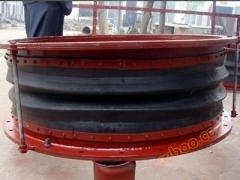
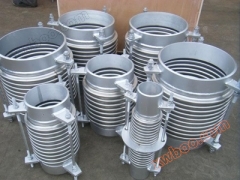
Rubber flexible joint is a hollow rubber product used for flexible connection between metal pipes. Rubber flexible joint, also known as rubber tube flexible joint, flexible rubber joint, rubber flexible joint, bendable rubber joint, high-pressure rubber joint, rubber shock absorber, compensator, etc. The tubular rubber component is composed of inner and outer layers of rubber, curtain layers, and steel wire rings, which are vulcanized and then combined with metal flanges or parallel joints to form a loose sleeve. This product can reduce vibration and noise, and compensate for thermal expansion and contraction caused by temperature changes. It is widely used in various pipeline systems.
Classification of rubber flexible joints:
According to the connection method, it can be divided into three types: loose flange type, fixed flange type, and threaded type;
According to structure, it can be divided into five types: single sphere, double sphere, reducing body, eccentric reducing body, curved sphere, and fan coil unit.
Specific parameters of rubber flexible joints:
Specifications:
DN32mm-DN4000mm;
Color:
Black, please refer to the product display image for the actual color;
Scope of application:
Acid, alkali, corrosive substances, oil, hot water, cold water, compressed air, natural gas, etc;
texture of material:
Environmentally friendly high-quality synthetic rubber; The product is environmentally friendly and pollution-free, and does not contain toxic substances such as lead;
Shock absorption level:
A-level, excellent shock absorption;
Working temperature:
-40 ° C to 80 ° C (can also process high-temperature resistant joints)
characteristic:
High internal density, able to withstand high pressure, and good elastic deformation effect.
Purpose:
Connections with pumps and valves, fire-fighting equipment, pipelines with high vibration, and pipelines with frequent changes in temperature.
Applicable medium:
Seawater, freshwater, hot and cold water, drinking water, domestic sewage, crude oil, fuel oil, lubricating oil, refined oil, air, coal gas, steam, and granular powder.
Advantages of rubber joints:
Reduce vibration, lower noise, have good scalability, and are easy to use. High internal density, able to withstand high pressure, and good elastic deformation effect. Reduce vibration, lower noise, have good scalability, and are easy to use.
usage method:
First, align the joint flange with the corresponding flange hole position, then pass the fixing screw through the flange hole, and use a wrench to symmetrically and gradually tighten the bolt by applying pressure;
Similar Product Recommend