-
E-mail
kdfxy@163.com
-
Phone
13913378668
-
Address
No. 28 Songyuan North Road, Gaochun Economic Development Zone, Nanjing City
Product Categories
Nanjing Kaidi High Speed Analytical Instrument Co., Ltd
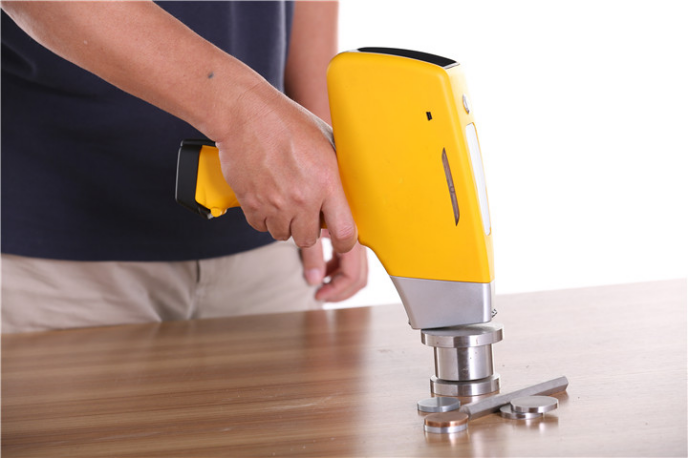
Portable Spectrometer
NegotiableUpdate on 05/12
- Model
- Nature of the Manufacturer
- Producers
- Product Category
- Place of Origin
Overview
1) Analyzable types of alloy components
(1) All elements between Ti (titanium) and U (uranium) can be analyzed.
(2) There are more than 2,000 alloy grades that can be analyzed, and the machine comes with a database of alloy grades of up to 300. At the same time, users can customize and add more than 300 alloy medal number databases.
(3) Used for grade identification of stainless steel, alloy steel, and tool steel, as well as component and content testing, including hundreds of commonly used stainless steel grades 201, 203, 301, 304, 316, 321, etc.
(4) Used for copper alloy grades and components testing, including brass, bronze, copper, pure copper, etc.
(5) Used for various hybrid alloy components and detection, including titanium alloy, tin alloy, lead alloy, tungsten alloy, zinc alloy, etc.
Gold, aluminum alloy, nickel alloy, etc.
(6) Used for precious metal testing. Contains gold, silver, platinum, rhodium, and palladium.
Product Details
1. Technical parameters and indicators
[Weight] Basic weight: 1.4kg, after battery installation: 1.5kg
[Size (H x Width x Length)] 300mm x 90mm x 220mm
There are 4 types of ray tube targets that can be selected: Gold (Au), Silver (Ag), Tungsten (W), Palladium (Pd)
[Voltage, Current and Power] High-Power Micro X-ray Tube 50KV, 100MA, 4W
[Filter] Six optional filters are automatically adjusted according to different physical objects
[Detector] High performance, high resolution Si-Pin X-ray detector
[Detector Refrigeration Temperature] Peltier Effect Semiconductor Refrigeration, Refrigeration Temperature-35
External 316 standard cap with test window protection function;
[Resolution] <180ev
[Power] 8 hours/2 blocks of lithium power and AC power
[Processor] Intel 400MHz StrongArm processor
Mobile Windows CE system
[Compatibility] Bluetooth
[Software Standard Mode] Alloy
8G large-capacity data memory card: ≥40,000 sets of data and spectral diagrams.
A variety of analysis modes, including basic parameters, Compton normalization, and empirical calibration mode.
Concentrated on ppm and percentage (%) display, spectrum or peak intensity (count rate) or user-determined units
RS232 serial cable, Bluetooth, EXCEL output.
[Display] Colorful, high-resolution 3.5-inch TFT industrial-grade touch screen, large icon graphic interface, clearly visible under any light conditions;
Integrated body design, sturdy, waterproof, dust-proof and freezing, effective vibration-proof, suitable for use in outdoor, humid or low temperature environments.
One-touch "trigger", software automatically locks the trigger or automatically stops the test protection function; automatically closes the X-ray within 2 seconds after judging that there is no sample in front of the test window.
All elements from Ti (titanium) to U (uranium) can be analyzed. The machine is equipped with standard elements:
Cr chromium, Mn manganese, Fe iron, Ni nickel, Cu copper, Zn zinc, Pb lead, Se selenium, Zr zirconium, Cocobalt, V vanadium, Momolybdenum, Ag silver, Cd cadmium, Sn tin, Sb antimony,
Titanium, Hf hafnium, Ta tantalum, W tungsten, Re rhenium, Pd palladium, Au gold, Pt platinum, Rh rhodium, Ru ruthenium, Nb niobium, Bibis bismuth and other elements;
[Testing Environmental Conditions] Temperature--20~+50℃, humidity <80%RH.
[Calibration] The instrument has been calibrated before leaving the factory; but the instrument still has the function of establishing a targeted calibration curve, suitable for accurate testing of specific samples
The instrument is equipped with a standard USB interface and Bluetooth wireless transmission, which can transmit data to computers or network storage devices directly, and can download measurement data and its X-ray spectrograms in customized EXCEL format directly. You can set users’ permissions, generate custom reports and print analysis reports
[Radiation-proof function] The radiation dose rate is <2.5µSv/h within the space range of 10 to 100 cm from the instrument housing.
[Element content analysis range] From 0.01% to 99.99%;
2. Product function, analysis accuracy and stability
1) Analyzable types of alloy components
(1) All elements between Ti (titanium) and U (uranium) can be analyzed.
(2) There are more than 2,000 alloy grades that can be analyzed, and the machine comes with a database of alloy grades of up to 300. At the same time, users can customize and add more than 300 alloy medal number databases.
(3) Used for grade identification of stainless steel, alloy steel, and tool steel, as well as component and content testing, including hundreds of commonly used stainless steel grades 201, 203, 301, 304, 316, 321, etc.
(4) Used for copper alloy grades and components testing, including brass, bronze, copper, pure copper, etc.
(5) Used for various hybrid alloy components and detection, including titanium alloy, tin alloy, lead alloy, tungsten alloy, zinc alloy, etc.
Gold, aluminum alloy, nickel alloy, etc.
(6) Used for precious metal testing. Contains gold, silver, platinum, rhodium, and palladium.
2) Analytical accuracy and stability:
(1) The detection limit of metal content reaches 0.01%. The stable reading allowance difference for these metal test analysis. This instrument has reached the following standards:
A. The test read difference of the test of elements with a detection content greater than 5 percentage is less than ±0.1~0.2%
B. The test reading difference of elements with a stable detection content of 0.5 to 5% reaches ±0.05% to 0.1%
C. The test reading difference of elements with a detection content of 0.1 to 0.5% is ±0.01 to 0.03%
D. Test reading rate of ±10-15% for elements with detection content less than 0.1%.
(2) The sample status can be detected and analyzed: blocky, solid, powder.


