-
Phone
159-0092-4336139-1604-7268
-
Address
Room 201-206, 2nd Floor, Building 3, No. 399 Duhui Road, Minhang District, Shanghai
Product Categories
Maiqi Optoelectronics Technology (Shanghai) Co., Ltd
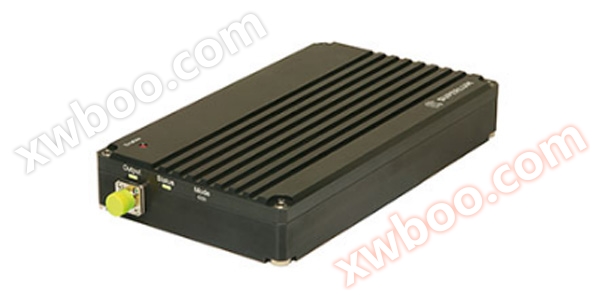
PiLas picosecond laser
NegotiableUpdate on 02/09
- Model
- Nature of the Manufacturer
- Producers
- Product Category
- Place of Origin
Overview
● Wavelength range: 375 nm-2 μ m ● Pulse width: 20 ps-5 ns ● Pulse repetition rate: single shot -120 MHz ● Continuous adjustable repetition rate ● External laser triggering ● High pulse quality ● Low time jitter ● Simple user interface ● Compact, light blocking, dust-proof OEM package ● No maintenance or calibration required ● Plug and play ● Air cooling ● RS232 or USB remote control ● High repeatability, 24/7 operation
Product Details
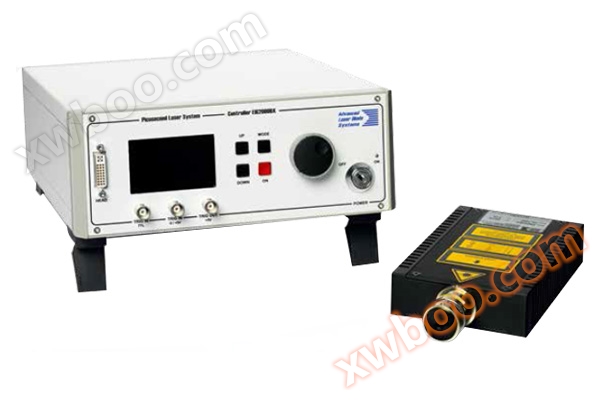
PiLas is a universal, multifunctional, picosecond laser diode module that features maintenance free, continuous adjustable repetition rate, low cost, and high cost-effectiveness. It can be applied in various fields of industry and scientific research. This type of semiconductor laser diode has a gain switching operation mode and can generate pulsed laser with a peak power of 20 mW-1 W and a wavelength range of 375 nm-2 μ m at 20 ps-5 ns. Its maximum pulse repetition frequency can reach 120 MHz, and the minimum repetition frequency can be selected by the user. It can be easily triggered by external sources (active or passive mode).
|
Product advantages: ● Wavelength range: 375 nm – 2 μ m Pulse width: 20 ps -5 ns ● Pulse repetition rate: single shot -120 MHz ● Continuous adjustable repetition rate External laser triggering ● High pulse quality ● Low time jitter ● Simple user interface Compact, light blocking, dust-proof OEM packaging No maintenance or calibration required ● Plug and play ● Air cooling ● RS232 or USB remote control ● High repeatability, working 24/7 |
Optional: Fiber optic output (PM, SM, MM) Fiber collimator w/o micro focusing ● Thermal wavelength tuning Narrow linewidth DFB laser ● Single box OEM packaging |
|
|
Main applications: ● Detector testing (fiber doubling tube, avalanche photodiode, etc.) Time resolved spectroscopy technology ● Ultra fast circuit analysis Semiconductor testing Fiber optic testing | ||
Standard model:
| optical parameters | PiLas | ||
| center wavelength(1) | 375 nm – 2 μm | ||
pulse width(2) |
20 ps – 150 ps | ||
Pulse peak power(3) |
20 mW – 1 W | ||
|
pulse energy(4) |
1 – 50 pJ | ||
|
Average output power at 100MHz |
0.5 – 2 mW | ||
| Pulse Repetition Frequency | Single shot -120 MHz | ||
| Beam Quality | M2< 1.1, TEM00 | ||
| polarization extinction ratio | > 20 dB | ||
| Time jitter(5) | < 3 ps (rms) | ||
|
Laser output |
Free space output or fiber optic output (PM, SM, MM) |
||
|
environmental parameters |
|||
|
warm-up time |
< 10 minutes |
||
|
Operating Temperature |
15 °C – 35 °C |
||
|
storage temperature |
- 20 °C – 65 °C |
||
|
switching times |
> 10000 |
||
|
Mechanical dimensions |
97 x 31 x 147 mm3 |
||
|
Laser head size |
Free space output or fiber optic output (PM, SM, MM) |
||
|
Weight of laser head |
0.45 kg |
||
|
OEM controller size (6) |
168 x 129 x 33 mm3 |
||
|
OEM controller weight |
0.7 kg |
||
|
Independent controller size |
235 x 88 x 326 mm3 |
||
|
Weight of independent controller |
2.5 kg |
||
|
Electronic parameters |
|||
|
power supply |
12 VDC/3 A or 100-264 VAC, 47-63 Hz |
||
|
power consumption |
< 30 W |
||
|
cooling method |
|||
|
LASER SYSTEM |
air-cool |
notes:
(1) All laser diodes available on the market have wavelengths within this range
(2) Depending on the laser head model, the maximum pulse width may reach 5 ns
(3) Depending on the laser head model
(4) Depending on the laser head model and pulse width
(5) Excluding DFB/DBR lasers
(6) Other OEM versions are also available for selection
PiL---X |
Wavelength (nm) |
Tolerance (nm) |
Spectral width (nm) |
pulse width (ps) ¹ |
Peak Power(mW) ² |
average power(mW) ³ |
PiL037X |
375 |
± 10 |
< 5 |
< 45 |
> 300 |
2 |
PiL040X |
405 |
± 15 |
< 5 |
< 45 |
> 300 |
2 |
PiL044X |
440 |
± 20 |
< 5 |
< 70 |
> 150 |
1.5 |
PiL047X |
470 |
± 10 |
< 5 |
< 60 |
> 150 |
1.5 |
PiL048X |
480 |
± 10 |
< 5 |
< 60 |
> 100 |
1 |
PiL051X |
510 |
± 20 |
< 10 |
< 140 |
> 100 |
1 |
PiL063X |
635 |
± 15 |
< 7 |
< 45 |
> 200 |
1.5 |
PiL067X |
665 |
± 15 |
< 7 |
< 45 |
> 200 |
1.5 |
PiL069X |
690 |
± 15 |
< 7 |
< 50 |
> 200 |
1.5 |
PiL072X |
720 |
± 30 |
< 7 |
< 50 |
> 200 |
1.5 |
PiL077X |
770 |
± 20 |
< 7 |
< 50 |
> 100 |
1 |
PiL080X |
805 |
± 20 |
< 7 |
< 50 |
> 100 |
1 |
PiL083X |
830 |
± 15 |
< 10 |
< 50 |
> 100 |
1 |
PiL085X |
850 |
± 15 |
< 10 |
< 50 |
> 100 |
1 |
PiL088X |
880 |
± 20 |
< 10 |
< 50 |
> 100 |
1 |
PiL090X |
905 |
± 15 |
< 10 |
< 50 |
> 100 |
1 |
PiL094X |
940 |
± 20 |
< 10 |
< 50 |
> 100 |
1 |
PiL098X |
980 |
± 20 |
< 10 |
< 50 |
> 100 |
1 |
PiL103X |
1030 |
± 20 |
< 15 |
< 60 |
> 100 |
1 |
PiL106X |
1060 |
± 20 |
< 15 |
< 60 |
> 100 |
1 |
PiL131X |
1310 |
± 20 |
< 15 |
< 35 |
> 50 |
0.5 |
PiL155X |
1550 |
± 20 |
< 15 |
< 35 |
> 50 |
0.5 |
PiL199X |
1990 |
± 50 |
< 50 |
< 80 |
> 100 |
1 |
|
|
|
|
|
|
|
PiL084DFBX |
852 |
± 2 |
< 0.5 |
< 90 |
> 100 |
0.5 |
PiL106DFBX |
1064 |
± 2 |
< 0.5 |
< 60 |
> 100 |
0.5 |
PiL131DFBX |
1310 ⁴ |
± 20 |
< 0.5 |
< 30 |
> 50 |
0.5 |
PiL155DFBX |
1550 ⁴ |
± 20 |
< 0.5 |
< 30 |
> 50 |
0.5 |
notes:
(1) The minimum pulse width depends on the repetition rate.
The table shows the peak power of the collimated beam. Using fiber optic coupling will reduce peak power. The corresponding pulse energy depends on the pulse width. For near Gaussian pulses, the pulse energy range is 1pJ-50pJ. If you want to obtain higher pulse energy, you need to pay the price of pulse waveform, and it is possible to increase the pulse width to 1 or 2 ns. In that case, the maximum repetition rate will be limited.
(3) The table shows the typical average output power of a collimated beam at a repetition rate of 100 MHz. The average power depends on the repetition rate. When the laser operates for a long time and the repetition rate is above 80MHz, a passive heat sink needs to be installed on the laser head.
(4) The wavelength can be selected within the C-band and O-band.
Laser spectrum: