-
E-mail
wangyingying@yunjingtianhe.com
-
Phone
13276363312
-
Address
Weifang Optoelectronic Industry Accelerator
Product Categories
Shandong Tianhe Environmental Technology Co., Ltd


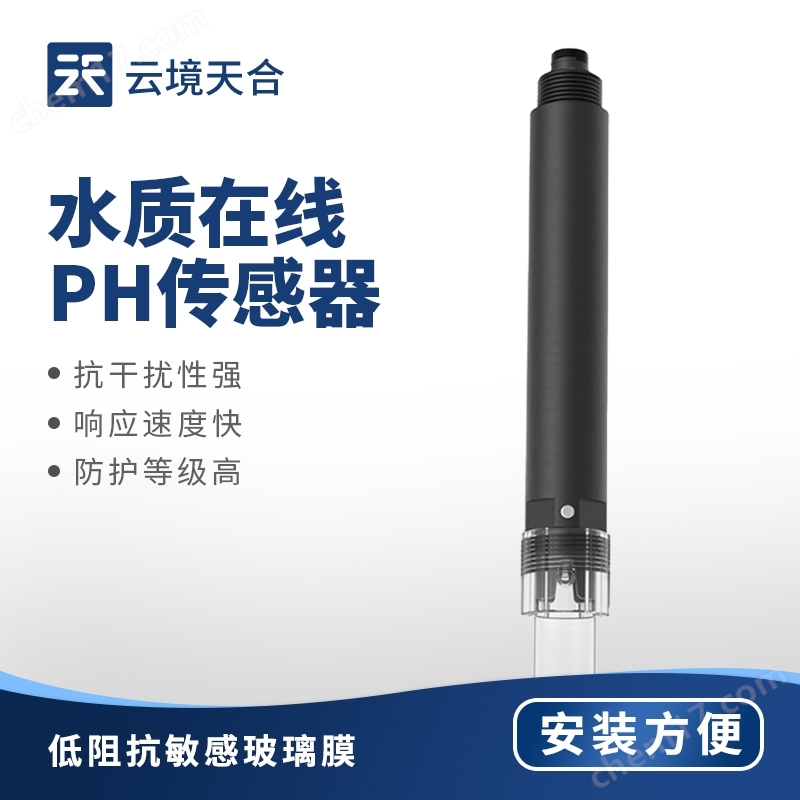


Online pH and temperature sensor for water quality
NegotiableUpdate on 02/02
- Model
- Nature of the Manufacturer
- Producers
- Product Category
- Place of Origin
Overview
The water quality online pH temperature sensor is an online monitoring device that can monitor the pH value and temperature of water in real time and accurately. It has a built-in temperature probe for automatic temperature compensation, which can significantly improve the measurement accuracy over the entire temperature range. High quality glass electrodes and dual junction designs can provide better stability and anti-interference performance. Reference electrodes that can be refilled typically have a longer lifespan and lower maintenance costs.
Product Details
Online pH and temperature sensor for water qualityIt is an online monitoring device that can monitor the pH and temperature of water in real-time and accurately. It has a built-in temperature probe for automatic temperature compensation, which can significantly improve the measurement accuracy throughout the entire temperature range. High quality glass electrodes and dual junction designs can provide better stability and anti-interference performance. Reference electrodes that can be refilled typically have a longer lifespan and lower maintenance costs.

1、 Application Environment Description
Online pH and temperature sensor for water qualityUsed for environmental water quality testing and various high/low ion strength water sample testing, it can meet the requirements of most industrial/environmental applications for online pH measurement.
Signal output: RS485 (MODBUS-RTU), 4-20mA current output.
Low impedance sensitive glass film, internal signal isolation technology, strong anti-interference ability.
Good reproducibility, thermal stability, low drift, small size, fast response speed
Easy to install, simple, 3/4NPT pipe thread, easy to sink or install in pipelines and tanks, stable performance, long service life
IP68 waterproof standard
2、 Technical parameters
| Measuring principle | Electrochemistry (salt bridge) |
| Signal mode | RS485(MODBUS-RTU) |
| measurement range | 0~14.00(PH) |
| Measurement resolution | 0.01 |
| measurement accuracy | ±0.1PH, ±0.1℃ |
| response time | About 10 seconds (98% flowing liquid) and about 15 seconds (98% stationary liquid) |
| Shell material | ABS |
| temperature compensation | Automatic temperature compensation |
| cable length | Standard 5-meter configuration |
| power supply voltage | 12-24VDC( 0.4W@12V ) |
| Measurement environment | Temperature 0~50 ℃ (non freezing),<0.2MPa |
| waterproof rating | IP68 |
| Installation method | Immersion installation, NPT3/4 thread |
3、 Installation and electrical connections
1. Installation
Attention: The sensor should not be installed upside down or horizontally, and should be installed at an angle of at least 15 degrees.
2. Electrical connection
The cable is a 5-core shielded wire, and the line sequence is defined as follows:
Brown - Power cord (12~24VDC) Black - Ground wire (GND)
Green -485B Yellow -485A
Before powering on, carefully check the wiring sequence to avoid unnecessary losses caused by wiring errors.
4、 Maintenance and upkeep
When used for the first time or left unused for a long time, the sensitive bulb and reference liquid should be immersed in a 3.3mol/L KCI solution for more than 2 hours.
Before use, rinse and dry with deionized water (or distilled water) to prevent impurities from entering the measured liquid. One third of the sensor should be inserted into the measured liquid.
The wiring terminal should be kept clean and dry, and the sensor should be cleaned when not in use. It should be inserted into a protective sleeve containing 3.3mol/L KCI solution or into a container containing 3.3mol/L KCI solution.
Check if the wiring terminals are dry. If there are stains, please wipe them with water and alcohol. After drying, continue to use. Sensors should avoid prolonged immersion in deionized water, protein solutions, strong acid and alkali solutions, and acidic fluoride solutions, and prevent contact with organic silicone oils and fats. Sensors that have been used for a long time may have their glass film become semi transparent or have sediment attached. In this case, they can be washed with hydrochloric acid and rinsed with water.
When the sensor has been used for a long time and measurement errors occur, it can be calibrated and corrected by cooperating with the instrument. If the above methods of maintenance and upkeep still cannot calibrate and measure the sensor, it indicates that the sensor has failed and should be replaced.


