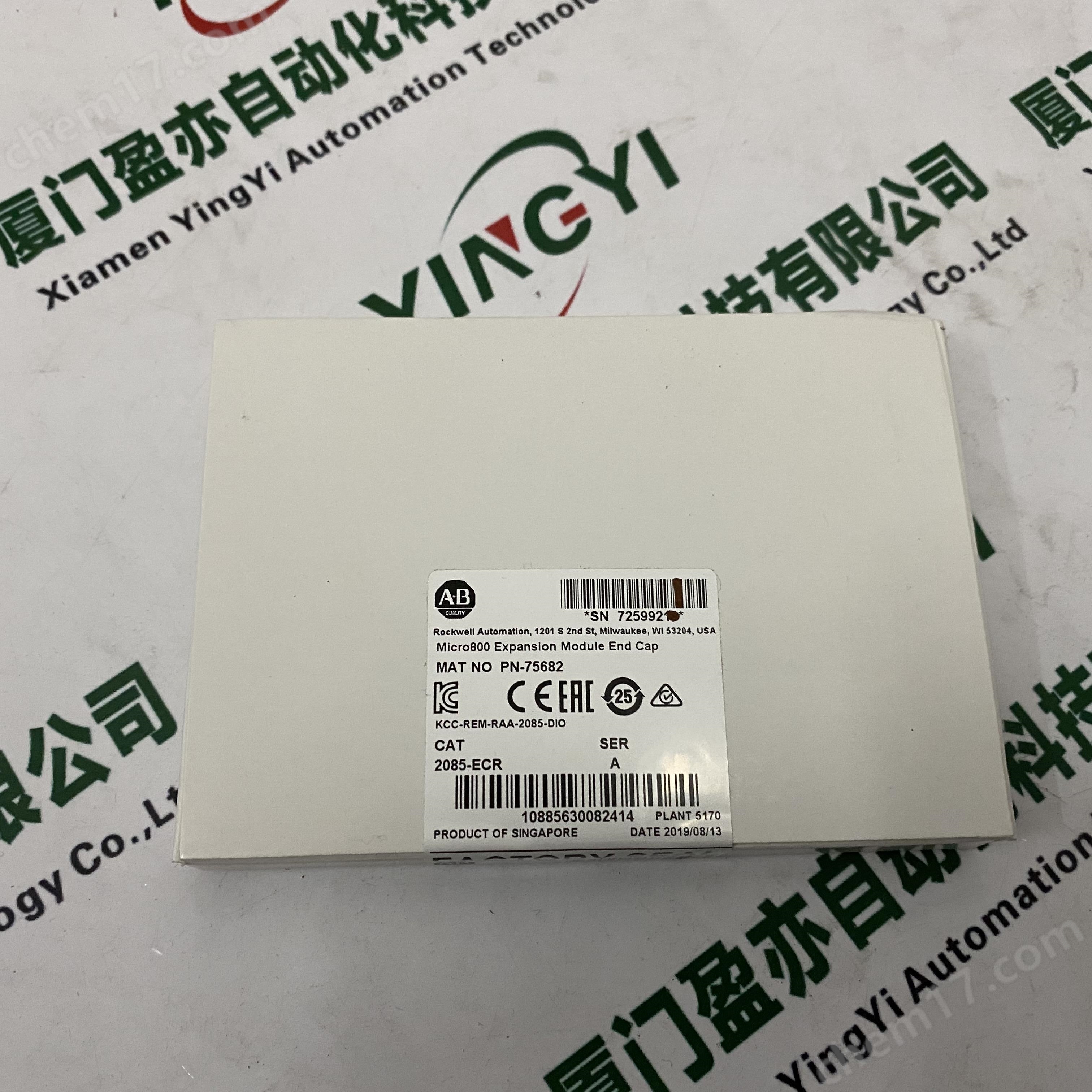
Module FX1S-20MT-ES Adaptive Control We are a company mainly engaged in various brands of automation equipment accessories. Our main products include distributed control systems (DCS), processors (CPU), programmable logic controllers (PLC), industrial control communication converters, input/output modules (I/O), human-machine interface touch screens, frequency converters and other industrial automation equipment accessories.
Module FX1S-20MT-ES Adaptive Control
Regarding different distribution schemes, they can generally be divided into three categories:
1. Directly distribute power from the low-voltage main switch:
This type of distribution level is powered by one or more medium/low voltage transformers connected to a shared medium voltage power grid
a、 Areas with different locations, such as factory workshops, production areas of industrial plants, and various floors of office buildings;
b、 Industrial production uses such as air compressors, large capacity cooling water units, or unit air conditioners, elevators, etc.
2. Distribution cabinet: used to distribute electricity to the electrical loads in each area.
3. Terminal distribution cabinet: used to supply power to various electrical loads.
Module FX1S-20MT-ES Adaptive Control
| 1794-IF4I |
2094-BC02-M02-S |
| 1794-IF4IXT |
2094-BC04-M03-M |
| 1794-IF8IH |
2094-BC07-M05-S |
| 1794-IG16 |
2094-BM01-M |
| 1794-IH16 |
2094-BM01-S |
| 1794-IJ2 |
2094-BM02-M |
| 1794-IM16 |
2094-BM02-S |
| 1794-IM8 |
2094-BM03-M |
| 1794-IR8 |
2094-BM03-S |
| 1794-IRT8 |
2094-BM05-S |
| 1794-IT8 |
2094-BMP5-S |
| 1794-IV16 |
2094-BNCON-1 |
| 1794-IV32 |
2094-EN02D-M01-S1 |
| 1794-OA16 |
2094-PRS1 |
| FU-66 |
LV-21A |
| PZ-G61N |
FU-77TZ |
| EM-030 |
KL-16BT |
| PZ2-61 |
KL-16BR |
| GT2-H12K |
KL-4AD |
| DL-PN1 |
EV-118U |
| OP-76874 |
FU-7F |
| OP-77682 |
OP-51657 |
| GT2-71N |
FU-52TZ |
| GT2-72N |
FS-N11N |
| GT2-CH5M |
PR-MB15N1 |
| LK-G3001V |
FU-10 |
| LK-G405 |
KV-AD40 |
| LK-GC30 |
KV-L21V |
| LK-G505 |
FU-VJ1 |
| CB-A30 |
LK-G155 |
| PZ-G41P |
FU-21X |
| FU-53TZ |
EV-108U |
| FU-46 |
SJ-F036 |
On March 24, 2026, Arm Holdings Limited (NASDAQ: ARM, hereinafter referred to as Arm) announced today that its computing platform has entered a new stage of development, extending its product matrix to the field of mass-produced chip products. The product is Arm ® AGI CPU, A CPU designed independently by Arm for artificial intelligence (AI) data centers, aimed at meeting the growing demand for agentic AI workloads.
For over thirty years, the industry has continuously innovated based on the Arm computing platform, achieving scalable and energy-efficient computing capabilities on billions of devices. As AI reshapes the global computing infrastructure, the entire ecosystem is seeking solutions for large-scale deployment of Arm technology. To this end, Arm has expanded its platform strategy by introducing new Arm independently designed chip products based on its existing IP and Compute Subsystems (CSS) business, providing partners with the option to build solutions based on Arm technology and accelerating the innovation process of the entire AI ecosystem.
Arm CEO Rene Haas said, "AI fundamentally reshapes the construction and deployment of computing, and proxy computing is further accelerating this transformation. Today marks a new stage of development for the Arm computing platform and an important milestone for the company's growth. With the launch of Arm AGI CPU chips, we will provide our partners with more choices based on Arm's high-performance and high-efficiency computing foundation, helping to achieve global scale deployment of proxy AI infrastructure. ”
Proxy AI is reshaping AI infrastructure and driving stronger demand for CPUs
The rise of AI intelligent agents is driving the global computing industry to a critical turning point. As the focus of AI applications gradually shifts from model training to deploying intelligent agents with sustainable operation, reasoning, planning, and execution capabilities, the number of tokens generated by the entire AI system is rapidly increasing, and more CPUs are urgently needed to carry tasks such as inference, collaborative scheduling, and data migration.
As enterprises continue to expand the scale of applications driven by intelligent agents, the demand for CPU computing power provided by data centers per gigawatt (GW) of power consumption will increase by more than four times, which means that a significant increase in computing power must be achieved under the same power consumption constraints. This trend has spurred the emergence of CPUs for AI scale infrastructure, which can support the performance required for high throughput while meeting energy efficiency requirements under actual power consumption limitations. At the same time, they adopt a simplified architecture to eliminate the additional overhead and complexity of x86 processors.