-
E-mail
kdfxy@163.com
-
Phone
13913378668
-
Address
No. 28 Songyuan North Road, Gaochun Economic Development Zone, Nanjing City
Product Categories
Nanjing Kaidi High Speed Analytical Instrument Co., Ltd
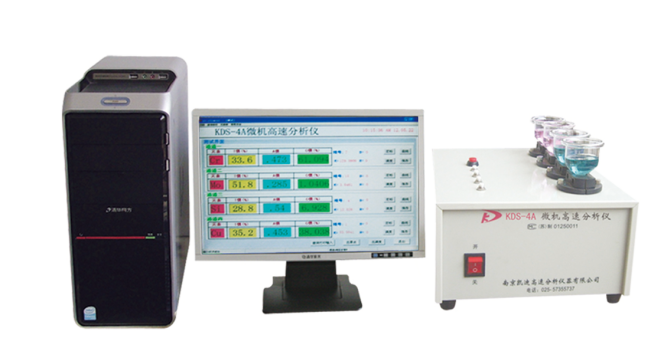
Microcomputer-Based Rapid Analyzer
NegotiableUpdate on 06/02
- Model
- Nature of the Manufacturer
- Producers
- Product Category
- Place of Origin
Overview
1. Instrument composition and technical parameters of each part
1) Equipment name: KDS-4A microcomputer high-speed analyzer
2) Equipment purpose: Measure the percentage content of various elements in solid substances such as ferrous metals, non-ferrous metals, ores.
3) Quantity: One set
The instrument mainly consists of two parts: ① Element analyzer; ② Computer part
Product Details
1. Instrument composition and technical parameters of each part
1) Equipment name: KDS-4A microcomputer high-speed analyzer
2) Equipment purpose:Measure the percentage content of various elements in solid substances such as ferrous metals, non-ferrous metals, ores.
3) Quantity: One set
The instrument mainly consists of two parts: ① Element analyzer; ② Computer part
4) Environmental requirements
Ambient temperature: 15-30℃
Ambient humidity: ≤80% (relative humidity)
Voltage: 220V, ±5%
5) Technical parameter requirements
5.1 This instrument can detect all conventional elements Mn, P, Si, Cr, Ni, Mo, Cu, Ti, Al, W, V, Zn, Co, Nb, ∑Re, Mg, Fe, etc. in steel, non-ferrous metals, ores and other materials;
5.2 Use brandedcomputer microcomputer control, automatic display of transmittance, absorbance and concentration, and print detection results of desktop printers;
5.3 The test software has complete functions and can replace all manual writing work in traditional laboratories completely . The test report format can be set at will according to the actual needs of each unit;
5.4 The detection function is huge, with a channel space for detecting 108 elements, and stores n working curves (depending on the amount of storage of computer hard disk). There is a curve diagram.
5.5 Measurement range: (Because the instrument can detect many materials and elements, we now take common elements such as Mn, P, Si, Cr, Ni, Mo, Cu, Ti, Mg in steel as examples)
Mn: 0.010~20.500% P: 0.0005~1.0000%
Si: 0.010~18.000% Cr: 0.010~38.000%
Ni: 0.010~48.000% Mo: 0.010~7.000%
Σ re: 0.0100 aring sentimental; 0.500% Mg: 0.0100%, in situ; 0.800%
Cu: 0.010~8.000% Ti: 0.010~5.000% ……
If the test conditions are changed, the range can be expanded accordingly.
5.6 Measurement accuracy: Meet GB223-2008
6) Computer system
6.1 Brandedcomputer: 500G hard disk, 1G memory, 19-inch color LCD displayer
6.2 Application software that supports the operating system of WindowsXP/98/2000 inChineselanguage
7) Analysis software
Operation software:operation interface inChineselanguage, standard configuration of report functions (included by the instrument software).
2. Scope of supply
KDS-4A microcomputer high-speed analyzer
Name |
Model |
Unit |
Quantity |
Note |
Element Analysis Box |
KDS-4A |
Station |
One |
Kaidi |
Computer |
set |
one |
||
Spare parts list |
Piece |
one |
List of spare parts for KDS-4A microcomputer high-speed analyzer
Name |
Unit |
Quantity |
Name |
Unit |
Quantity |
Power cord |
piece |
1 |
2cm cuvette |
piece |
1 |
Light emitting tube |
piece |
2 |
certificates of conformity |
piece |
1 |
Add hopper |
piece |
3 |
repair orders |
piece |
1 |
0.5cm color cuvette |
piece |
1 |
instrument instruction manual |
piece |
1 |
Latex tube |
meter |
1 |
Customer satisfaction survey form |
piece |
1 |
Fuse |
piece |
2 |
3. Technology and after-sales service
1) Technical information: Random technical manual and operating instructions for reference for instrument use and maintenance;
2) Instrument acceptance: Standard acceptance and laboratory conduct at the user's site and meet the national standard technical requirements.
3) After-sales service: High-quality after-sales service is the biggest feature of the "Kaidi" brand. The company has full-time maintenance engineers at the headquarters to provide users with fast, thoughtful and comprehensive quality services at any time.
4) Training: Free training for the users of the demand. Including training on basic principles of instruments, common fault phenomena and troubleshooting requirements; during instrument installation and debugging, the installation engineer will provide technical training to the user on-site (domestic).
5) Quality assurance period: After the product is delivered and accepted, it will be warranted for free within 12 months (i.e. 1 year), providing lifelong maintenance and maintenance services; at the same time, it will continue to provide high-quality services after the warranty period expires. Peripheral configurations are implemented in accordance with the three guarantees for each brand.
Product Introduction
The Microcomputer-Based Rapid Analyzer is an advanced analytical instrument designed for high-speed and accurate measurementof chemical elements in ferrous and non-ferrous metals. Specially optimized for applications in the steel and metallurgy industries, this device enables fast detection of critical elements such as carbon, sulfur, silicon, manganese, and phosphorus. The system integrates a microcomputer control unit with high-sensitivity sensors to deliver reliable, repeatable results within minutes, improving efficiency in both production and laboratory environments.
Key Features
Microcomputer Control System
Ensures intelligent data processing, automatic calibration, and real-time monitoring with minimal human intervention.
High-Speed Analysis
Typical analysis time is under 2 minutes per sample, supporting high-throughput demands in industrial settings.
Multi-Element Detection
Supports simultaneous or sequential detection of C, S, Si, Mn, P, and more.
User-Friendly Interface
Easy-to-navigate software with touchscreen or keyboard input for streamlined operation and data reporting.
Data Management System
Includes data storage, report generation, and export capabilities compatible with LIMS or external systems.
Product Advantages
Speed + Accuracy: Delivers rapid results without sacrificing precision, crucial for time-sensitive production lines.
Low Maintenance: Robust build and stable software minimize downtime and service costs.
Modular Design: Easy integration with combustion furnaces or sample handling units.
Industrial Durability: Engineered to withstand harsh environments common in steel factories.
Compliant & Traceable: Fulfills industry standards such as ASTM, ISO, and GB/T.
FAQ
Q1: What materials can be tested with this analyzer?
A: Mainly ferrous materials like steel, iron, and alloys, but other configurations can analyze non-ferrous metals.
Q2: How many samples can it analyze per hour?
A: Up to 30–40 samples/hour, depending on the elements and sample prep.
Q3: Is training required to operate the system?
A: Basic training is recommended, but the system is user-friendly and intuitive.
Q4: How often does it need calibration?
A: The system supports auto-calibration, typically done weekly or per lab policy.
Q5: Can results be exported digitally?
A: Yes, reports can be saved or exported via USB, serial ports, or network connections.


