-
E-mail
sales@light-physics.com
-
Phone
18938877527
-
Address
Room 1010, Kumak Building
Product Categories
Leifei Optoelectronics Technology (Shenzhen) Co., Ltd
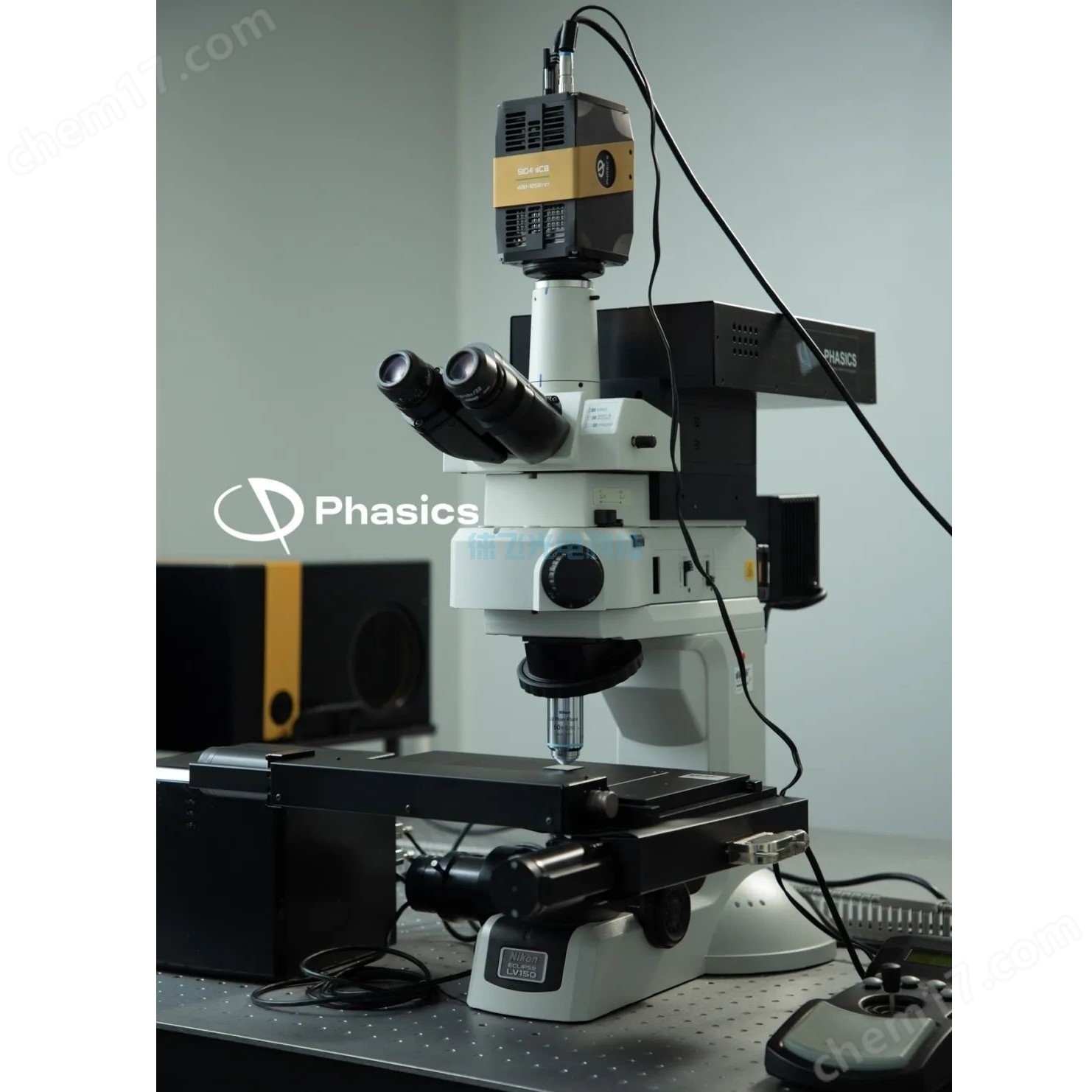
Metalens wavefront phase analysis system
NegotiableUpdate on 02/07
- Model
- Nature of the Manufacturer
- Producers
- Product Category
- Place of Origin
Overview
The Metalens wavefront phase analysis system is useful in any situation where the size and weight of optical components in the system need to be reduced. The laser radar for 3D sensing in autonomous vehicle and face recognition system is included; Medical equipment such as endoscopes and microscopes; Monitoring systems such as infrared and machine vision cameras; Display and imaging systems such as mobile phone cameras, CMOS image sensors, and AR/VR devices; And holograms.
Product Details
Optical metasurfaces are a revolutionary class of materials specifically designed for manipulating light waves at the nanoscale. By designing and manufacturing artificial nanostructures at sub wavelength scales, metasurfaces can precisely control the amplitude, phase, and polarization of light waves. Compared with traditional optical devices, metasurfaces not only have powerful functions, but also significantly reduce the volume of optical devices.Metalens wavefront phase analysis system,Metalens are one of the typical applications of metasurface technology. Superlenses are useful in any situation where the size and weight of optical components in a system need to be reduced. The laser radar for 3D sensing in autonomous vehicle and face recognition system is included; Medical equipment such as endoscopes and microscopes; Monitoring systems such as infrared and machine vision cameras; Display and imaging systems such as mobile phone cameras, CMOS image sensors, and AR/VR devices; And holograms.
The existing challenges and manufacturing difficulties of superlenses
Due to the nanoscale structure and subwavelength working mode of superlenses, their optical metrology faces challenges in research and development, manufacturing, and detection processes. Traditional low resolution techniques are difficult to accurately measure the complex features of superlenses. In order to achieve sub wavelength resolution, special techniques such as electron microscopy or scanning probe microscopy must be used. In addition, the manufacturing tolerances of superlenses can also affect their performance, so accurate characterization is crucial for evaluating their performance.
The sensitivity of superlens to polarization further increases the difficulty of measurement, therefore it is necessary to measure different polarization states. In order to achieve multispectral performance, it is also necessary to use * technology with high spectral resolution. In addition, accurate analysis of wavefront is crucial for evaluating the wavefront shaping ability of superlenses. At the same time, stability testing of the environment is also essential to ensure consistent performance of the superlens.
In response to these challenges, Phasics has launched a comprehensive solution that can simultaneously meet the needs of polarization sensitivity, multispectral performance, high-precision wavefront analysis, and environmental stability of superlenses.
Phasics' solution for superlenses
Phasics' four wave transverse shear interferometry technology can provide targeted optical characterization of superlenses to provide corresponding solutions, and meet the following requirements:
-High precision measurement at sub wavelength spatial scale: Phasics' wavefront sensor not only has optical path difference measurement accuracy better than 2nm RMS, but also adopts a convenient C-end interface design, which can directly connect to a microscope, achieving plug and play fast installation and sub wavelength level spatial resolution.
-Polarization independence: Phasics' wavefront sensor supports comprehensive polarization measurement and can accurately analyze the optical response of metasurfaces under different polarization states, thereby better evaluating the actual performance of the device.
-Multispectral measurement capability: Its products can perform high-precision measurements in multiple wavelength ranges, ensuring the performance of superlenses in multispectral applications.
-Environmental stability: Phasics' sensors can maintain accurate measurements under unstable environmental conditions, eliminate interference from environmental factors on measurement results, and ensure data reliability.
Through Phasics' * measurement technology, researchers are able to comprehensively address various challenges in the field of metrology posed by superlens and metasurfaces, driving the widespread application of these revolutionary technologies in imaging, laser systems, and optical computing.
How to use Phasics sensors for measurement?
Phasics metasurface measurement optical path construction

In the example shown in Figure 1, the simple phase shift of the metasurface was measured. Phasics' high-precision wavefront sensor can detect local phase defects caused by production errors, which can help evaluate and adjust manufacturing processes, ensuring the production quality of metasurfaces.

Figure 1: Optical characterization of metasurfaces based on four wave transverse shear interferometry
CNRS CRHEA Laboratory in France, S. Khadir arXiv: 2008.11369v1
Figure 2 illustrates the measurement of a Pancharatnam Berry (PB) superlenses using two different circularly polarized states: right-handed and left-handed. According to the design, when the polarization state is changed, the hyper lens will generate a positive lens or a negative lens.

Figure 2: The phase diagram of wavefront curvature is displayed on the left, and the corresponding curve contour is shown on the right. The intermediate phase map displays the residual wavefront error after filtering out the wavefront curvature.
Phasics' QWLSI technology is not affected by polarization, so our device can still provide detailed characterization of the wavefront when switching from right-handed circular polarization to left-handed circular polarization. Figure 2 shows the variation of wavefront curvature. In addition, residual wavefront errors can be revealed by filtering out the main wavefront curvatures, which reflect defects at higher spatial frequencies (see the left phase diagram in the middle of Figure 2).


Figure 3: The upper side shows the PB super lens measured at the design wavelength of 544nm, and the lower side shows the same super lens measured at 633nm. After subtracting the wavefront curvature, it shows that the residual error measured at the design wavelength is relatively low.
In Figure 3, we measured the same PB super lens at two different wavelengths: 544nm (its design wavelength) and 633nm. Phasics technology has the characteristic of self chromatic aberration and can measure any wavelength within the sensitivity range of the sensor model.
The measurement results show that when the hyper lens is used at its designed wavelength, it produces less high spatial frequency wavefront error.

Figure 4: Measurement of PB metal lens. The left side shows the intensity image and total wavefront image, while the right side reveals other optical aberrations through filtered wavefront curvature (or Zernike defocus term). The bottom bar chart shows the main low order Zernike aberrations. The point spread function (PSF) of the hyper lens was generated based on the intensity map and wavefront map, and the modulation transfer function (MTF) was calculated (image and chart in the bottom right corner).
In Figure 4, we measured a PB metal lens. The high dynamic range of Phasics' SID4-HR wavefront sensor can simultaneously capture the main wavefront curvature and display the required optical aberrations through aberration filtering.
The sample exhibits 45 degree astigmatism as the main Zernike optical aberration. By using intensity maps and wavefront maps, Phasics technology can calculate the point spread function (PSF), two-dimensional optical transfer function (OTF), and modulation transfer function (MTF) of superlenses in real time.
By accurately measuring the wavefront and comparing it with the design theory of the manufactured sample, Phasics can help characterize the manufacturing process and ensure the expected optical functionality is achieved. In addition, Phasics' metrology solution can provide comprehensive optical performance characterization of superlenses through classical optical aberrations such as Zernike coefficients, modulation transfer functions (MTF), point spread functions (PSF), and total wavefront error maps. Importantly, these measurements can be conducted in real-time and can be completed with just a single measurement.
Phasics technology has become an ideal choice for practical applications due to its excellent robustness and ease of integration. Due to its appearance design resembling a scientific camera and insensitivity to vibration, Phasics technology can achieve in-situ measurement, greatly approaching the production environment of metasurfaces and simplifying the measurement process.
For the measurement and characterization needs of metasurfaces, we recommend Phasics' SID4-sC8 and SID4-HR quantitative phase imaging cameras.Metalens wavefront phase analysis systemIf you have any questions, please feel free to consult.

SID4- HR Quantitative Phase Imaging Camera

SID4 sC8 Quantitative Phase Imaging Camera
Similar Product Recommend


