-
E-mail
mkr@sh-beyond.com
-
Phone
13918792095
-
Address
No. 680 Tingyi Road, Tinglin Industrial Zone, Jinshan District, Shanghai
Product Categories
Shanghai Benyou Machinery Co., Ltd
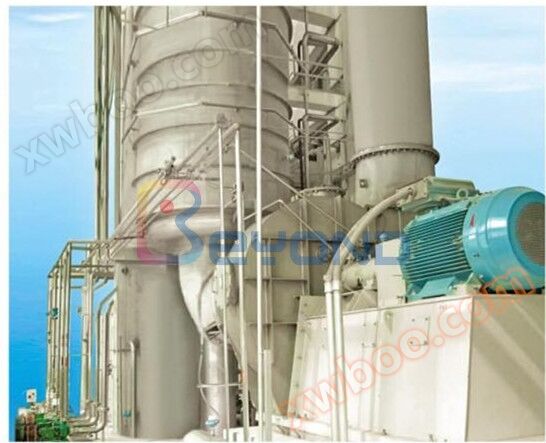
MVR evaporator
NegotiableUpdate on 12/03
- Model
- Nature of the Manufacturer
- Producers
- Product Category
- Place of Origin
Overview
MVR evaporator MVREVAPORATOR mechanical vapor compression MVR or MVC (Mechanical Vapor Compression) evaporator, its principle is to use a steam compressor to compress the secondary steam generated by evaporation, increase the heat and temperature of the secondary steam, and the compressed steam is sent to the evaporator as a heat source to evaporate the original liquid again, thereby achieving the purpose of evaporation concentration without the need for external fresh steam and relying on the self circulation of the evaporator system
Product Details
MVR evaporator
The mechanical vapor compression (MVR) or MVC (Mechanical Vapor Compression) evaporator uses a steam compressor to compress the secondary steam generated by evaporation, increasing the heat and temperature of the secondary steam. The compressed steam is then fed into the evaporator as a heat source, causing the original liquid to evaporate again. This achieves the goal of evaporation and concentration without the need for external fresh steam, relying on the self circulation of the evaporator system. By using engineering software such as PLC control system and configuration software, the system temperature, pressure, and motor speed are controlled to maintain stable, efficient, and intelligent operation of the evaporator.

Performance characteristics and scope of application:
1. No waste heat steam emissions, significant energy-saving effect, equivalent to a 10 effect evaporator;
2. The use of this technology can achieve countercurrent washing of secondary steam, so the dry matter content of condensed water is much lower than that of multi effect evaporators;
3. Using low-temperature negative pressure evaporation (50-90 ℃) is beneficial in preventing high-temperature denaturation of the evaporated material;
4. MVR evaporator is a replacement product of traditional multi effect falling film evaporator, which is based on single effect evaporator and reused through secondary steam countercurrent washing and re compression.
All materials suitable for single effect and multi effect evaporators are suitable for using MVR evaporators, which have complete substitutability in technology and better environmental and energy-saving characteristics.
MVR evaporator technology, due to its significant energy-saving effect, has rapidly developed abroad since the 1970s and is now widely used in industrial wastewater treatment, dairy products, sugar production, starch, alumina, papermaking, caprolactam, seawater desalination, coking plants, sulfur dioxide recovery and ammonia production, salt chemical industry and many other production fields.
Summary:
Mechanical vapor compression MVR or MVC(Mechanical Vapor Compression) evaporator, the principle is to use the secondary steam which is produced through compressing the steam by the steam compressor, secondary steam heat and temperature is increased by the compressor, steam compressed into the evaporator as the heat source, again makes the raw material liquid start evaporation, so there is no need to rely on external fresh steam, just need to rely on the evaporator system itself circulating to achieve the purpose of evaporation. Through the PLC control system, configuration software and engineering software to control the temperature, pressure, speed motor system, maintain stable, intelligent and efficient operation of the evaporator.
Performance Characteristics and Scope Of Application:
1. No waste heat steam emissions, energy-saving effect is very sigmificant, which is ecquivalent of 10 effect evaporator.
2. Using this technology can achieve to countercurrent washing of secondary steam, therefore the dry matter content in condensed water is far lower than the number of evaporator.
3. Using low temperature negative pressure evaporation(50-90℃), help to prevent the degeneration resulted from high temperature evaporation.
4. MVR evaporator is a substitute of traditional multi-effect falling-
film evaporator, is based on single effect evaporator through the reuse of the secondary steam countercurrent washing and recompression. All material that applicable for single effect and multi-effect evaporator, are suitable for use in the MVR evaporator, technically have the substitutability. It has perfect characteristics of environmental protection and energy saving. Because of its significant energy-saving effect, MVR evaporator technology started rapid development in foreign countries at the beginning of 70's, now is widely used, which is used in industrial wastewater treatment and dairy, sugar, starch, alumina, papermaking, caprolactam, seawater desalination, coking plant(recovery of sulfur dioxide production sulfur ammonia), salt chemical industry, and other many production areas.


