-
E-mail
yongliang.tao@leowlab.com
-
Phone
18620176533
-
Address
Rooms 206-207, Building 4, No. 8 Tianfeng Road, Science City, Huangpu District, Guangzhou, China
Product Categories
- UPS uninterruptible power supply
- Nitrogen Generator for ELSD/CAD
- Purifier A48
- SmartVap N96 Dual
- SmartVap QE
- SmartVap AE
- Portable gas chromatography-mass spectrometer
- Clinical mass spectrometry pre-processing automatic workstation
- Vacuum centrifugal concentrator
- Purifier A12
- High purity nitrogen generator
- Liquid nitrogen generator
Guangzhou Leo Laboratory Technology Co., Ltd
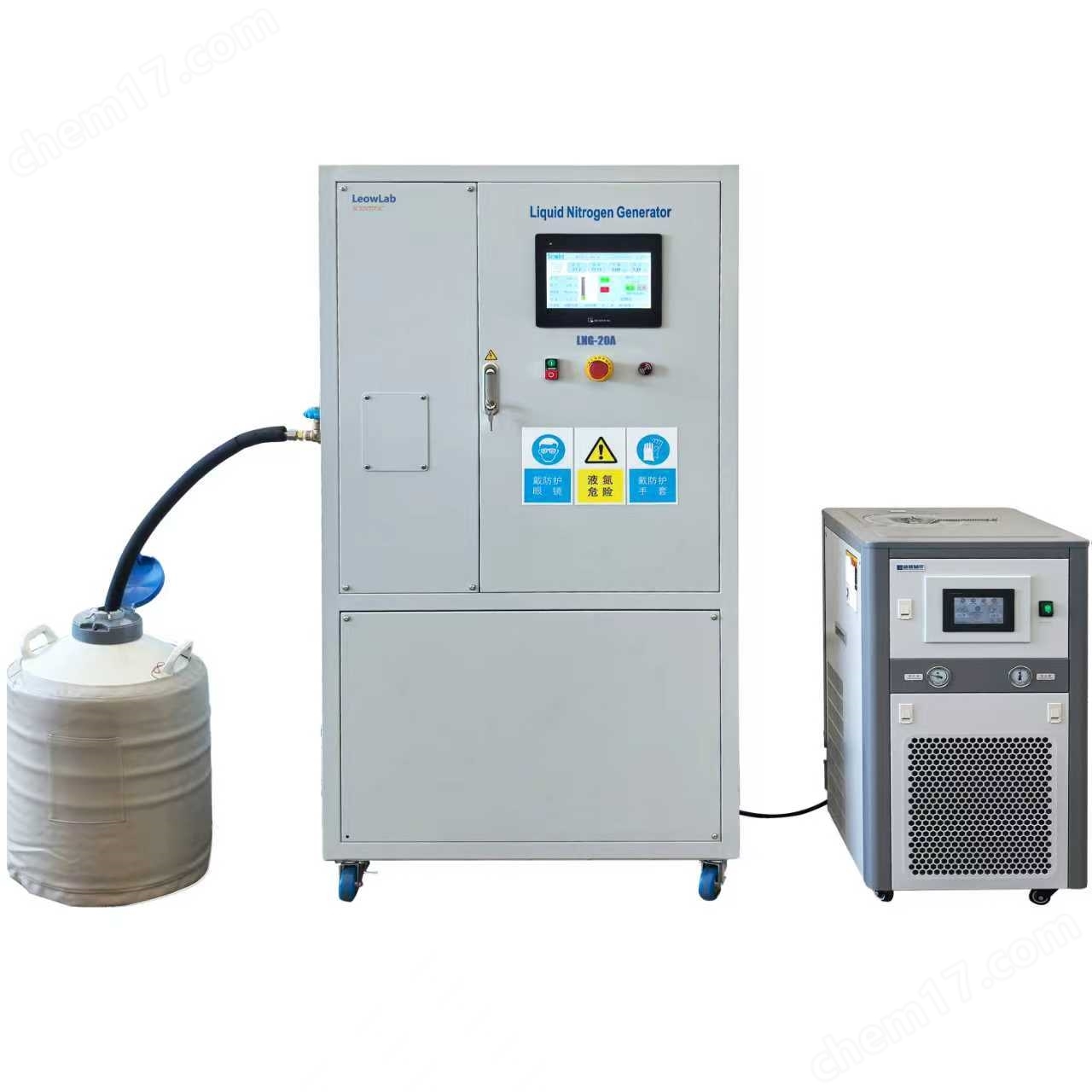
Liquid Nitrogen Generator LNG Series
NegotiableUpdate on 01/30
- Model
- Nature of the Manufacturer
- Producers
- Product Category
- Place of Origin
Overview
The LNG series liquid nitrogen generator is a * liquid nitrogen equipment with a daily production capacity of 10-50 liters. In addition, LNG also offers a laboratory workstation version, which is very suitable for applications that require the use of small amounts of liquid nitrogen. This model adopts a "plug and play liquefaction" system design, which does not require any other equipment and can be powered on to operate.
Product Details
Liquid Nitrogen Generator LNG SeriesEquipped with a user-friendly interface and one click operation function, it can be easily integrated into various usage environments. By completing the necessary electrical connections, you can enjoy a fully automated operating experience with the assistance of a PLC controller. The operator only needs to replace the filter and conduct routine inspections during the maintenance cycle of 8000 hours of equipment operation.
The air is compressed to high pressure by a built-in oil-free compressor and then transported to a buffer tank. The high-pressure air inside the buffer tank is then transported to the filter at the rear of the equipment to remove water and particulate matter from the air. Afterwards, the built-in air dryer will remove all residual moisture in the gas phase. The final dry and clean treated air (dew point up to -40 ° C) is then transported to one of the adsorption cylinders in the pressure swing adsorption (PSA) module. Pressure swing adsorption (PSA) technology can efficiently produce nitrogen gas of the required purity level for liquefaction. The carbon molecular sieve inside the PSA adsorption cylinder selectively adsorbs oxygen and carbon dioxide molecules until the adsorbent reaches saturation. Once saturation is reached, the feed process valve will switch to the second adsorption cylinder, and the first adsorption cylinder will quickly depressurize and blow to remove the adsorbed gas. By continuously switching between two adsorption beds, a stable stream of pure nitrogen can be generated. The purified nitrogen is then transported to the nitrogen buffer tank and finally enters the low-temperature liquid nitrogen tank; The storage tank works together with the GM refrigeration machine and its helium compressor, and the liquefied nitrogen gas is converted into liquid nitrogen and stored in the liquid nitrogen tank.

Liquid Nitrogen Generator LNG SeriesThe working principle of
The production of liquid nitrogen is achieved through air liquefaction and then stored in a built-in Dewar flask with optional capacity. The equipment ensures that liquid nitrogen is available at any time. With a simple start-up operation, it can be distributed to a liquid nitrogen storage tank through a vacuum insulated tube or transferred to an external Dewar flask.
The liquid nitrogen transfer operation is not affected by the system operating mode; When the liquid nitrogen level in the Dewar flask drops to 70%, the PLC will automatically start the production program. When the Dewar flask is filled with liquid nitrogen, the equipment will stop production and enter standby mode until the liquid nitrogen is transferred (and then restarted).
model |
LNG-10 |
LNG-20 |
LNG-50 |
output |
≥10 L/day |
≥20 L/day |
≥50 L/day |
Voltage optional |
220 VAC, 50 Hz, 1 PH |
380 VAC, 50 Hz, 3 PH |
|
power |
2.5 KW |
3.9 KW |
7.9 KW |
size(W×L×Hmm) |
79 x 65 x 168 |
145 x 75 x 178 |
145 x 75 x 178 |
weight |
250kg |
450kg |
600Kg |
cooling method |
Air cooled type |
Air cooled type |
water-cooled |
Duwa tank capacity |
35 rise |
50rise |
100rise |
Integrated air compressor |
Built in oil-free air compressor |
||
refrigerator |
GMThe refrigeration machine is installed on the Duwa tank |
||
built-inPSANitrogen Generator |
|||
purity |
≥99.9% |
||
dew point |
-65℃ |
||
PLCinterface |
10”Color touch screen |
||
work pressure |
1.5 bar |
||
Dewar liquid level control |
Capacitive liquid level sensor |
||
Environmental temperature range |
+5℃ to +40℃ |
||
maximum altitude |
3000 meters |
||
noise |
<60 dB@1meter |
||
Similar Product Recommend


