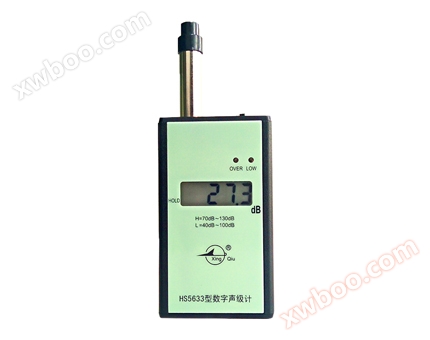
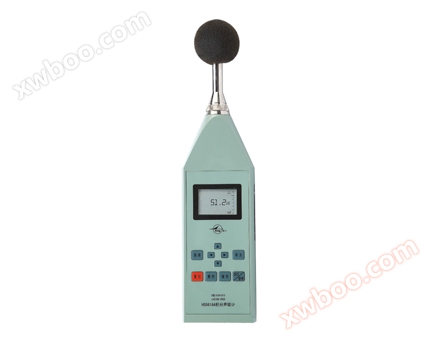
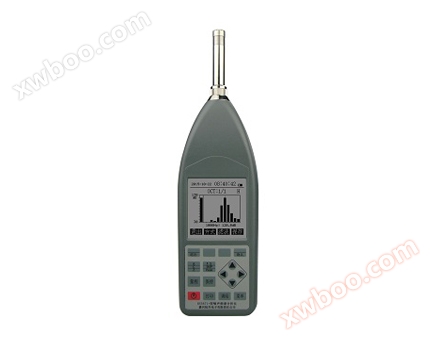
HS5670 typeIt is a multi-channel signal measurement and analysis instrument that can arbitrarily combine noise and vibration measurement channels to achieve real-time measurement of physical quantities such as noise and acceleration. It uses the high-speed computing and large storage capacity of a general-purpose computer (PC) to analyze and calculate the collected signals in the time and frequency domains. It has the advantages of versatility and high accuracy, and can be widely used in environmental noise measurement, environmental vibration measurement, 1/1 and 1/3 frequency spectrum analysis of noise sources, real-time FFT analysis, building acoustics measurement and other fields. It is a good noise measuring instrument.
HS5670 typeThe multi-channel noise/vibration analyzer consists of a computer, software package, high-speed A/D board, measurement amplification board, charge amplification board, accelerometer, preamplifier, test microphone, and other components.
1. Noise measurement channel
(1) Measurement microphone: Φ 12.7mm pre polarized test condenser microphone, sensitivity: approximately 30mV/Pa,
(2) Frequency range: 20Hz-20kHz
(3) Background noise: Direct input short circuit, A weighted less than 5 μ V
(4) Frequency weighting: A, C, Z (linear), compliant with IEC61672-1:1 level.
(5) Anti mixing filter: built-in, cut-off frequencies of 40kHz, 2.5kHz, 630Hz, 200Hz, attenuation of -48dB/oct
(6) Range: 20dB, 40dB, 60dB, 80dB
(7) Communication output: maximum 7V effective value
(8) Measurement range: 25-140dB when equipped with a 30mV/Pa test microphone.
2Vibration measurement channel
(1) Sensor: piezoelectric accelerometer, charge sensitivity: ≈ 10mv/m • s-2
(2) Frequency range: 1Hz-10kHz
(3) Measurement range: 0.1-5 × 10²m/s2
3. High speed and high-precision A/D board
(1) Sampling frequency: up to 200kHz
(2) Sampling bits: 16 bits
(3) FIFO: 32k bytes
(4) Interface: USB
Main software: 1) FFT analysis and testing
(1) The type and sensitivity of sensors can be set in the settings window
(2) The sampling speed of A/D can be set arbitrarily
(3) The range of each channel and the upper limit frequency of the anti aliasing filter can be set separately
(4) The vertical axis can be automatically generated by the type and range of the sensor
(5) The measurement results can be saved and printed
(6) It can display both FFT analysis results and time-domain waveforms
(7) The same software can be used to measure noise or vibration. When measuring vibration, it can measure peak value, effective value, or peak to peak value, which can be selected by the user.
2) OCT analysis testing
(1) Sampling rate: 50kHz/channel
(2) Dynamic range: 80dB
(3) Center frequency: 20Hz, 25Hz, 31.5Hz, 40Hz, 50Hz, 63Hz, 80 Hz,100Hz,125Hz,160Hz,200Hz,250Hz,315Hz,400Hz,500Hz,630Hz,800Hz,1000Hz,1250Hz1600Hz,20000Hz,2500Hz,3150Hz,4000Hz,5000Hz,6300Hz,8000Hz,10kHz、12.5kHz、16kHz。
(4) Parallel 1/3 OCT analysis
(5) The measurement results can be saved and printed
3) Architectural Acoustic Measurement
It is possible to conduct laboratory measurements of building component air sound insulation, on-site measurements of air sound insulation between two rooms in a building, on-site measurements of air sound insulation between exterior wall components and walls, laboratory measurements of floor impact sound insulation, and on-site measurements of floor impact sound insulation according to GBJ75-84<Code for Measurement of Building Sound Insulation>. The sound insulation measurement results can also be automatically converted into single value evaluation quantities according to GBJ121-88<Standard for Evaluation of Building Sound Insulation>, and reverberation time can be measured according to GBJ76-84<Code for Measurement of Hall Reverberation Time>.
4) Measurement of sound absorption coefficient
(1) The laboratory measurement of sound absorption coefficient can be carried out according to GBJ47-83<Specification for Measurement of Sound Absorption Coefficient by Reverberation Chamber Method>
(2) The measurement of reverberation time can be carried out according to GBJ76-84<Specification for Measuring Reverberation Time in Halls>.
(3) When measuring reverberation time, the number of repeated measurements can be selected from 1 to 18 times. Measurement using 1/3 octave band with a center frequency of 50 Hz、63Hz、80Hz、100Hz、125Hz、160Hz、200Hz、250Hz、315Hz、400Hz、500Hz、630Hz、800Hz、1000Hz、1250Hz、1600Hz、2000Hz、2500Hz、3150Hz、4000Hz、5000Hz、6300Hz、8000Hz、10000Hz。
(4) The lower limit frequency for measurement can be selected by the user at any of the following points: 50Hz, 63Hz, 80Hz, and 100Hz.
(5) The upper limit frequency for measurement can be selected by the user at any of 5000Hz, 6300Hz, 8000Hz, and 10000Hz.
(6) The test report can be automatically printed according to the requirements of GBJ47-83<Measurement Specification for Sound Absorption Coefficient by Reverberation Chamber Method>.
(7) The measurement range of reverberation time is 0.2 seconds to 10 seconds.
(8) Simultaneously calculate T60, T50, T40, T30, T25, or users can define the slope of the attenuation curve to calculate T60.
(9) All measurement results can be integrated with software such as EXCEL and WORD.
(10) Can display, save, and print time-domain waveforms
(11) Can display, save, and print graphs of various frequency components changing over time
(12) Can display, save, and print reverberation time frequency characteristic maps