-
E-mail
0595188@163.com
- Phone
-
Address
No. 5, Lianhu Industrial Zone, Tangxia Town, Dongguan City
Product Categories
Dongguan Tangxia Precision Instrument Factory

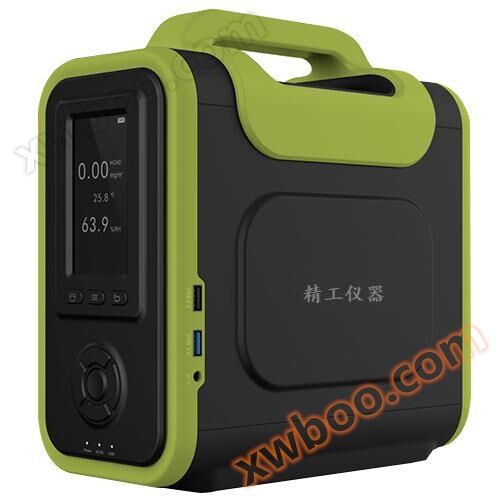
JG-500 Textile Formaldehyde Release Tester
NegotiableUpdate on 04/15
- Model
- Nature of the Manufacturer
- Producers
- Product Category
- Place of Origin
Overview
JG-500 Textile Formaldehyde Release Tester
Product Details
JG-500Textile formaldehyde emission tester
Gas detection:formaldehyde
Textile formaldehyde emission tester
The determination of formaldehyde content in textiles has become a routine testing item. There are already many existing testing methods and standards. The testing methods and principles of different countries are basically the same, but there may be some differences in specific extraction and analysis conditions, and there is no strict comparability between the results obtained by methods with different testing conditions.
The determination of formaldehyde content in textiles can be divided into two categories based on sample preparation: liquid-phase extraction method and gas-phase extraction method. The liquid phase extraction method is used to determine the total amount of free and hydrolyzed formaldehyde in the sample, in order to investigate the potential harm of free formaldehyde emissions to the human body caused by factors such as sweating or getting wet during the wearing and use of textiles.
The gas phase extraction method is used to determine the free formaldehyde content released by a sample under certain temperature and humidity conditions, in order to investigate the amount of formaldehyde that textiles can release during storage, transportation, display, and pressing processes, and to evaluate their potential harm to the environment and human health. The liquid-phase extraction method requires a large amount of chemical reagents and complex detection procedures, with a long detection time cycle and the need for professional testing personnel to operate. It is suitable for large professional testing institutions, but not very practical for general small testing units, textile raw material manufacturers, and clothing manufacturers.
Design principle:
The textile formaldehyde emission tester adopts a combination of steam absorption method and gas-phase extraction method. The sample is placed in a glass bottle at a constant temperature of 40 ℃, and the rapid release of formaldehyde in textiles is accelerated by the formation of formaldehyde vapor in a high-temperature and high humidity environment. After heating for 30 minutes, the sample gas is sampled by a gas pump and sent to a dryer. The sample steam is separated into water and gas in the dryer to form a stable formaldehyde mixture gas. The sampling pump sends the mixture gas into the formaldehyde electrochemical sensor chamber. The sample gas contacts the formaldehyde electrochemical sensor in a diffusion manner and undergoes electrochemical reaction, outputting a stable electrical signal. The electrical signal is processed by a central processor, and the gas concentration value can be accurately displayed on a digital screen. The entire measurement process does not require any chemical reagents and the operation method is simple.
Characteristics of textile formaldehyde emission tester:
The textile formaldehyde emission tester can automatically and quickly detect the formaldehyde emission content in textiles and their products (cotton, synthetic fiber, wool clothing) within 30 minutes.
The temperature control of the sample collection bottle in this instrument adopts Philips PLC as the core control unit, which has high reliability, strong anti-interference ability, and achieves intelligent temperature control.
The detection unit is composed of an American INTELAN formaldehyde electrochemical sensor and a central processing unit. The formaldehyde gas concentration value can be accurately displayed on a digital screen with sound and light alarms. The operation is simpler, the detection accuracy is high, the speed is fast, and the anti-interference ability is strong. The entire measurement process does not require any chemical reagents.
Formaldehyde vapor adopts advanced foreign dryer water gas separation technology, which achieves thorough water gas separation and stable output of mixed gas.
The instrument is designed with a sensor and sampling gas path reset system, which uses activated carbon filters to clean residual formaldehyde gas in the sensor and sampling gas path.
The entire testing process of the textile formaldehyde emission tester complies with the national standard GB/T 2912.2-2009 "Testing Method for Formaldehyde Content in Textiles - Steam Absorption Method".
Technical parameters:
☆ Detection method: steam absorption method (gas-phase extraction method - formaldehyde electrochemical sensor detection)
☆ Detection range: 0-1999mg/Kg
☆ Resolution: ± 1mg/Kg
Measurement accuracy: 1mg/Kg
☆ Repeatability: 5% F.S
☆ Measurement time: 3 minutes
☆ Sample collection method: pump absorption collection
☆ Temperature: 40 ℃± 1 ℃
☆ Test sample specification: 20g ± 0.01g, (length 20mm * width 20mm)
☆ Display mode: digital display
☆ Power supply: AC220V
Conventional gas types and parameters (gas types, ranges, and resolutions not listed can be customized by phone)
|
JG6000 series gas detector selection table |
|
|
Gas type and molecular formula |
Optional range (range not listed can be customized by phone); The letter 'Chang' indicates the standard range |
|
CO Carbon Monoxide |
0-50, 100, 200, 500, 1000 (normal), 2000, 5000ppm |
|
H2S hydrogen sulfide |
0-10, 20, 50, 100, (normal), 200, 0-500, 1000, 2000ppm |
|
O2 oxygen |
0-5%, 25%, 30% (Regular), 50% VOL |
|
EX may have natural gas |
0-100% LEL (normal) |
|
N2 nitrogen gas |
0-100%. Vol (often) |
|
NH3 ammonia gas |
0-50, 100ppm (normal), 200, 500, 1000, 2000, 5000ppm |
|
CL2 chlorine gas |
0-10 (normal), 20, 50, 100, 200, 500 ppm |
|
VOC Total Volatile Organic Gas Detector |
0-2、10、50、100、200、1000、2000、6000、10000PPM |
|
H2 hydrogen gas |
0-500, 1000 (normal), 2000, 5000, 10000, 20000, 40000 ppm |
|
CH2O formaldehyde |
0-10 (normal), 20, 50, 100, 500, 1000ppm |
|
O3 ozone |
0-1, 5, 10, 20, 50 (normal), 100, 200, 500, 1000ppm |
|
CO2 carbon dioxide (infrared) |
0-1000, 2000 (normal), 5000, 10000, 50000ppm |
|
CO2 carbon dioxide (infrared) |
0-10%、20%、50%、100%Vol |
|
NO nitric oxide |
0-100, 0-250 (normal), 500, 1000, 2000, 4000ppm |
|
NO2 Nitrogen dioxide |
0-20 (normal), 50, 100, 500, 1000, 2000, 4000ppm |
|
NOX nitrogen oxides |
0-20 (normal), 50, 100, 500, 1000, 2000, 4000ppm |
|
SO2, sulfur dioxide |
0-10, 20, 100 (normal), 150ppm, 200, 1000, 2000 ppm |
|
ETO epoxyethane |
0-10 (normal), 20, 50, 100ppm |
|
Ethylene oxide ETO |
0-500、1000ppm |
|
PH3 phosphine |
0-10 (normal), 20, 50, 100, 1000, 2000, 3000, 5000ppm |
|
HCL hydrogen chloride |
0-10 (normal), 20, 50, 100ppm |
|
HCN hydrogen cyanide |
0-10 (normal), 20, 50, 100ppm |
|
COCL2 phosgene |
0-1ppm (normal) |
|
CLO2 chlorine dioxide |
0-1, 10 (normal), 20, 50ppm |
|
SiH4 silane |
0-10, 50ppm (normal) |
|
F2 fluorine gas |
0-1 (normal), 10ppm |
|
HF hydrogen fluoride |
0-10 (normal), 50ppm |
|
HBr hydrogen bromide |
0-10, 50 (normal), 100ppm |
|
B2H6 diborane |
0-5, 10, 50ppm (normal) |
|
AsH3 arsine |
0-1, 10 (normal), 50ppm |
|
GeH4 Germanane |
0-1ppm (normal) |
|
N2H4 hydrazine, hydrazine |
0-1ppm (normal) |
|
THT tetrahydrothiophene |
0-100ppm, 0-50mg/m3 (normal), 0-100mg/m3 |
|
Br2 bromine gas |
0-5, 10 (normal), 50ppm |
|
C2H2 acetylene |
0-100ppm (normal) |
|
CS2 carbon disulfide |
0-100% LEL, 50ppm (normal) |
|
C3H3N acrylonitrile |
0-10, 20 (normal), 50, 100ppm |
|
CH3COOH ethyl acetate |
0-10、20p、 50, 100 (normal), 500, 1000ppm |
|
C2H4 ethylene |
0-10 (normal), 20, 50, 100, 500, 1000ppm |
|
CH3OH methanol |
0-50, 100 (normal), 500, 1000ppm |
|
C2H5OH ethanol |
0-10, 50, 100 (normal), 500, 1000ppm |
|
CH4S Methyl Thiol |
0-20 (normal), 50ppm |
|
C2H3Cl vinyl chloride |
0-50, 100ppm (usual) |
|
Chloromethane (monochloromethane, dichloromethane, etc.) |
0-50、100ppm |
|
C8H8 styrene (electrochemical) |
0-50、200、1000、10000ppm |
|
Styrene (PID) |
0-100 (normal), 200, 1000, 6000ppm |
|
Total volatile organic compounds (TVOC) PID |
0-1,10,50PPM, (High precision, high resolution 0.001PPM) |
|
Total volatile organic compounds (TVOC) PID |
0-100 (normal), 2001000, 6000, 10000ppm |
|
Bromomethane (CH3Br) (PID photoionization) |
0-100 (normal), 2001000, 10000PPM |
|
Bromomethane (CH3Br) (electrochemical) |
0-50100 (normal), 2001000ppm |
|
C6H6 benzene (PID photoionization) |
0-1, 10, 50PPM (high precision, high resolution 0.001PPM) |
|
C6H6 benzene (PID photoionization) |
0-100 (normal), 2001000, 600010000ppm |
|
Toluene (PID photoionization) |
0-1, 10, 50PPM (high precision, high resolution 0.001PPM) |
|
Toluene (PID photoionization) |
0-100 (normal), 200,1000, 6000, 10000ppm |
|
Xylene (PID photoionization) |
0-1, 10, 50PPM (high precision, high resolution 0.001PPM) |
|
Xylene (PID photoionization principle) |
0-100 (normal), 2001000, 600010000ppm |
|
Total volatile organic compounds (TVOC) electrochemistry |
0-10,50,100PPM |
|
C6H6 benzene (electrochemical) |
0-10,50,100PPM |
|
Toluene (electrochemical) |
0-10,50,100PPM |
|
Xylene (electrochemical) |
0-10,50,100PPM |
|
The ranges listed in the above table are conventional ranges and are not included in the list. If you need to test, please consult our sales personnel Jinggong Instrument provides you with comprehensive technical support and after-sales service! Details consultation: WeChat Same Account |
|

Similar Product Recommend