-
E-mail
0595188@163.com
- Phone
-
Address
No. 5, Lianhu Industrial Zone, Tangxia Town, Dongguan City
Product Categories
Dongguan Tangxia Precision Instrument Factory

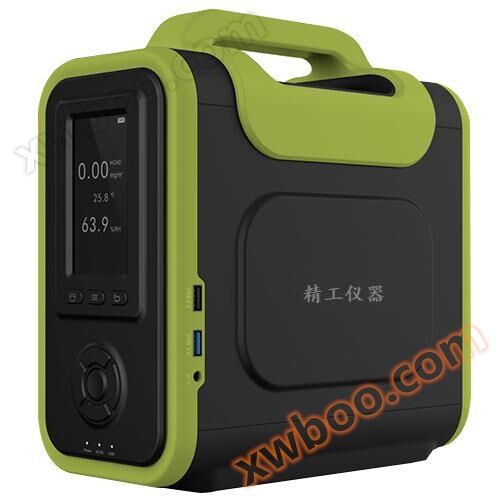
JG-330 Formaldehyde Emission Detector for Artificial Board
NegotiableUpdate on 04/15
- Model
- Nature of the Manufacturer
- Producers
- Product Category
- Place of Origin
Overview
JG-330 Formaldehyde Emission Detector for Artificial Board
Product Details
JG-330Formaldehyde emission detector for artificial board
Gas detection:formaldehyde
The formaldehyde emission detector for artificial boards can automatically and quickly detect the formaldehyde emission content in artificial boards and their products within 3 minutes; For example, formaldehyde emission detection in decorative materials such as plywood, decorative veneer veneer plywood, particleboard, medium density fiberboard, high-density fiberboard, particle board, oriented strand board, decorative artificial board, impregnated paper layer wooden flooring, solid wood flooring, composite flooring, bamboo flooring, impregnated film paper faced wooden artificial board, gypsum board, paper faced gypsum board, gypsum fiber board, anti-static flooring, wall cloth, wallpaper, polyvinyl chloride roll flooring, various carpets, etc.
The temperature control of this instrument's climate chamber adopts Philips PLC as the core control unit, with high reliability and strong anti-interference ability, achieving intelligent temperature control. The temperature of the climate chamber is maintained at (40 ± 0.5) ℃. There is no requirement for environmental temperature and humidity, and it is automatically adjusted inside the box.
The detection unit is composed of a Swiss (Membrapor) formaldehyde electrochemical sensor and a central processing unit. Formaldehyde gas contacts the electrochemical sensor through air pump diffusion and undergoes electrochemical reactions, outputting stable electrical signals. The electrical signals are processed by the central processing unit, and the gas concentration values can be accurately displayed on a digital screen with sound and light alarms. The operation is simpler, the detection accuracy is high, the speed is fast, and the anti-interference ability is strong.
The entire detection process of the formaldehyde emission detector for artificial boards complies with the national standard GB/T 18580-2001 "Indoor Decoration Materials - Formaldehyde Emission Limits in Artificial Boards and Their Products".
The formaldehyde emission detector for artificial boards can be widely used in indoor environmental testing, environmental decoration, scientific research and teaching, as a specialized equipment for detecting formaldehyde emission limits in artificial boards and their products. Provide a convenient, economical, and reliable specialized equipment for formaldehyde emission limit detection in artificial board manufacturers
Technical Specifications:
Detection methods: climate chamber method, formaldehyde electrochemical sensor detection (no need for any chemical reagents)
Detection range 0.00-19.99mg/m3
Resolution: ± 0.01mg/m3
Measurement accuracy: 0.01mg/m3
Repeatability: 5% F.S
Measurement time: 3 minutes
Working mode of climate chamber: heating
Climate chamber volume: 45cm * 38.5cm * 35cm
Climate chamber temperature: 40 ℃± 0.5 ℃
Air flow velocity inside the climate chamber: 0.1-0.3m/s
Test board area: 0.16m2
Display mode: Three and a half digit digital display
Power supply: 220V
Dimensions: 65cm * 45cm * 40cm
Conventional gas types and parameters (gas types, ranges, and resolutions not listed can be customized by phone)
|
JG6000 series gas detector selection table |
|
|
Gas type and molecular formula |
Optional range (range not listed can be customized by phone); The letter 'Chang' indicates the standard range |
|
CO Carbon Monoxide |
0-50, 100, 200, 500, 1000 (normal), 2000, 5000ppm |
|
H2S hydrogen sulfide |
0-10, 20, 50, 100, (normal), 200, 0-500, 1000, 2000ppm |
|
O2 oxygen |
0-5%, 25%, 30% (Regular), 50% VOL |
|
EX may have natural gas |
0-100% LEL (normal) |
|
N2 nitrogen gas |
0-100%. Vol (often) |
|
NH3 ammonia gas |
0-50、100ppm(常)、200、500、1000、2000、5000ppm |
|
CL2 chlorine gas |
0-10 (normal), 20, 50, 100, 200, 500 ppm |
|
VOC Total Volatile Organic Gas Detector |
0-2、10、50、100、200、1000、2000、6000、10000PPM |
|
H2 hydrogen gas |
0-500, 1000 (normal), 2000, 5000, 10000, 20000, 40000 ppm |
|
CH2O formaldehyde |
0-10 (normal), 20, 50, 100, 500, 1000ppm |
|
O3 ozone |
0-1, 5, 10, 20, 50 (normal), 100, 200, 500, 1000ppm |
|
CO2 carbon dioxide (infrared) |
0-1000, 2000 (normal), 5000, 10000, 50000ppm |
|
CO2 carbon dioxide (infrared) |
0-10%、20%、50%、100%Vol |
|
NO nitric oxide |
0-100, 0-250 (normal), 500, 1000, 2000, 4000ppm |
|
NO2 Nitrogen dioxide |
0-20 (normal), 50, 100, 500, 1000, 2000, 4000ppm |
|
NOX nitrogen oxides |
0-20 (normal), 50, 100, 500, 1000, 2000, 4000ppm |
|
SO2, sulfur dioxide |
0-10、20、100(常)、150ppm、200、1000、2000 ppm |
|
ETO epoxyethane |
0-10 (normal), 20, 50, 100ppm |
|
Ethylene oxide ETO |
0-500、1000ppm |
|
PH3 phosphine |
0-10 (normal), 20, 50, 100, 1000, 2000, 3000, 5000ppm |
|
HCL hydrogen chloride |
0-10 (normal), 20, 50, 100ppm |
|
HCN hydrogen cyanide |
0-10 (normal), 20, 50, 100ppm |
|
COCL2 phosgene |
0-1ppm (normal) |
|
CLO2 chlorine dioxide |
0-1, 10 (normal), 20, 50ppm |
|
SiH4 silane |
0-10, 50ppm (normal) |
|
F2 fluorine gas |
0-1 (normal), 10ppm |
|
HF hydrogen fluoride |
0-10 (normal), 50ppm |
|
HBr hydrogen bromide |
0-10, 50 (normal), 100ppm |
|
B2H6 diborane |
0-5, 10, 50ppm (normal) |
|
AsH3 arsine |
0-1, 10 (normal), 50ppm |
|
GeH4 Germanane |
0-1ppm (normal) |
|
N2H4 hydrazine, hydrazine |
0-1ppm (normal) |
|
THT tetrahydrothiophene |
0-100ppm、0-50mg/m3(常)、0-100mg/m3 |
|
Br2 bromine gas |
0-5, 10 (normal), 50ppm |
|
C2H2 acetylene |
0-100ppm (normal) |
|
CS2 carbon disulfide |
0-100% LEL, 50ppm (normal) |
|
C3H3N 丙烯腈 |
0-10, 20 (normal), 50, 100ppm |
|
CH3COOH ethyl acetate |
0-10、20p、 50, 100 (normal), 500, 1000ppm |
|
C2H4 ethylene |
0-10 (normal), 20, 50, 100, 500, 1000ppm |
|
CH3OH methanol |
0-50, 100 (normal), 500, 1000ppm |
|
C2H5OH 乙醇 |
0-10, 50, 100 (normal), 500, 1000ppm |
|
CH4S Methyl Thiol |
0-20 (normal), 50ppm |
|
C2H3Cl vinyl chloride |
0-50, 100ppm (usual) |
|
Chloromethane (monochloromethane, dichloromethane, etc.) |
0-50、100ppm |
|
C8H8 styrene (electrochemical) |
0-50、200、1000、10000ppm |
|
Styrene (PID) |
0-100 (normal), 200, 1000, 6000ppm |
|
Total volatile organic compounds (TVOC) PID |
0-1,10,50PPM, (High precision, high resolution 0.001PPM) |
|
Total volatile organic compounds (TVOC) PID |
0-100 (normal), 2001000, 6000, 10000ppm |
|
Bromomethane (CH3Br) (PID photoionization) |
0-100 (normal), 2001000, 10000PPM |
|
Bromomethane (CH3Br) (electrochemical) |
0-50100 (normal), 2001000ppm |
|
C6H6 benzene (PID photoionization) |
0-1, 10, 50PPM (high precision, high resolution 0.001PPM) |
|
C6H6 benzene (PID photoionization) |
0-100 (normal), 2001000, 600010000ppm |
|
Toluene (PID photoionization) |
0-1, 10, 50PPM (high precision, high resolution 0.001PPM) |
|
Toluene (PID photoionization) |
0-100 (normal), 200,1000, 6000, 10000ppm |
|
Xylene (PID photoionization) |
0-1, 10, 50PPM (high precision, high resolution 0.001PPM) |
|
Xylene (PID photoionization principle) |
0-100 (normal), 2001000, 600010000ppm |
|
Total volatile organic compounds (TVOC) electrochemistry |
0-10,50,100PPM |
|
C6H6 benzene (electrochemical) |
0-10,50,100PPM |
|
Toluene (electrochemical) |
0-10,50,100PPM |
|
Xylene (electrochemical) |
0-10,50,100PPM |
|
The ranges listed in the above table are conventional ranges and are not included in the list. If you need to test, please consult our sales personnel Jinggong Instrument provides you with comprehensive technical support and after-sales service! Details consultation: WeChat Same Account |
|

Similar Product Recommend