- Phone
-
Address
10th and 11th floors, China Blue Star Building, No. 19 North Third Ring East Road, Chaoyang District, Beijing
Product Categories
Beijing Yubang Electric Power Technology Co., Ltd

Intelligent transmission network analysis and control system
NegotiableUpdate on 03/13
- Model
- Nature of the Manufacturer
- Producers
- Product Category
- Place of Origin
Overview
The intelligent transmission network analysis and control system is based on the production management system, supported by the power grid GIS spatial information service platform and the transmission and transformation equipment status monitoring system, to achieve panoramic information interaction, asset performance analysis, and on-site intensive control. The system adopts precise technical architecture, standardized interface specifications, modular functional configuration, and integrated open platform to provide efficient services to company leaders, scheduling departments, production departments, scientific research units, and grassroots units, achieving observable equipment status, monitored production processes, and early warning of operational risks. The intelligent transmission network analysis and control system combines online monitoring, real-time information of the power grid, lightning location, traveling wave distance measurement and other systems to facilitate production personnel at all levels to obtain detailed information on power production and operation at any time; At the same time, the system utilizes the powerful spatial analysis function of GIS to achieve two-dimensional GIS control functions such as inspection management, operation management, fault management, defect management, intelligent monitoring point deployment, spare parts and materials management, vehicle management, personnel management, etc. on digital maps, providing auxiliary decision-making for emergency command and achieving controllable, in control, and controllable safety production.
Product Details
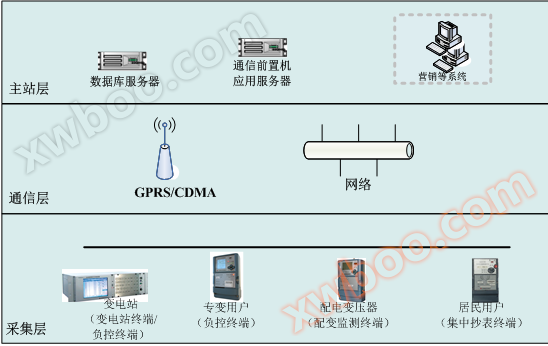
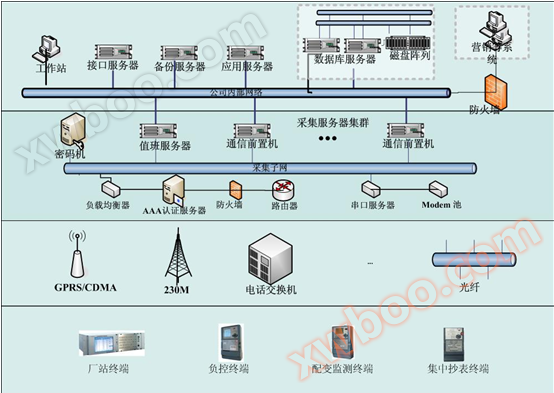
System architecture:
The intelligent transmission network analysis and control system adopts a service-oriented technical architecture, standardized interface specifications, modular functional configuration, and constructs an integrated, flexible, and open platform. The service architecture design between various components within the system and the entire platform adopts a service-oriented architecture to achieve standard connectivity between internal components of the entire platform; The system adopts a plugin mechanism to dynamically load functional components based on the core framework, in order to extend the runtime functionality of platform applications, thus making the system highly unified, open, and extensible.
System Characteristics
1Information panoramic interaction;
2. Holographic remote diagnosis;
3 On site intensive control;
Similar Product Recommend