- Phone
-
Address
No.388 Xinshi Middle Road, Qiaoxi District, Shijiazhuang City, Hebei Province, China. Hebei Jiyu Innovation Park 5-025
Product Categories
Shijiazhuang Shiya Technology Co., Ltd


Handheld Leaf Area Meter
NegotiableUpdate on 05/06
- Model
- Nature of the Manufacturer
- Producers
- Product Category
- Place of Origin
Overview
Handheld leaf area meters achieve parameter acquisition through optical imaging, laser scanning, or resistive touch technology. Taking optical imaging as an example, the device is equipped with a high-definition camera to capture the contour of the blade, and combined with image processing algorithms to quickly calculate the area; Laser scanning technology generates three-dimensional contour data by scanning the blade edge with a laser beam, with an accuracy of up to millimeters. Compared to traditional grid paper or weighing methods, this instrument breaks through the limitations of leaf shape, color, and thickness, supports in vivo and ex vivo leaf measurement, and avoids damage to the sample.
Product Details
In agricultural, forestry, and ecological research, leaves serve as the core organ of plant photosynthesis, and accurate measurement of their morphological parameters is crucial for evaluating crop growth status and optimizing cultivation management. As a portable non-destructive measuring device, the handheld leaf area meter has become a reliable assistant for researchers and producers due to its high precision, multifunctionality, and intelligent design.
1、 Technical principles and core advantages
Handheld leaf area meters achieve parameter acquisition through optical imaging, laser scanning, or resistive touch technology. Taking optical imaging as an example, the device is equipped with a high-definition camera to capture the contour of the blade, and combined with image processing algorithms to quickly calculate the area; Laser scanning technology generates three-dimensional contour data by scanning the blade edge with a laser beam, with an accuracy of up to millimeters. Compared to traditional grid paper or weighing methods, this instrument breaks through the limitations of leaf shape, color, and thickness, supports in vivo and ex vivo leaf measurement, and avoids damage to the sample.
Its core advantages are reflected in three aspects: first, high precision, with measurement errors controlled within ± 2% and a resolution of 0.01cm?; The second is multifunctionality, which can synchronously obtain more than 10 parameters such as leaf area, perimeter, aspect ratio, shape factor, etc; The third is portability, with devices weighing generally less than 1kg and built-in lithium batteries supporting 16 hours of continuous operation, suitable for multiple scenarios such as fields, greenhouses, and laboratories.
2、 Functional characteristics and operating procedures
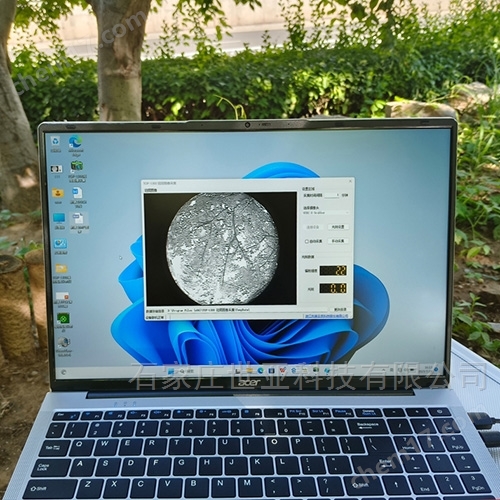
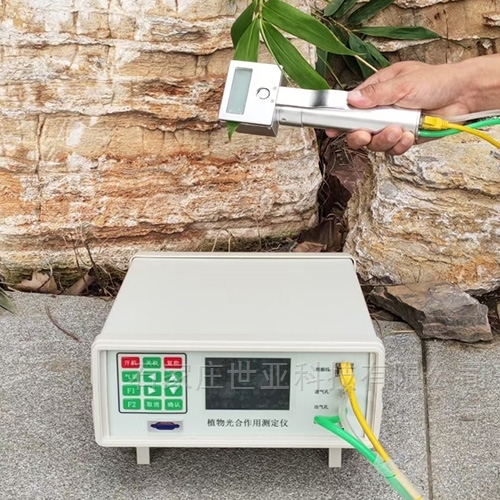
Mainstream models such as the Top Yunnong YMJ-B series adopt an integrated design, equipped with a 5-inch touch color screen, supporting dual display of data and graphics. The operation process is simple and efficient: after starting up, select the measurement mode, lay the blades flat in the measurement area, and the device automatically scans and generates contour images; For narrow blades, the image stitching function can be activated to complete the calculation of the entire leaf area through multiple scans. After the measurement is completed, the data is stored in real-time in the built-in storage area (with a capacity of 1000 sets), or exported to the computer through the Type-C interface. The supporting software can generate Excel reports and trend analysis charts.
Some models integrate GPS positioning modules, which automatically record latitude and longitude information during measurement, combined with timestamp function, to achieve data tracking in the space-time dimension. For example, in forest ecological monitoring, researchers can locate sampling points through coordinate information and evaluate changes in vegetation coverage based on historical data. In addition, the device supports Bluetooth/4G dual-mode transmission, and measurement data can be uploaded to the cloud platform in real-time. Users can remotely view, share, and export data through a mobile app.
3、 Application scenarios and value realization
1. Agricultural production management
During the crop growth cycle, leaf area index (LAI) is an important indicator reflecting the photosynthetic potential of a population. The handheld leaf area meter can quickly measure the leaf area of a single plant and calculate the population LAI based on planting density, providing a basis for irrigation and fertilization decisions. For example, during the wheat filling stage, monitoring changes in flag leaf area can accurately regulate nitrogen fertilizer application and avoid the risk of lodging caused by excessive fertilization.
2. Plant Physiology Research
Leaf morphology parameters are closely related to plant stress resistance. In drought stress experiments, researchers found that the leaves of drought resistant varieties often have higher aspect ratios and shape factors. Handheld leaf area meters can quantify these differences and provide data support for screening stress tolerant germplasm resources. In addition, in pest and disease monitoring, by comparing the area changes of healthy leaves and diseased leaves, the infected area can be quickly located to guide precise prevention and control.
3. Ecological protection and resource investigation
In the nature reserve, researchers use this device to evaluate the leaf area development of tree seedlings, and construct a biomass estimation model based on breast height diameter and tree height data. For example, in the Qinling Mountains, by monitoring the leaf area dynamics of Quercus acutissima seedlings for three consecutive years, it was found that the annual growth rate of leaf area was significantly positively correlated with soil moisture, providing a scientific basis for vegetation restoration.
4、 Selection suggestions and maintenance points
The mainstream brands in the market include Top Yunnong, Leiente, Yuntang, etc., with price ranges ranging from 4000 yuan to 100000 yuan. Ordinary scientific research users can choose the YMJ-B series, which supports rectangular/triangular compensation modes and can effectively correct the impact of blade edge serrations on area calculation; For high-precision demand scenarios, the imported model CI-203 can be considered, with a laser scanning accuracy of 0.05mm but a price exceeding 200000 yuan.
There are three points to pay attention to in daily maintenance: first, clean the lens and measurement platform to avoid dust interference with the optical system; The second is to regularly calibrate the equipment, with some models having built-in automatic calibration modules that users can verify through standard blades; The third is data backup. It is recommended to export historical data to external storage media every month to prevent accidental loss.
Handheld leaf area meters are gradually becoming a standard tool for modern agriculture and ecological research due to their real-time, precision, and ease of use. Whether it is precise monitoring by scientific research institutions or rapid diagnosis of planting bases, this equipment will provide more scientific and efficient solutions for plant growth management.