- Phone
-
Address
Jinan High tech Zone, Shandong
Product Categories
Shandong Zhongcheng Herun Technology Development Co., Ltd


Glass Bottle Vertical Axis Deviation Meter - Intelligent Type
NegotiableUpdate on 05/06
- Model
- Nature of the Manufacturer
- Producers
- Product Category
- Place of Origin
Overview
Glass Bottle Vertical Axis Deviation Meter - Intelligent $r $n $r $n In the field of container manufacturing and quality inspection, accurate measurement of vertical deviation is the core link to ensure product compliance with standards and improve qualification rate. This type of measuring equipment is based on the principle of mechanical contact to achieve high-precision detection, and is widely used in various container production scenarios, becoming a key technical tool to ensure product safety. Its core value lies in directly obtaining container shape data through physical contact, providing reliable basis for quality control.
Product Details
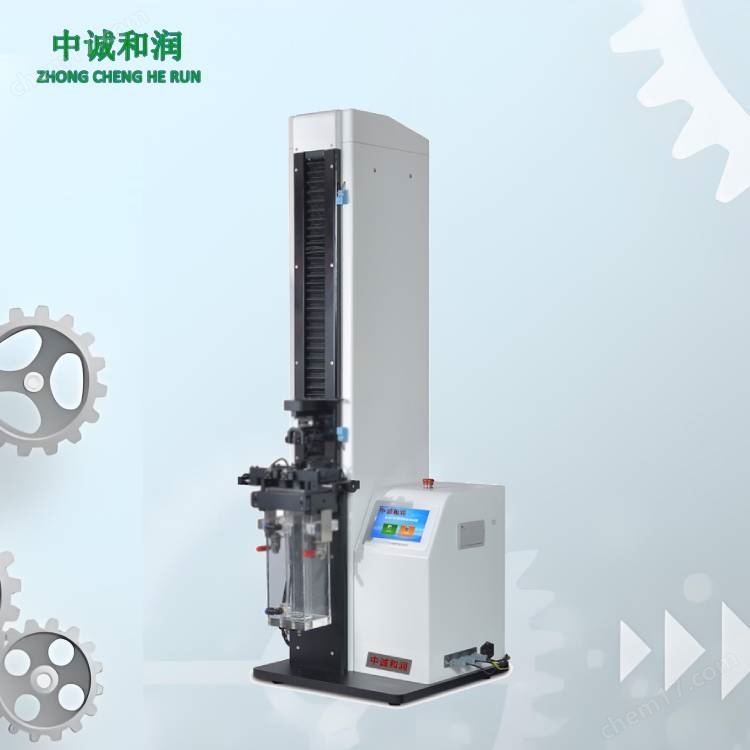
Intelligent Glass Bottle Vertical Axis Deviation Meter
In the field of container manufacturing and quality inspection, the deviation of verticalityaccurateMeasurement is the core link to ensure that products meet standards and improve the qualification rate. This type of measuring equipment is based on the principle of mechanical contact to achieve high-precision detection, and is widely used in various container production scenarios, becoming a key technical tool to ensure product safety. Its core value lies in directly obtaining container shape data through physical contact, providing reliable basis for quality control.
The core mechanism of the mechanical contact principle lies in the direct contact between the precision probe and the surface of the container. The device moves along the axis of the container through a rotatable measuring head. When the measuring head contacts the container wall, the displacement sensor records the movement trajectory of the measuring head, and calculates the offset between the container axis and the theoretical vertical axis through data analysis. This measurement method directly reflects the actual shape characteristics of the container, and its advantage is that it is not affected by external factors such as ambient light and container color, and the measurement results are intuitive and reliable. Compared to non-contact methods, this principle performs more outstandingly in terms of stability and repeatability, and can meet the requirements of high-precision detection.
At the application level, this technology is suitable for various production scenarios. In a continuous production environment, equipment can be deployed at the end of the production line to achieve real-time online detection, timely detection and isolation of non-conforming products, and avoid subsequent process problems caused by vertical deviation. In laboratory research and development scenarios, high-precision measuring equipment supports new product form verification and process parameter optimization, providing data support for product iteration. In the quality control system, the digital display interface supports multiple sets of data comparison and trend analysis to ensure that the test results meet industry standard requirements.
In terms of technical characteristics, this type of equipment has multiple advantages. High repeatability ensures consistency of multiple measurement results and reduces the risk of human error; Modular design supports quick replacement of probe fixtures to meet the testing needs of containers of different specifications; The automatic calibration function eliminates system errors through standard block calibration, ensuring long-term measurement accuracy; The automatic data recording and export function can be linked with the production management system to achieve digital management of quality traceability and process improvement. These characteristics together constitute the comprehensive advantages of the equipment in cost control, operational convenience, maintenance efficiency, and other aspects.
However, this technology also has certain limitations. Long term use may cause wear and tear on the measuring head, and regular maintenance and calibration are required to maintain accuracy; The measurement of soft material containers may result in deformation errors due to contact pressure, which can affect the accuracy of the measurement results. In response to these challenges, the industry is improving the adaptability and reliability of equipment through technological paths such as optimizing probe materials, developing adaptive pressure control algorithms, and integrating temperature compensation modules.
In the future, with the deep integration of intelligent sensors and IoT technology, mechanical contact based verticality deviation detection devices will evolve towards intelligence and networking. The wireless transmission module can achieve remote data monitoring and cloud collaborative analysis, improving fault response speed; Artificial intelligence algorithms can establish a correlation model between container shape and verticality deviation, achieving predictive quality control; Standardized interface design will promote interoperability between different devices and facilitate the standardization of technical specifications. These innovative directions will further expand the application scenarios of devices and enhance their value in intelligent production systems.
In summary, the mechanical contact principle has irreplaceable technical value in the detection of container verticality deviation. Through continuous technological innovation and application expansion, this type of equipment will continue to provide solid guarantees for the improvement of container production quality and intelligent transformation, helping various industries achieve greater efficiency and effectivenessaccurateThe quality control objectives aim to promote the development of the manufacturing industry towards high quality and high reliability.
Intelligent Glass Bottle Vertical Axis Deviation Meter
Similar Product Recommend